
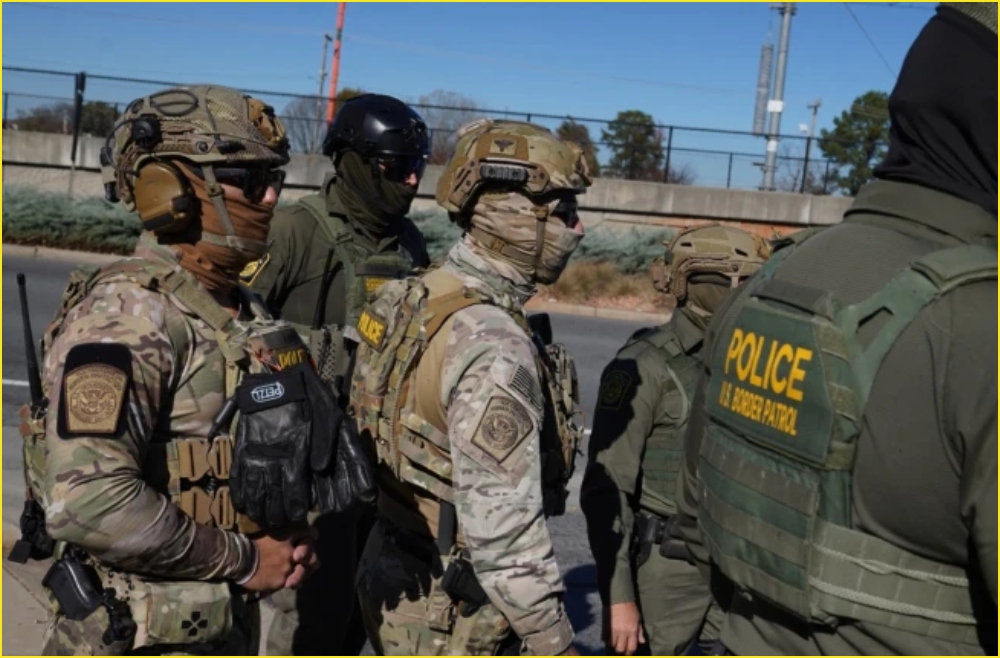
A federal judge in Chicago has ordered U.S. Immigration and Customs Enforcement (ICE) agents to wear body cameras during enforcement activities and all interactions with the public, citing concerns that the agency may not have complied with a previous court order aimed at protecting protesters and journalists.
Sara Ellis issued the directive as part of a modified Temporary Restraining Order (TRO) that will remain in effect until November 6. The order expands judicial oversight of ICE operations following allegations that federal agents violated restrictions imposed by the court just days earlier.
During a court hearing, Ellis expressed skepticism about whether the original order had been followed, referencing media reports depicting enforcement actions that appeared inconsistent with the court’s directives.
“I live in Chicago if folks haven’t noticed,” Ellis remarked. “And I’m not blind.”
The original TRO prohibited ICE from deploying certain riot-control weapons against protesters and journalists except when necessary to prevent harm. The restrictions cover less-lethal shotguns, 40 mm munition launchers, pepper balls and tear gas.
Under the order, federal agents must provide at least two warnings and allow a reasonable opportunity for compliance before using such force. The court also specifically barred ICE from using force against journalists unless agents have probable cause to believe they have committed a crime.
The latest order requiring body cameras is intended to provide greater accountability and create an evidentiary record of interactions between federal agents and members of the public.
In addition to imposing the body-camera requirement, Ellis has directed senior federal officials to testify regarding alleged violations of the original restraining order. Customs and Border Protection Deputy Incident Commander Kyle C. Harvick and ICE Deputy Field Office Director Shawn Byers are scheduled to appear in court Monday.
The litigation stems from a class-action lawsuit filed against the Department of Homeland Security by journalist organizations and protesters. The plaintiffs contend that federal enforcement actions interfered with constitutionally protected First Amendment activities, including reporting and public demonstrations.
According to the complaint, federal agents engaged in what plaintiffs described as a “pattern of extreme brutality” and an ongoing effort to suppress journalists and civilians documenting public events. The lawsuit alleges that agents used flash grenades, tear gas, pepper spray, rubber bullets and paintballs against demonstrators, resulting in injuries.
Plaintiffs further claim that journalists and protesters were detained for extended periods and prevented from exercising their rights to gather, report news and participate in lawful demonstrations.
The case highlights ongoing legal tensions between federal law enforcement authority and constitutional protections for free speech, freedom of the press and peaceful assembly. Courts have increasingly been asked to examine the conduct of law enforcement agencies during public demonstrations, particularly when journalists allege interference with newsgathering activities.
Legal observers note that the body-camera requirement is an unusually direct form of judicial intervention, reflecting the court’s concern about compliance and accountability while the litigation proceeds. The forthcoming testimony from federal officials could provide additional insight into how ICE interpreted and implemented the original restraining order.
The case remains ongoing, with the court expected to continue monitoring federal enforcement activities as it evaluates the plaintiffs’ constitutional claims and determines whether further relief is warranted.