
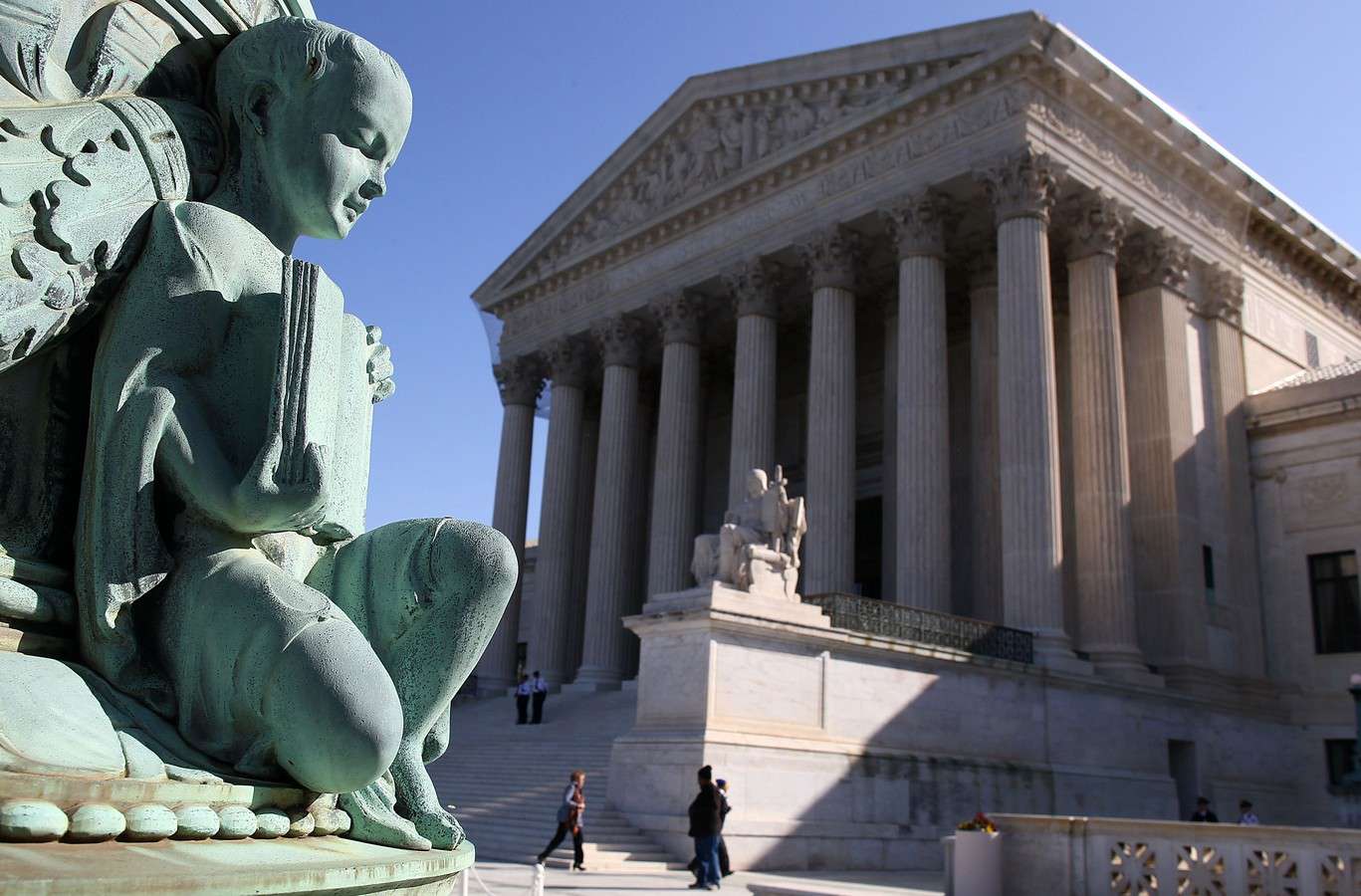
The U.S. Supreme Court has denied Alabama’s emergency request to proceed with the execution of death row inmate Jeffery Lee using nitrogen hypoxia, leaving in place lower court rulings that found the execution method is likely unconstitutional.
In a brief, unsigned order issued Thursday evening, the high court declined to intervene and allow the execution to move forward as scheduled. The court did not provide an explanation for its decision, a common practice in emergency docket matters. However, Justices Clarence Thomas, Samuel Alito and Neil Gorsuch indicated they would have granted Alabama’s request.
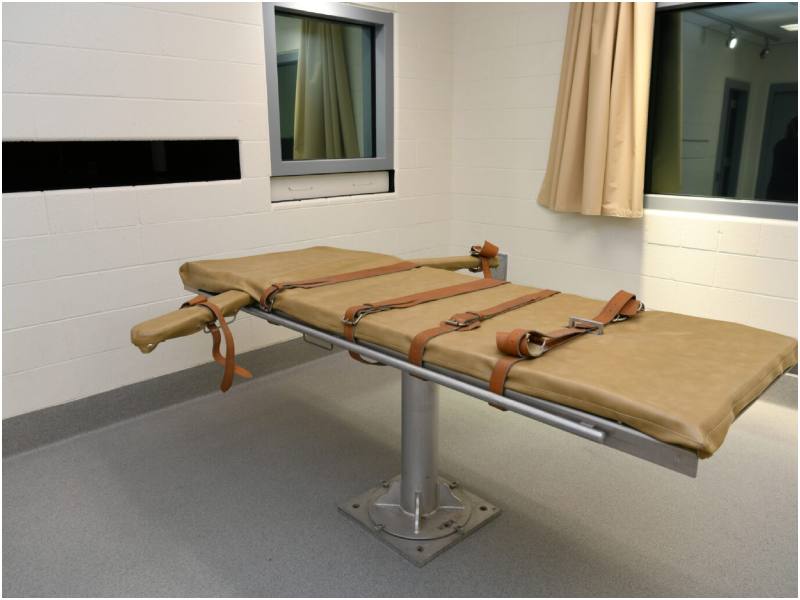
The decision means the state remains barred from executing Lee using nitrogen hypoxia, a method in which a prisoner breathes pure nitrogen through a mask until oxygen deprivation causes unconsciousness and death.
The case has emerged as a significant legal battle over the constitutionality of newer execution methods and the scope of the Eighth Amendment’s prohibition against cruel and unusual punishment.
Lee was convicted in the 1998 robbery and murders of a pawn shop owner and an employee. Although the jury recommended a sentence of life without parole by a 7-5 vote, the trial judge overrode that recommendation and sentenced him to death, a practice that was once permitted under Alabama law.
Last year, Lee challenged Alabama’s planned use of nitrogen hypoxia, arguing that the method would subject him to unconstitutional suffering. Initially, Emily Marks rejected his claim, reasoning that some degree of discomfort is inherent in executions and does not necessarily violate constitutional standards.
That ruling was overturned on June 8 by the United States Court of Appeals for the Eleventh Circuit, which concluded there was a substantial risk of serious harm associated with nitrogen hypoxia. The appeals court pointed to evidence suggesting the procedure could result in one to three minutes of severe air hunger, emotional distress, anxiety, physiological stress and physical discomfort.
The court found that such suffering exceeded the level of distress typically associated with impending execution.
Following the appellate ruling, Judge Marks conducted further review and determined that a firing squad—an alternative method proposed by Lee—would likely result in a less painful death. She subsequently issued an order prohibiting Alabama from using nitrogen hypoxia to execute him.
Alabama then sought emergency intervention from the Supreme Court.
In filings before the justices, Alabama Solicitor General A. Barrett Bowdre argued that allowing the lower court decisions to stand could produce a historic legal precedent.
The state contended that a permanent ban on a legislatively authorized execution method would be unprecedented and warned that the lower courts had expanded the definition of cruelty beyond the limits established by the Eighth Amendment.
Alabama further argued that any discomfort caused by nitrogen hypoxia was comparable to the risks associated with other constitutionally permitted execution methods. State attorneys also maintained that Lee had failed to prove that a firing squad was a readily available alternative, as required under Supreme Court precedent governing method-of-execution challenges.
Lee’s attorneys urged the court to reject Alabama’s request, arguing that executing him before the appellate process concluded would create irreversible harm.
Lead counsel Paige Sharpe told the court that the constitutional questions surrounding nitrogen hypoxia should be resolved through the ordinary appeals process rather than emergency intervention.
Lee’s legal team emphasized that the lower court’s decision followed a three-day bench trial involving extensive testimony and evidence. They argued that the state’s request effectively sought a permanent reversal of the lower court’s judgment rather than temporary emergency relief.
The defense also disputed Alabama’s characterization of nitrogen hypoxia as comparable to other execution methods.
According to Lee’s attorneys, the suffering associated with nitrogen hypoxia is not the result of a malfunction or botched procedure but instead occurs when the execution functions exactly as intended.
The case also drew attention from legal scholars. Stephen Vladeck filed a friend-of-the-court brief arguing that Alabama was effectively seeking summary reversal of a final judgment rather than the type of emergency relief typically considered under the Supreme Court’s expedited procedures.
The Supreme Court’s refusal to intervene leaves unresolved broader constitutional questions surrounding nitrogen hypoxia, a method that has attracted increasing scrutiny as states explore alternatives to lethal injection amid ongoing legal and pharmaceutical challenges.
For now, Alabama remains prohibited from executing Lee using nitrogen hypoxia, while the underlying constitutional dispute continues to move through the federal courts.