
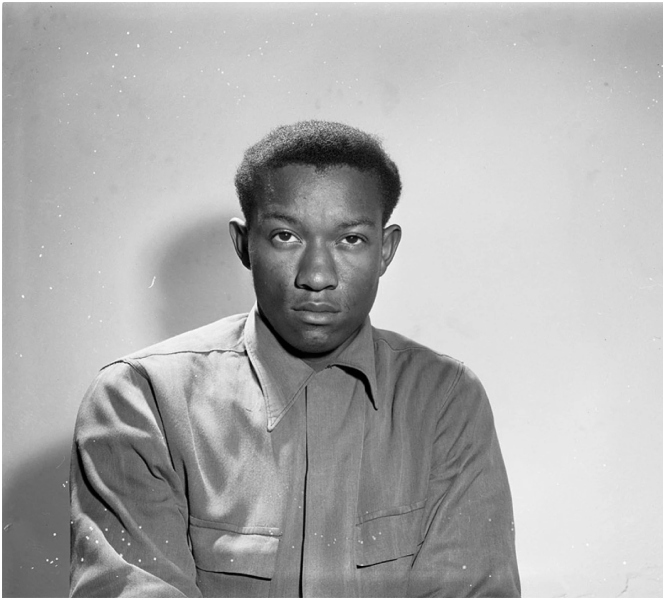
In a rare and historic act of posthumous justice, Dallas County officials have formally exonerated Tommy Lee Walker, a 21-year-old Black man executed by the state of Texas in 1955 for the sexual assault and murder of Venice Parker, a crime county leaders now say he did not commit.
On Wednesday, January 21, 2026, the Dallas County Commissioners Court unanimously passed a symbolic resolution clearing Walker’s name, acknowledging that his conviction and execution were the result of systemic failures driven by racial hysteria, unreliable witness testimony, and a coerced confession.
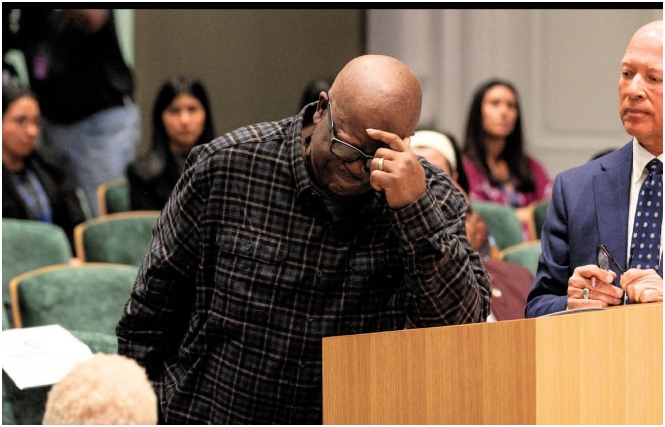
The vote marked a powerful moment of reckoning—bringing together, for the first time, the sons of both the wrongfully executed man and the murder victim—two families bound for decades by a shared injustice.
A Case That Would Not Stand Today
Dallas County District Attorney John Creuzot said the modern DA’s office would never have pursued the case against Walker.
“The Dallas County District Attorney’s office of today would not have prosecuted Tommy Lee Walker,” Creuzot stated. “This case was built during a time when truth was overshadowed by fear, segregation, and deeply flawed investigative practices.”
More than a decade of research by journalists, legal scholars, and civil rights experts revealed that Walker’s prosecution relied on discredited witness accounts and a confession shaped by suggestion rather than fact.
Freelance journalist Mary Mapes, who helped uncover the case’s failures, said the absence of DNA evidence did not prevent investigators from uncovering the truth.
“We didn’t find DNA,” Mapes said, “but we did find a story that desperately needed to be told.”
A Confession Shaped by Coercion
Legal experts highlighted how Walker’s so-called confession reflected the coercive interrogation tactics common in the Jim Crow era.
Margaret Burnham, a Northeastern University law professor, noted that Walker’s statement—“I didn’t intend to kill her, she ran into my knife”—suggested he was coached to believe a lesser narrative might spare his life.
Creuzot, who grew up under segregation in New Orleans, described watching archival footage of Walker addressing the judge before sentencing.
“When I saw that video, I could read his mind,” Creuzot said. “‘They’re going to kill me, and I didn’t do this.’ Nobody was going to listen.”
Walker was executed in the electric chair despite pleading his innocence.
“I Still Miss My Daddy”
For Walker’s son, Ted Smith, now 72, the resolution brought long-delayed validation—but not closure.
Watching the grainy footage of his father’s final courtroom moments proved overwhelming.
“I’m 72 years old, and I still miss my daddy,” Smith said through tears. “They gave your father the electric chair for something he didn’t do. And it hurts every time I talk about it.”
Smith said the exoneration lifts a lifelong burden.
“I don’t have to look over my shoulder anymore,” he said. “‘Oh, that’s Tommy Lee Walker’s son.’ My daddy’s name is clear.”
Support From the Victim’s Family
In a striking moment of shared humanity, Joe Parker, the son of murder victim Venice Parker, publicly supported the resolution exonerating Walker.
“Society and the justice system have a knack for taking the biggest cases and screwing them up royally,” Parker said.
His support underscored the resolution’s broader message: that acknowledging injustice serves both the wrongly accused and the true memory of victims.
Symbolism—and a Call for Accountability
While the exoneration cannot undo Walker’s execution, county leaders and advocates say it carries lasting significance.
Former Dallas District Judge and Democratic district attorney candidate Amber Givens welcomed the resolution but cautioned against mistaking symbolism for reform.
“Mr. Tommy Lee Walker deserved justice in his lifetime,” Givens said. “Honoring the past means changing the policies that allow injustice to happen today. Anything less is symbolism without accountability.”
The courtroom bench where Walker stood 70 years ago still remains. This week, just steps away from that spot, his family finally received the official acknowledgment they had waited a lifetime to hear: the state was wrong.