

President Donald Trump’s motion seeking more than $6.2 million in attorney fee reimbursements from the Fulton County District Attorney’s Office has spotlighted novel legal and ethical questions about prosecution standards, fee-shifting statutes, prosecutorial independence, and the impact on local taxpayers.
Background: How We Got Here
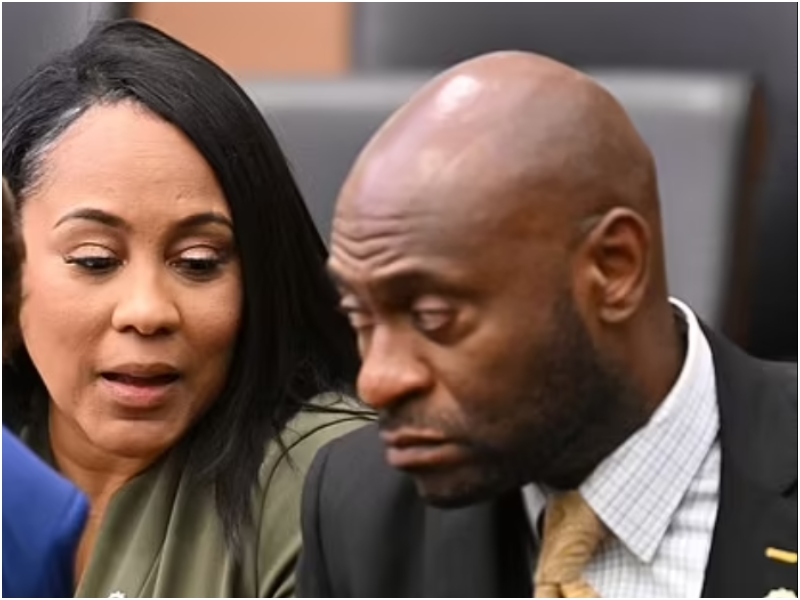
Trump filed the fee motion after a Georgia racketeering case alleging election interference was dismissed last year. The case, originally brought by Fulton County DA Fani Willis, charged Trump and 18 others with attempting to overturn Georgia’s 2020 election results.
Willis and her office were removed from the case by the Georgia Court of Appeals because a romantic relationship she had with the special prosecutor she appointed created an “appearance of impropriety.” The case was then taken over by a substitute prosecutor, who dismissed it in November 2025.
A 2025 Georgia law (Senate Bill 244) provides that if a prosecutor is disqualified for misconduct and the case is dismissed, defendants are entitled to reimbursement of “reasonable attorney’s fees and costs.”
Trump’s motion seeks $6,261,613.08 under this statute.
Legal Appropriateness: Statutory Right vs. Prosecutorial Independence
Supporters of the motion argue that Trump is exercising a clear statutory right. The Georgia law expressly allows defendants in dismissed cases — where the prosecutor was disqualified — to recover legal fees. That means a judge must review the reasonableness of the requested expenses and, if appropriate, order payment from the prosecutor’s office budget.
From this view, enforcing the statute ensures accountability when prosecutorial missteps — here tied to an “appearance of impropriety” — derail a case and impose heavy legal costs on defendants. It reinforces a check on prosecutors’ conduct and forces clarity on whether public resources should fund litigation that cannot proceed because of disqualification issues. Some commentators note that lawmakers passed this law with Trump’s case in mind, aiming to mitigate perceived prosecutorial abuses.
Critics, including Willis’ office, raise constitutional and process concerns. In filings opposing fee awards, they argue:
- The fee-shifting statute imposes financial liability on an elected constitutional officer for decisions made in the scope of prosecutorial duties, raising separation-of-powers concerns. Prosecutors are meant to exercise independent judgment without fear of financial penalties.
- The law is retroactive and novel, potentially violating due process by exposing county taxpayers to burdens for actions that were lawful when taken.
These arguments reflect broader tensions between legislative attempts to curb perceived prosecutorial misconduct and the traditional autonomy granted to prosecutors under state constitutions.
Ethical Considerations: Incentives and Accountability
At the heart of the ethical debate is whether statutes like Georgia’s strike the right balance between accountability and prosecutorial independence:
Arguments Supporting Fee Recovery
- Deterrence of prosecutorial overreach: Holding prosecutors financially accountable when cases collapse due to misconduct may deter ethically dubious conduct or conflicts of interest.
- Fairness to defendants: Trump and co-defendants argue that having to pay millions in legal fees for a case dismissed due to procedural flaws is fundamentally unfair.
- Judicial oversight: Judges can assess whether fees are reasonable, providing a judicial check on both defendants’ claims and prosecutorial conduct.
Arguments Against Fee Recovery
- Chilling effect on prosecution: If prosecutors fear personal or institutional liability, they might avoid bringing difficult but legitimate cases, undermining public safety and justice goals.
- Taxpayer burden: Costs shift to county budgets, potentially burdening taxpayers for defending litigation rooted in complex investigations that did not conclude on merits.
- Separation of powers: Courts traditionally avoid second-guessing prosecutorial charging decisions unless there is clear misconduct — here disputed — risking undue interference with prosecutorial discretion.
Broader Implications for American Legal Systems
While this is a Georgia state law applied in a highly political case, it raises broader questions relevant to legal practice nationwide:
- Fee-shifting norms: Traditional American criminal practice rarely permits defendants to recover attorney fees, even when cases are dismissed. This Georgia law is unusual and could influence similar legislative efforts elsewhere.
- Public confidence and ethics: High-profile prosecutions require both ethical conduct and public trust. Laws measuring accountability for prosecutors could be seen as enhancing transparency — or as politicizing prosecutorial responsibilities.
- Political context: Given that the underlying case involves a former president and pending election issues, any fee award is likely to attract political interpretations, complicating purely legal evaluations.
Conclusion: A Test Case in Statutory Interpretation and Legal Ethics
Trump’s motion to recoup more than $6.2 million in legal fees sits at the intersection of novel statutory law, prosecutorial ethics, and constitutional structure.
Its outcome will not only impact Fulton County’s finances but may also shape future debates on prosecutor accountability, fee recovery in criminal cases, and the delicate balance between legislative tools and prosecutorial independence.