
Picture this: A tech mogul from Mumbai, staring at a screen in a high-rise overlooking the Arabian Sea, clicks “apply” and wires $1 million to the U.S. Treasury. Months later—not years—he’s unpacking in Silicon Valley, green card in hand, chasing the American Dream on steroids.
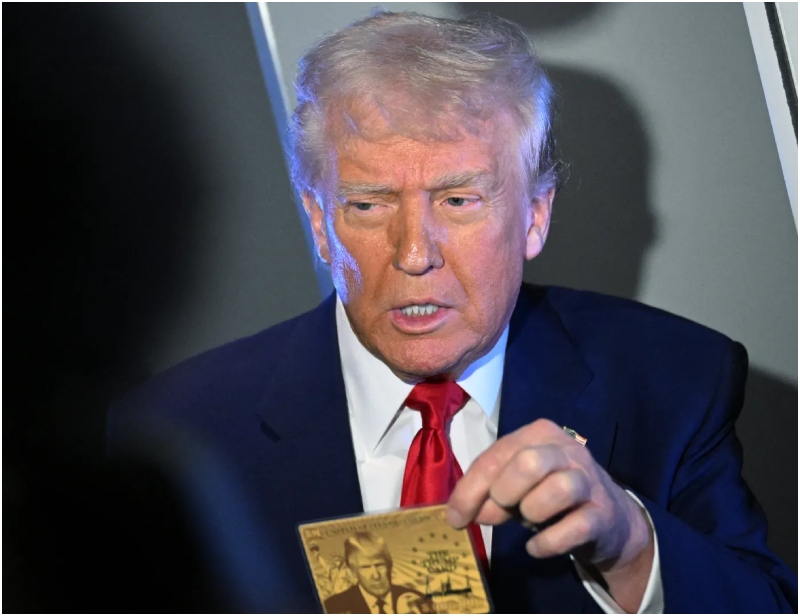
That’s the pitch behind President Donald Trump’s newly unveiled “Gold Card” visa program, which went live this week on trumpcard.gov. Amid a sweeping immigration crackdown that’s already deported thousands and slashed legal pathways for ordinary migrants, this $1 million shortcut to permanent residency has sparked a firestorm: Is it a savvy economic booster, or the ultimate pay-to-play betrayal of the nation’s founding ideals?
The rollout, teased in a February 2025 speech and formalized by Executive Order 14351 in September, targets high-flyers with “extraordinary” or “exceptional” talents—think EB-1A prodigies like Nobel laureates or EB-2 NIW innovators whose work serves the national interest.
Applicants kick off with a non-refundable $15,000 filing fee via Form I-140G to the Department of Homeland Security, followed by rigorous background checks. Clear those hurdles, and it’s time for the big ask: an “unrestricted gift” of $1 million per person to the Commerce Department—no returns, no investments, just pure, one-way largesse to Uncle Sam.
Spouses and kids? Another million each. Corporations sponsoring execs pony up $2 million for the lead, plus $1 million per family member, with add-ons like a 1% annual maintenance fee ($20,000) and 5% transfer penalties for swapping holders.
No in-country adjustments here—successful petitioners head to U.S. embassies abroad for consular processing, entering as lawful permanent residents with a clear citizenship runway. Commerce Secretary Howard Lutnick, who helped craft the plan, boasted Wednesday that 10,000 pre-registrations are already in the hopper, eyeing an initial batch of 80,000 cards to flood the economy with talent and cash. Trump, ever the showman, called it “a path that’s a big deal” during a White House briefing, framing it as a counterweight to his border wall rhetoric: Why block the poor when you can beckon the loaded?
But peel back the gold plating, and the cracks show.
Critics like Sen. Dick Durbin (D-IL) blast it as a “welcome mat for Russian oligarchs and cartel bosses,” potentially laundering dirty money under the guise of generosity. Immigration advocates decry a two-tier system that slams doors on refugees fleeing war while flinging them open for fat wallets—echoing the EB-5 investor visa it aims to supplant, but turbocharged and controversy-prone. Legal eagles whisper of court battles ahead, questioning if executive fiat can redefine “national interest” without congressional buy-in. And for everyday Americans? That $1 million “gift” funnels straight to the Treasury, a windfall for debt reduction or tax cuts, but one that stings families watching relatives wait decades in visa backlogs.
Commentary:
This program? Some migrants have described as a gilded escalator for the elite while the ladder crumbles for the rest. Sure, it could lure brainiacs who spark the next AI boom, much like how Canadian snowbirds or Portuguese golden visas have juiced those economies. But in a country born on “no taxation without representation,” auctioning citizenship feels like a raw deal for the soul of the nation. As applications pour in from Shanghai boardrooms and Dubai penthouses, the real test isn’t the wire transfers—it’s whether this fast lane widens the chasm or, somehow, bridges it.
For now, the site’s buzzing, law firms like AK Poku are fielding calls, and Trump floats a $5 million “Platinum” upgrade with tax perks.
If you’re a millionaire eyeing Manhattan, the clock’s ticking. For ordinary Americans and average global citizens, it’s a stark reminder: In Trump’s America, opportunity knocks, but only if you’ve got the key.