
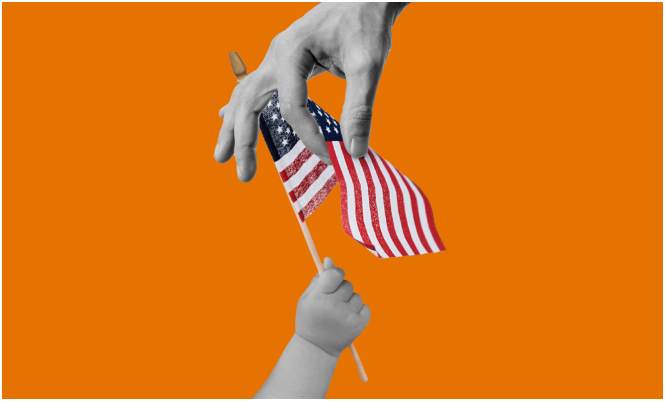
In a move that could reshape the foundations of American citizenship and ignite fierce political debates, the U.S. Supreme Court on December 5, 2025, agreed to hear challenges to President Donald Trump’s executive order limiting birthright citizenship under the 14th Amendment.
While no oral arguments were scheduled that Friday, December 5, 2025, adhering to the Court’s standard Monday-through-Wednesday hearing calendar—the certiorari grants in the consolidated cases of Barbara v. Trump and Trump v. Washington underscore a pivotal moment in constitutional law. But beyond the headlines, what are the broader implications of this decision, alongside other simmering Court activities?
The Core Issue: Testing the 14th Amendment’s Boundaries
At stake is Trump’s January 20, 2025, executive order, which seeks to deny automatic citizenship to children born in the U.S. to non-citizen parents, particularly those without legal status. Lower courts in the 4th and 9th Circuits swiftly blocked the measure, deeming it an unconstitutional overreach. The Supreme Court’s decision to take up these cases—backed by 24 Republican-led states—signals a willingness to revisit the 14th Amendment’s Citizenship Clause, a bedrock principle established post-Civil War to ensure citizenship for all born on U.S. soil, regardless of parental status.
Implications for Immigration Policy: If upheld, the order could drastically alter U.S. immigration dynamics, potentially affecting millions of families and deterring migration. Critics argue it would create a tiered citizenship system, exacerbating inequalities and straining social services. Proponents, however, see it as a tool to curb “birth tourism” and enforce stricter border controls. With arguments slated for spring 2026 and a decision by early summer, this ruling could either embolden further executive actions on immigration or reinforce judicial checks on presidential power, influencing everything from deportation policies to family reunification programs.
Shadow Docket Trends: A Growing Concern for Transparency?
No emergency rulings emerged on December 5, but the Court’s “shadow docket”—its fast-tracked, often opaque decisions—has already handled 36 administration-related cases this term, with 29 favoring the government. Pending applications, like Rollins v. Rhode Island State Council of Churches on immigration stays, highlight this mechanism’s increasing role in Trump-era policies.
Implications for Judicial Integrity: The shadow docket’s rise has drawn sharp criticism, including Justice Ketanji Brown Jackson’s October dissent labeling it a “grave misuse.” This trend could erode public trust in the Court, portraying it as a partisan tool rather than an impartial arbiter. For democracy, it means critical issues like immigration and executive authority might be decided without full briefing or oral arguments, limiting accountability and setting precedents that future administrations could exploit. As the term progresses, watch for how this affects high-stakes areas like voting rights and environmental regulations.
Cert Petitions and Broader Docket: Signals of a Busy Term Ahead
The December 5 conference reviewed a record 67 Second Amendment petitions, including challenges to age restrictions on handguns (Fraser v. ATF) and pharmaceutical patent issues (Hikma Pharmaceuticals v. Amarin Pharma). No grants were announced yet, but outcomes are expected in Monday’s orders list. Other notable items include extensions in death penalty cases and a petition in Canna Provisions v. Bondi, which could overturn Gonzales v. Raich (2005) and expand states’ rights on medical marijuana under the Commerce Clause.
Implications for Society and Law: A flood of gun-related cases could redefine Second Amendment interpretations, impacting public safety amid rising violence. The marijuana petition, if granted, might signal a shift toward federal deference to states on drug policy, potentially boosting cannabis industries and challenging DEA authority. Overall, this docket reflects a Court grappling with cultural flashpoints—guns, drugs, and citizenship—amid a polarized nation. Outcomes could influence midterm elections, state legislatures, and even international perceptions of U.S. stability.
As the Court gears up for arguments in Trump v. Slaughter on presidential removal powers starting December 8, these developments hint at a term defined by executive-branch scrutiny. For Americans, the implications extend far beyond legalese: They touch on who belongs in the nation, how power is checked, and whether the judiciary remains a guardian of rights or a reflector of politics.

