
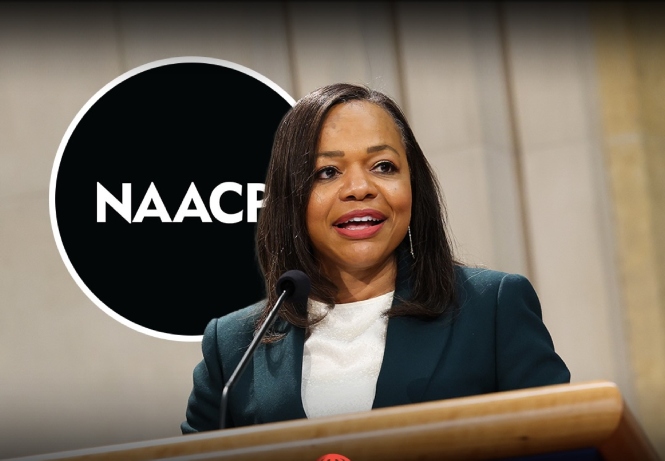
The NAACP has appointed Kristen Clarke as its general counsel, a move widely viewed as a significant escalation in the organization’s legal campaign against policies advanced under the administration of Donald Trump.
Clarke’s arrival comes as the NAACP expands litigation targeting federal and state actions it argues undermine longstanding civil rights protections, particularly in the areas of voting access, redistricting, and diversity initiatives.
Legal Experience Positioned for Impact
Clarke previously led the Civil Rights Division at the U.S. Department of Justice, where she oversaw enforcement of federal civil rights statutes, including the Voting Rights Act and laws addressing discriminatory policing and hate crimes.
Her tenure included the initiation of multiple “pattern or practice” investigations into police departments and the prosecution of dozens of bias-related offenses.
Her background is expected to strengthen the NAACP’s capacity to pursue complex constitutional claims and federal litigation at a time when legal disputes over executive authority and civil rights enforcement are intensifying.
“Kristen Clarke is exactly the legal mind this moment demands,” said Derrick Johnson, noting that the organization is confronting “unprecedented attacks on voting and civil rights.”
Expanding Litigation Against Federal Policies
The NAACP is already engaged in a series of legal challenges connected to Trump administration actions, including lawsuits over election-related executive orders and redistricting efforts in multiple states.
The organization has also opposed federal efforts to access sensitive voter data and has participated in litigation involving alleged interference in local election administration.
Clarke is expected to coordinate these efforts while shaping broader legal strategy, including potential challenges tied to the rollback of Diversity, Equity, and Inclusion (DEI) programs and other administrative actions affecting civil rights protections.
Legal analysts note that such cases could raise significant constitutional questions, including the scope of executive authority under Article II and the extent to which federal agencies can reshape civil rights enforcement frameworks.
Constitutional Stakes and Civil Rights Implications
Clarke’s appointment signals a more aggressive posture from the NAACP as it positions itself to test the legality of federal and state actions in court. Her statement emphasized the organization’s intent to pursue accountability through litigation.
“Our communities are under relentless attack — from the ballot box to their wallets,” Clarke said. “This moment demands that we use the full weight of the law to promote justice and accountability.”
Her leadership is expected to play a central role in cases involving alleged voter suppression, gerrymandering, and First Amendment concerns, as well as disputes over federal authority in administering elections.
A Strategic Shift in Legal Advocacy
Founded in 1909, the NAACP has a long history of landmark civil rights litigation. With Clarke now overseeing its legal operations, the organization appears poised to expand its courtroom strategy at a time when civil rights enforcement is increasingly being contested through the judicial system.
Observers say her appointment could influence not only ongoing cases but also the broader legal framework governing civil rights protections in the United States, particularly as challenges to Trump-era policies continue to move through federal courts.