
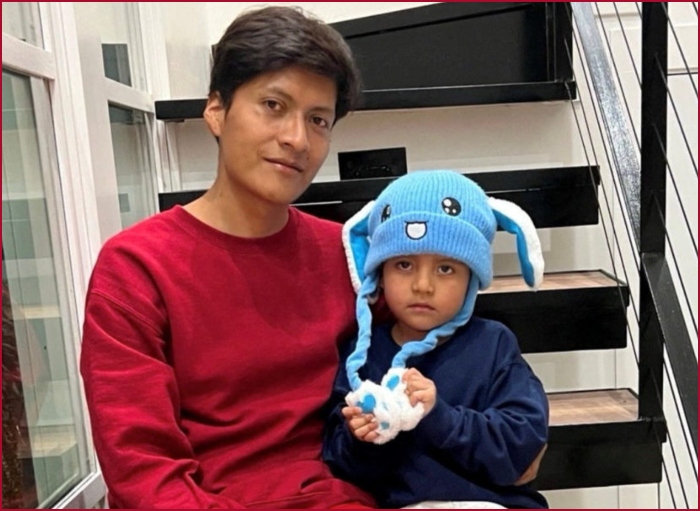
In a case that captured national attention and raised intense legal and ethical questions about U.S. immigration enforcement, a federal judge has ordered the release of 5-year-old Liam Conejo Ramos and his father, Adrian Conejo Arias, from immigration detention in Dilley, Texas.
The decision ended a detention that sparked protests, political outrage, and widespread scrutiny over how federal authorities handle families and children.
From Minneapolis Driveway to National Spotlight
The controversy began on January 20, 2026, when Immigration and Customs Enforcement (ICE) officers detained the Ecuadorian father and his preschool-aged son in a Minneapolis suburb as part of a broader federal immigration enforcement operation. Images of Liam wearing a bunny hat and Spider-Man backpack circulated widely, becoming a symbol of growing unease and opposition to aggressive enforcement tactics.
Neighbors and local school officials said immigration agents had used the young boy to try to prompt his family to open their front door — an allegation the Department of Homeland Security (DHS) strongly denied. DHS maintained that the father fled on foot and left Liam in a vehicle as agents approached.
At the time of their detention, the family’s lawyer emphasized that the father and son had an active asylum claim, meaning they were seeking legal protection under U.S. immigration law and could not be deported until their cases were resolved.
A Judge’s Strong Rebuff of Enforcement Practices
On January 31, U.S. District Judge Fred Biery issued a powerful and highly unusual opinion ordering the release of Liam and his father no later than February 3. In a ruling that read as much like a civics lesson as a legal order, Judge Biery condemned what he described as cruel and constitutionally dubious enforcement practices.
He cited foundational texts like the Declaration of Independence and Bible verses, including “Let the little children come to me…,” underscoring the gravity of detaining a young child away from home.
Biery’s opinion sharply criticized federal immigration policy under the Trump administration, characterizing the approach as rooted in rigid daily deportation quotas that risk traumatizing children for the sake of numerical targets. He wrote that such policies reflect “an ignorance” of America’s foundational principles and a disregard for human dignity.
Release and Return to Minnesota
Following the judge’s order, the father and son were freed and returned to Minnesota, where Democratic Congressman Joaquin Castro personally met them and escorted them home. The swift transit from Texas to Minneapolis highlighted both community support and the broader political resonance of the case.
Elected officials, including Sen. Amy Klobuchar and Rep. Ilhan Omar, welcomed Liam back and urged that children not be held in detention, particularly when asylum cases are pending and families are complying with legal requirements.
Broader Legal and Human Rights Implications
Legal experts say the case is significant not just for one family but for how the U.S. handles immigration enforcement involving minors and families. Courts typically grant the federal government considerable leeway in immigration matters, but Judge Biery’s forceful language — unusual for judicial opinions in immigration cases — suggests judicial frustration with policies that may compromise constitutional values and children’s welfare.
Critics of ICE’s practices pointed to reports of poor conditions at family detention centers and a lengthy history of complaints about access to medical care and treatment of detained families. In December 2025, courts found that ICE had held hundreds of minors beyond recommended time limits — a practice that raised concerns among advocates and lawmakers alike.
What Comes Next
While Liam and his father are now home, their immigration case continues through the U.S. legal system. Release from detention does not end the asylum process, but the court’s ruling sets an important precedent about how far immigration enforcement can go when constitutional rights and humanitarian concerns intersect.
Advocates hope the case will catalyze broader reforms, including clearer standards for family detentions and stronger protections for children in immigration proceedings. Whether that momentum results in changes to federal policy remains to be seen — but for now, the decision has brought a young boy home and sparked renewed public dialogue about enforcement, compassion, and the rule of law.