
Calls for renewed scrutiny of the U.S. Supreme Court intensified Thursday after a major immigration ruling cleared the way for the Trump administration to revoke protections for hundreds of thousands of immigrants from Haiti and Syria, prompting criticism from civil rights advocates and legal observers.
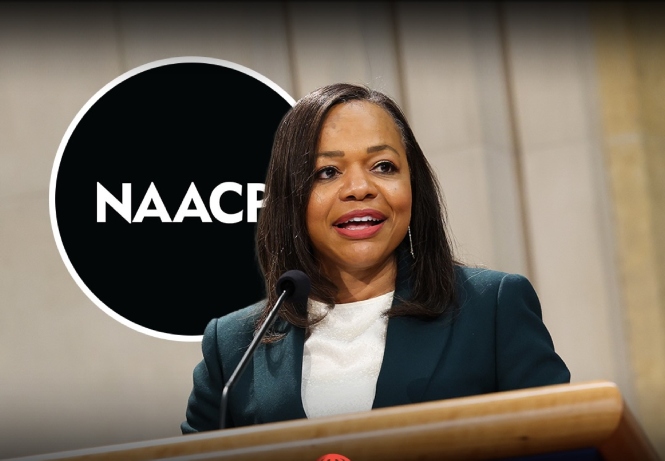
Among the sharpest responses came from Kristen Clarke, general counsel for the NAACP and former assistant attorney general for civil rights, who characterized the court’s latest decisions as deeply consequential and warned that broader questions about the judiciary itself can no longer be ignored.
“We need to talk seriously about the need for Supreme Court reform in our country right now,” Clarke said outside the courthouse after the rulings.
Clarke’s comments followed a 6–3 decision by the Supreme Court allowing the administration to move forward with ending Temporary Protected Status (TPS) for approximately 350,000 Haitians and roughly 6,000 Syrians living in the United States.
The ruling concluded that the Department of Homeland Security’s decisions regarding the termination or extension of TPS are largely shielded from judicial review, effectively limiting courts’ ability to intervene in such administrative determinations.
The majority opinion, authored by Justice Samuel Alito, held that federal law “expressly restricts” judicial review over these decisions. The court also rejected arguments that the termination of Haiti’s TPS designation was unlawfully motivated by racial discrimination.
In a forceful dissent, Justice Elena Kagan argued that the majority downplayed evidence presented by plaintiffs concerning statements and conduct they alleged reflected anti-Haitian bias.
Clarke specifically focused on the implications for Haitian nationals.
“This is a court that absolutely ignored overwhelming evidence that the decision to terminate TPS status for Haitian nationals in particular was racially motivated,” she said. “This stands to impact hundreds of thousands of lawful, peaceful Haitian nationals who live among us.”
Temporary Protected Status, created by Congress in 1990, grants temporary legal status and work authorization to people from countries experiencing armed conflict, environmental disaster, or extraordinary humanitarian conditions.
The administration argued that conditions in Haiti and Syria had improved sufficiently to justify ending protections. However, critics have questioned that conclusion, noting that both nations currently remain under U.S. State Department “Do Not Travel” advisories due to security concerns.
The decision may have ramifications extending beyond Haitian and Syrian immigrants. Legal analysts say it could strengthen the administration’s ability to remove TPS protections for nationals from other countries as part of broader immigration enforcement initiatives.
The ruling also represents another chapter in an ongoing constitutional debate over the judiciary’s role in reviewing executive branch immigration decisions. Advocates for court reform have increasingly argued that recent decisions raise questions about accountability, judicial ethics, and the balance of power between branches of government.
For affected families, however, the consequences may be more immediate than theoretical.
Without TPS protections, many individuals who have lived and worked lawfully in the United States for years could now face deportation proceedings unless they qualify for other forms of immigration relief.
The federal government retains significant discretion over future immigration policy changes, but legal challenges and advocacy efforts are expected to continue in lower courts and through congressional action.
As debate over immigration policy intensifies, Clarke’s remarks suggest the conversation may increasingly shift beyond the policies themselves to the institution interpreting them.
“The need for Supreme Court reform,” she warned, “is something the country must now confront seriously.”