
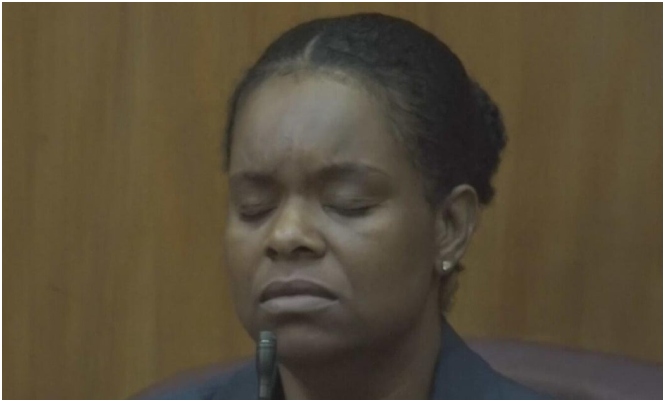
A South Florida judge has found Precious Bland not guilty by reason of insanity in a closely watched criminal case involving the death of her 15-month-old daughter, accepting defense arguments that she was experiencing a severe psychotic episode at the time of the 2021 incident.
The decision followed testimony from expert witnesses and the presentation of evidence that attorneys described as central to understanding Bland’s mental condition during the events in question.
Defense lawyers argued that Bland suffered a COVID-induced psychotic break that left her unable to understand the nature of her actions or distinguish right from wrong at the time of the offense. A forensic psychiatrist also testified during proceedings as the court weighed the issue of criminal responsibility.
Under criminal law, a finding of not guilty by reason of insanity differs significantly from a standard acquittal. Such a ruling does not determine that a defendant did not commit the acts alleged. Rather, it reflects a judicial determination that a defendant lacked the legal mental capacity necessary for criminal culpability at the time of the conduct.
Authorities said that during the 2021 incident, Bland fatally injured her 15-month-old daughter and also stabbed her husband, her older child, and herself.
Following the ruling, Bland addressed reporters in emotional remarks that centered on grief, faith, and the difficult path ahead.
“God is good. This doesn’t bring back my daughter,” she said. “I’m thankful. I love my children. I’m just ready to get my life back together — my husband and my children — and move forward.”
While the ruling resolved the question of criminal guilt, legal proceedings in the matter are not fully concluded.
According to reports, a future status hearing is expected to address issues surrounding post-ruling supervision and jurisdiction. The court may consider whether psychiatric treatment, state oversight, or additional conditions should accompany Bland’s release.
Mental-health defenses remain among the most legally complex areas of criminal law, often involving competing psychiatric evaluations and difficult questions surrounding culpability, treatment, and public safety. Courts generally apply strict standards when evaluating insanity claims, making successful defenses relatively uncommon.
For Bland, however, the legal decision arrived alongside a reality untouched by court findings. Despite leaving court with a favorable ruling, her statement reflected the enduring loss at the center of the case.
“This doesn’t bring back my daughter,” she said.