
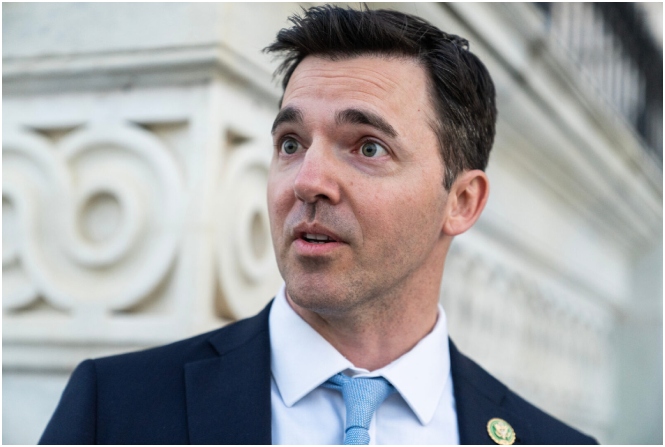
North Carolina Attorney General Jeff Jackson announced that a federal judge has granted an emergency motion freezing what he described as the largest television merger in U.S. history, setting up a major legal battle over media consolidation and antitrust law.
“Merger frozen,” Jackson said in a social media video after describing the court decision as an early legal victory in a case he said could affect “80% of American homes.”
The dispute centers on a $6.2 billion acquisition involving Nexstar Media Group and Tegna. The transaction would create a television broadcasting giant with control of more than 260 local stations and an estimated reach into approximately 80% of U.S. households.
According to Jackson, a bipartisan coalition of state attorneys general joined legal efforts challenging the transaction, arguing the merger violates federal ownership limits and raises concerns about market concentration.
“The biggest TV company in the country is called Nexstar. The third biggest is Tegna,” Jackson said. “No company has ever controlled that much broadcast television.”
The merger had already received approval from federal regulators, including the Federal Communications Commission and the Department of Justice, allowing Nexstar to complete the acquisition. However, almost immediately after the transaction closed, DirecTV and multiple state attorneys general filed antitrust litigation seeking to block or unwind the deal.
A federal judge subsequently issued a preliminary injunction that effectively prevents integration of the two companies through a “hold-still” order. While Tegna currently operates as a subsidiary of Nexstar, the ruling bars the companies from consolidating assets and operations while litigation proceeds.
Jackson argued that the legal challenge extends beyond questions of corporate size and raises broader concerns regarding local news markets and consumer impact.
He claimed the companies had previously signaled plans involving price increases and reductions in local reporting staff, though those allegations remain part of the broader legal dispute.
The attorney general also questioned the speed of federal approval.
“We filed a lawsuit but the day after we filed it these two companies ran to the FCC in Washington and within 24 hours the FCC waived its own rules and signed off on the deal,” Jackson said, calling the timeline “remarkable.”
Nexstar has appealed the injunction ruling to the Ninth Circuit Court of Appeals, meaning the case now moves into a potentially lengthy appellate process that could shape future standards for media mergers and antitrust enforcement.
Legal observers are expected to closely watch the litigation because the outcome may influence how courts interpret ownership caps, competition concerns, and federal oversight of increasingly concentrated media markets.
For now, despite the acquisition’s formal completion, the court’s freeze means the legal fight over one of the country’s most consequential media transactions is far from over.