
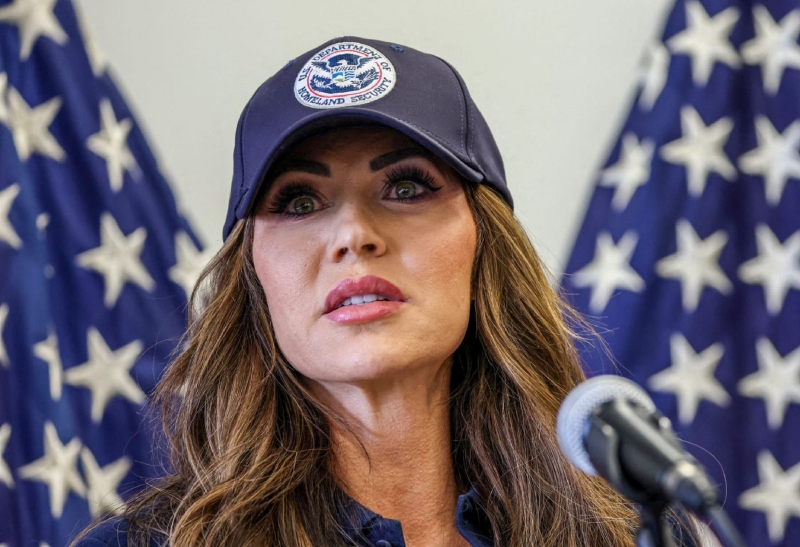
Two senior Democratic lawmakers on the congressional judiciary committees have formally referred Kristi Noem, recently fired Secretary of the U.S. Department of Homeland Security (DHS), to the U.S. Department of Justice for a potential criminal investigation over alleged false statements made during congressional testimony.
In a March 16 letter, Dick Durbin, ranking member of the U.S. Senate Committee on the Judiciary, and Jamie Raskin, ranking member of the U.S. House Committee on the Judiciary, asked Attorney General Pam Bondi to review whether Noem’s testimony violated federal criminal statutes related to perjury and false statements.
Allegations of Misleading Testimony
According to the lawmakers, Noem provided “demonstrably false statements” during appearances before the Senate Judiciary Committee on March 3 and the House Judiciary Committee on March 4, 2026.
The letter alleges the DHS secretary misled lawmakers on several issues, including:
- Compliance with court orders involving DHS actions
- Federal contracting practices
- Allegations that U.S. citizens were improperly detained
- Conditions inside immigration detention facilities
Durbin and Raskin said the statements could violate federal statutes governing false statements and perjury before Congress.
Criminal Statutes Cited
The referral specifically cites 18 U.S.C. §1001, which prohibits knowingly making false statements to federal officials, and 18 U.S.C. §1621, the federal perjury statute.
“Making false statements to Congress is a crime,” the lawmakers wrote in their referral letter.
They also emphasized that providing false testimony under oath during congressional oversight hearings could constitute a criminal offense if investigators determine the statements were made knowingly and willfully.
Political Tensions Surrounding Referral
In the letter, the lawmakers criticized the Justice Department’s leadership, suggesting they had “low expectations” the matter would be pursued due to what they characterized as partisan conduct within the department.
Nevertheless, Durbin and Raskin noted that the statute of limitations for perjury and false statements to Congress is five years, leaving ample time for federal prosecutors to evaluate the allegations.
Oversight and Next Steps
Congressional referrals do not automatically trigger criminal prosecutions. Instead, they typically serve as formal requests for the Justice Department to review evidence and determine whether a criminal investigation is warranted.
Neither Noem nor DHS officials immediately responded publicly to the referral.
If the Justice Department decides to review the matter, investigators would likely examine transcripts from the March hearings and supporting documents to determine whether the statements cited by lawmakers meet the legal threshold for criminal charges.