
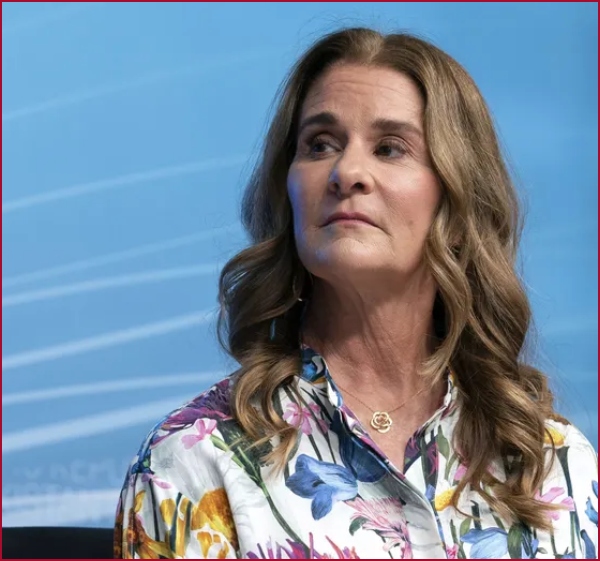
Melinda French Gates has weighed in on the renewed legal and public scrutiny surrounding the Jeffrey Epstein files, saying repeated references to her former husband, Microsoft co-founder Bill Gates, raise unresolved questions that must be addressed by those involved, while underscoring her profound sympathy for Epstein’s alleged victims.
Speaking in an interview on Wild Card With Rachel Martin, French Gates framed the ongoing disclosures as part of a broader societal reckoning with sexual exploitation, power, and accountability. Her remarks come amid continued analysis of court filings and evidentiary records linked to Epstein, the financier who died in federal custody in 2019 while awaiting trial on sex trafficking charges.
“I think we’re having a reckoning as a society,” French Gates said, emphasising that minors should never have been exposed to the circumstances described in Epstein-related testimony and records. She described the revelations as “beyond heartbreaking,” particularly when viewed through the lens of her own experiences as a woman and a mother.
From a legal standpoint, the Epstein files — which include depositions, exhibits, and references to prominent individuals — have reignited debate about the distinction between being named in legal records and being accused of wrongdoing. Courts and legal experts have repeatedly noted that inclusion in such documents does not, on its own, establish liability or criminal conduct. Nevertheless, the disclosures have prompted renewed calls for transparency and accountability regarding Epstein’s network and the institutions that failed to stop his abuse.
French Gates acknowledged that news coverage of the files evokes painful memories from her marriage, which ended in divorce in 2021. Without alleging specific conduct, she said the resurfacing of details tied to Epstein has been personally difficult, but stressed that she has intentionally moved on from that period of her life.
Crucially, she drew a clear legal and moral boundary around responsibility. “Whatever questions remain there… those questions are for those people and for even my ex-husband,” she said. “They need to answer to those things, not me.”
Her statement aligns with a core legal principle: accountability rests with the individuals whose actions are under scrutiny, not with former spouses or associates absent evidence of involvement.
French Gates also referenced her decision to step away from the Bill & Melinda Gates Foundation, now the Gates Foundation, noting that disentangling herself from both her marriage and the organisation was necessary for her own well-being. While she did not connect that decision to any specific legal exposure, it highlights how reputational and governance considerations often intersect with high-profile legal controversies.
Throughout the interview, French Gates returned to the impact on survivors, many of whom are now adults advocating publicly for justice through civil litigation, congressional advocacy, and media appearances. She said her dominant reaction to reading about the Epstein files is “unbelievable sadness,” particularly for women who say they were abused as girls and are still seeking redress.
From a legal perspective, the Epstein case continues to raise unresolved questions about prosecutorial discretion, non-prosecution agreements, institutional accountability, and the challenges survivors face in pursuing justice years after alleged abuse occurred. French Gates expressed hope that ongoing legal processes and public scrutiny will lead to meaningful accountability for those harmed.
Her comments add a notable voice to the legal and ethical debate surrounding the Epstein files — one that underscores both the limits of collective guilt and the enduring need for answers from those directly implicated, as courts, lawmakers, and survivors continue to confront the legacy of one of the most far-reaching abuse scandals in recent history.