
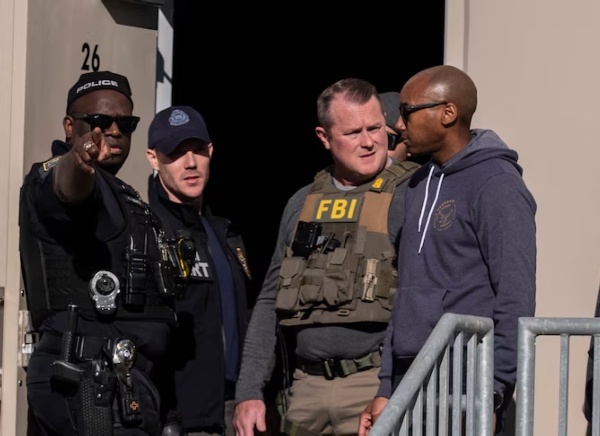
On January 28, 2026, the Federal Bureau of Investigation (FBI) executed a court-authorized search warrant at the Fulton County Election Hub and Operation Center in Union City, Georgia.
The operation seized hundreds of boxes containing ballots and related material from the 2020 U.S. presidential election — a highly unusual federal action that has sparked legal debate and political controversy.
What Happened
Federal agents entered the Fulton County election facility with a sealed warrant signed by a U.S. magistrate judge. According to documents obtained by media outlets, the items listed for seizure included:
- All physical ballots from the 2020 general election,
- Tabulator tapes used by voting machines,
- Electronic ballot images, and
- Voter rolls and registration lists.
Photographs and reports show the materials — marked as pertaining to the 2020 election — being loaded into trucks under FBI supervision. Local officials say they were kept largely in the dark about the process and were not allowed full access to observe what was taken.
Legal Basis and Questions
Federal search warrants must be supported by probable cause that a crime has been committed and that evidence of that crime is likely to be found in the place searched. The warrant in this case authorized the seizure of ballots and related records under the claim that the materials “constitute evidence of the commission of a criminal offense.”
The publicly available cover sheet lists possible violations including:
- A federal requirement that election records be retained for a specific period, and
- Statutes making it a crime to willfully defraud voters or count fraudulent ballots.
However, legal experts note that the 2020 election occurred more than five years ago, and many federal crimes have a statute of limitations shorter than that period. If the alleged offenses fall outside that statutory window, prosecution may be barred unless specific exceptions apply.
Political and Legal Context
The action comes against a backdrop of unsubstantiated allegations of fraud by President Donald Trump, who narrowly lost Georgia in 2020 and has repeatedly asserted — without credible evidence — that illegal activity cost him the election.
Critics, including Fulton County officials and Democratic leaders, argue the seizure is politically motivated and risks undermining trust in the integrity of the U.S. electoral system. They contend that extensive recounts, audits, and court reviews have not shown evidence of widespread fraud in the 2020 vote tally.
Republican officials and supporters of the FBI action maintain that the search was conducted under a valid warrant obtained from a federal judge and is part of a legitimate law enforcement investigation.
Concerns Over Chain of Custody and Transparency
Legal observers have raised concerns about how the seizure could affect the chain of custody for these historically significant records and whether proper procedures were followed to protect ballot security. If election materials are mishandled or removed without clear justification, it may pose legal and constitutional questions about the preservation of election data.
County officials have also expressed confusion and worry about what will happen to the ballots now under federal custody and whether the action will erode public confidence in future elections.
What Happens Next
Because the warrant and underlying affidavit remain sealed, many details about the legal basis for the FBI’s actions are not yet public. Lawyers for the county may seek judicial review or challenge aspects of the seizure, especially if local or state laws governing election records are implicated.
Additionally, political and civil liberties organizations may file lawsuits to compel greater transparency or to challenge any alleged misuse of federal investigative powers. The matter highlights ongoing tensions between federal authority, state election administration, and contested narratives about election security.