
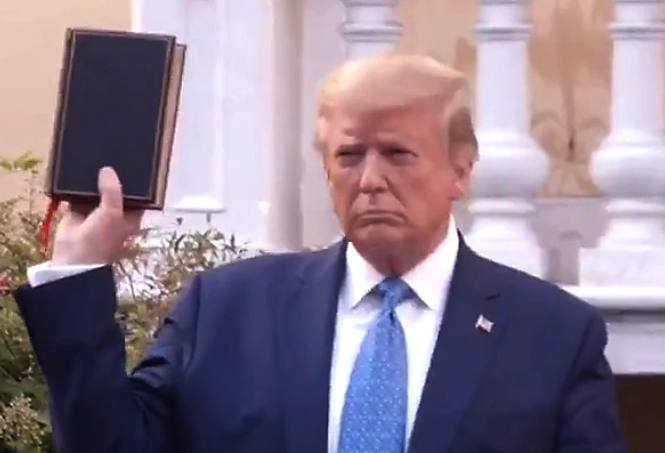
Major American religious figures have recently issued rare and stark public warnings about the moral and legal direction of U.S. government policies under Donald Trump— touching on immigration enforcement, foreign military action and the conscience rights of service members.
These statements, documented across multiple credible news sources, reflect significant institutional concerns that bridge theology, ethics and law.
Episcopal Bishop Warns Clergy About “New Era of Martyrdom”
In a widely reported speech at a vigil in Concord, New Hampshire, Episcopal Bishop Rob Hirschfeld urged clergy within his diocese to “get their affairs in order” and prepare for potential risks tied to their advocacy work, invoking historical examples of religious figures who made the ultimate sacrifice. The remarks, according to The Associated Press, framed current conditions as so grave that clergy might be called upon to physically stand against what he described as oppressive actions by authorities.
While framed in religious terms, the bishop’s comments also touch on the broader legal doctrine of conscientious objection, which in U.S. law can extend beyond military orders to civil disobedience when individuals believe laws or policies fundamentally violate moral or constitutional principles. The First Amendment protects religious testimony and moral objection, but it does not immunise unlawful actions taken in the name of conscience, a balance that legal scholars note remains a source of ongoing debate.
Catholic Archbishop Says Troops May Morally Refuse Certain Orders
On a related front, Archbishop Timothy P. Broglio, who oversees the Archdiocese for the U.S. Military Services, stated that it could be “morally acceptable” for American service members to refuse orders that conflict with conscience — particularly if they believe such orders would violate ethical or legal norms. Reuters reported that Broglio’s comments came amid concerns over potentially controversial foreign policy directions, including threats involving Greenland.
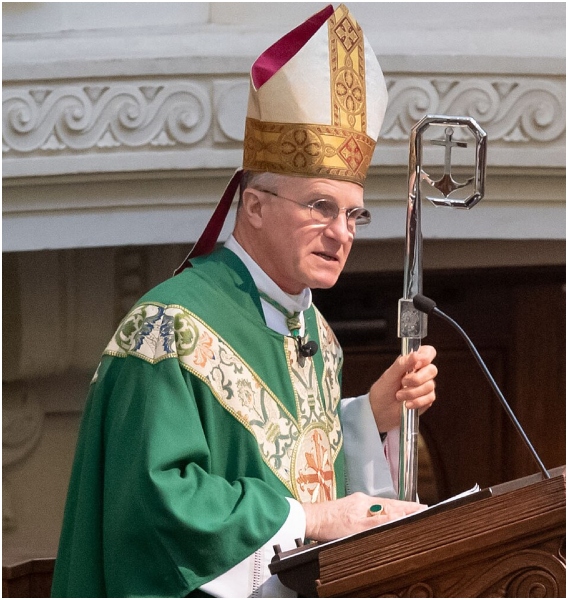
From a legal standpoint, the U.S. Uniform Code of Military Justice (UCMJ) obligates military personnel to obey lawful orders but also requires them to refuse unlawful ones. Orders that would clearly violate international law or result in war crimes are defined as unlawful under U.S. military law and international conventions. Thus, the archbishop’s remarks reflect longstanding legal principles that much of the public may be unfamiliar with.
U.S. Catholic Cardinals Challenge Foreign Policy on Moral Grounds
In an unusually public intervention, three senior U.S. Catholic cardinals — Blase Cupich (Chicago), Robert McElroy (Washington), and Joseph Tobin (Newark) — released a joint statement urging the U.S. government to adopt a foreign policy rooted in humanitarian values, respect for human dignity, and peace. The Associated Press and other international outlets reported that the cardinals explicitly questioned aspects of U.S. military actions and threats, including potential operations in Venezuela and Greenland, and criticized reductions in foreign aid.
Their statement invoked moral teachings emphasised by Pope Leo XIV and called on U.S. political leaders to consider principles beyond partisan interests when deciding on military force and humanitarian commitments. Such clerical interventions — rare in their collective force — do not carry legal authority but can influence public debate and inform ethical discourse on legal responsibilities of lawmakers and military officials.
Broader Legal and Constitutional Considerations
These developments occur at a time of heightened debate over executive power, foreign policy, and civil liberties in the United States. While religious leaders are free under the First Amendment to express moral objections, their assertions also intersect with legal doctrines governing military obedience, conscientious objection, and the boundaries of lawful protest.
Legal experts emphasise that:
- Freedom of religion and speech**: The U.S. Constitution protects religious expression, allowing clergy and faith leaders to critique government actions.
- Military law: Service members are legally obligated to follow lawful orders; refusal of unlawful ones is permitted and, in some cases, required under military justice codes.
- Civil disobedience: While protected speech encompasses moral objection, knowingly breaking laws in protest can still carry legal consequences.
The convergence of these religious pronouncements with public policy highlights deep tensions in American society over how moral authority intersects with constitutional obligations and legal frameworks governing conduct in both domestic and international arenas.