
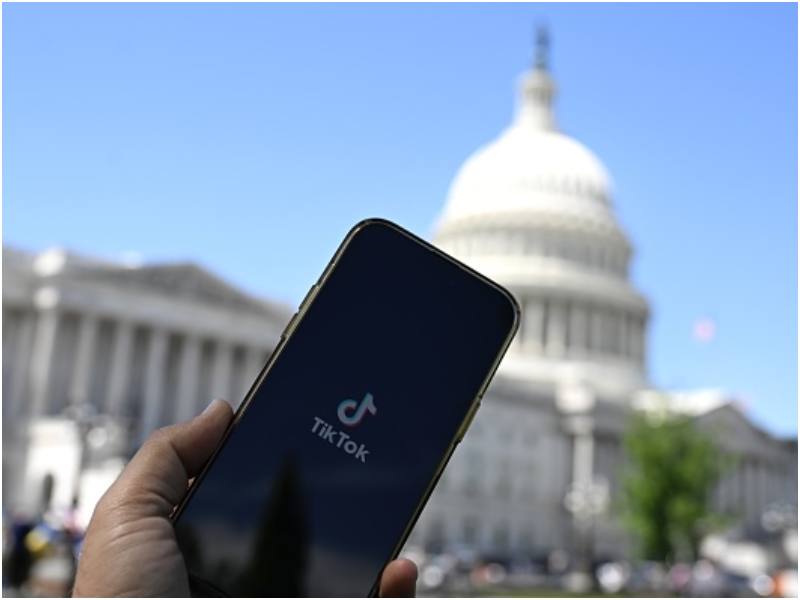
TikTok’s decision to formally separate its US operations from its global business marks a major turning point in one of the most closely watched technology and national security disputes of the past decade.
The newly finalized deal, which allows the short-video platform to continue operating in the United States, reflects a complex legal compromise shaped by congressional pressure, executive action, investor influence, and evolving US-China relations.
For lawyers, regulators, and policymakers, the agreement raises important questions about data sovereignty, foreign ownership limits, algorithmic control, and the future of national security regulation in the digital economy.
A dispute rooted in national security law
The TikTok saga dates back to 2020, when then-President Donald Trump first attempted to ban the app using executive authority, citing concerns that its Chinese parent company, ByteDance, could be compelled by Beijing to share US user data. Although those early efforts failed in court, the issue gained bipartisan momentum over the following years.
Under President Joe Biden, Congress escalated the matter by passing legislation in 2024 requiring ByteDance to divest TikTok’s US operations or face a nationwide ban. That law framed TikTok not merely as a consumer app, but as a potential national security risk subject to extraordinary regulatory intervention.
ByteDance challenged the legislation, triggering a legal battle that briefly resulted in TikTok going offline for US users in January 2025. The blackout ended after Trump, then president-elect, pledged to halt enforcement and pursue a negotiated solution—setting the stage for the deal now finalized.
The structure of the new TikTok US entity
At the center of the agreement is the creation of TikTok USDS Joint Venture LLC, a new company designed to wall off US user data, operations, and core technology from foreign control.
Key elements of the structure include:
- Majority US governance: The joint venture will be overseen by a seven-member board with a majority of American directors.
- Ownership limits: ByteDance retains a 19.9% stake, staying below the 20% threshold often viewed by US regulators as a marker of controlling influence.
- American investors in control: Oracle, Silver Lake, and MGX each hold 15% stakes, with additional ownership spread among US-based investment entities.
- Leadership: Adam Presser, formerly of WarnerMedia, has been appointed chief executive.
From a legal standpoint, this ownership and governance model appears designed to withstand scrutiny under US national security law, including review standards applied by the Committee on Foreign Investment in the United States (CFIUS).
The algorithm question: licensing instead of transfer
Perhaps the most legally sensitive issue has been TikTok’s content-recommendation algorithm, widely viewed as the platform’s most valuable asset and the primary driver of its success.
Rather than transferring ownership of the algorithm, ByteDance has agreed to license the technology to the US entity. Under the deal:
- The algorithm will be retrained exclusively on US user data.
- Data and algorithmic operations will be hosted in Oracle’s US-based cloud environment.
- Data handling will be subject to American privacy and cybersecurity standards.
This licensing approach appears to strike a balance between US demands for control and China’s longstanding restrictions on exporting sensitive technologies. For regulators, it represents a novel attempt to address national security concerns without forcing a full technology divestiture.
Legal and regulatory implications
The TikTok deal may serve as a template for future cases involving foreign-owned technology platforms operating in the US. Several implications stand out:
- Expanded role of national security law
The case underscores how national security rationales can now shape outcomes in consumer technology markets, even absent evidence of direct wrongdoing. - Precedent for “controlled separation”
Rather than outright bans or full breakups, US authorities may increasingly favor structural solutions that impose governance, data localization, and ownership caps. - Algorithmic regulation enters the mainstream
The focus on TikTok’s recommendation engine signals growing legal attention to algorithms as strategic assets, not just intellectual property. - Judicial uncertainty remains
While the deal resolves immediate enforcement threats, it does not fully settle constitutional questions around forced divestment, executive power, and due process—issues likely to resurface in future litigation.
What this means for American users and businesses
For TikTok’s estimated 200 million US users, the app will remain available, though experts caution that changes to the algorithm may alter how content is recommended. From a legal and commercial perspective, US advertisers, creators, and partners gain stability after years of uncertainty.
For Washington, the deal allows policymakers to claim a national security win without provoking a broader trade or diplomatic rupture with Beijing. For Beijing, allowing a licensing arrangement—rather than a sale—helps preserve ByteDance’s core intellectual property.
A new chapter in tech regulation
The TikTok USDS deal closes one chapter in a long-running dispute, but it opens another in the evolving relationship between technology, law, and national security.
As governments grapple with foreign ownership, data control, and algorithmic power, TikTok’s US restructuring is likely to be cited as a defining case study for years to come.