
The United States is set to gain control over designated areas of Greenland under a proposed security framework agreed this week on the sidelines of the World Economic Forum in Davos, raising complex legal questions about sovereignty, territorial jurisdiction, and international law.
According to diplomatic sources cited by The Telegraph, the arrangement would allow parts of Greenland to be designated as sovereign U.S. base areas, mirroring Britain’s long-standing agreement with Cyprus.
Under such a model, American military installations on the Arctic island would be treated as U.S. territory for legal and operational purposes, even though Greenland would formally remain under Danish sovereignty.
The framework was reportedly agreed during a meeting on Wednesday evening, January 22, 2026, between U.S. President Donald Trump and NATO Secretary-General Mark Rutte. It is intended as a compromise to defuse escalating tensions following Trump’s renewed public demand to purchase Greenland outright—a proposal that Denmark has consistently rejected as non-negotiable.
Legal Workaround to Annexation Claims
Under the proposed deal, the U.S. would be permitted to conduct military, intelligence, and training operations within the designated base areas without requiring local permits or planning approvals. The framework could also facilitate U.S.-backed development projects, including access to mineral-rich zones containing rare earth elements critical to defense and technology supply chains.
Legal analysts note that the Cyprus-style arrangement functions as a jurisdictional workaround, allowing a foreign power to exercise near-complete control over specific territories while stopping short of formal annexation. In Cyprus, the United Kingdom retains sovereignty over two military bases, while Cypriot civilians living within those areas are afforded rights similar to those elsewhere in the republic.
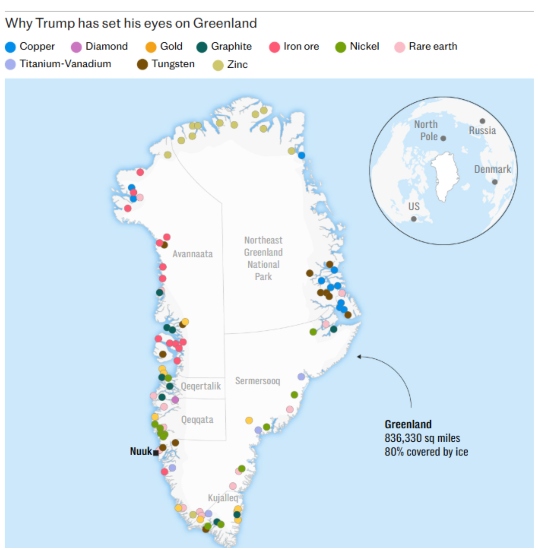
If implemented, the Greenland framework could significantly expand U.S. legal authority in the Arctic, including the potential deployment of assets linked to Trump’s proposed “Golden Dome” missile defense system.
Denmark Pushes Back on Sovereignty
Danish Prime Minister Mette Frederiksen moved quickly to draw legal red lines, stating that while Denmark is open to negotiations on Arctic security, investment, and economic cooperation, sovereignty is not on the table.
“We cannot negotiate on our sovereignty,” Frederiksen said in a statement, emphasizing that only Denmark and Greenland can make decisions concerning the territory. She added that she had been informed NATO was aware of Denmark’s position and that no agreement compromising sovereignty had been reached.
A NATO spokesperson supported that account, saying Secretary-General Rutte “did not propose any compromise to sovereignty” during his discussions with President Trump.
NATO, Arctic Security, and International Law
NATO officials framed the talks as part of a broader effort to address growing Russian and Chinese activity in the Arctic. Rutte said the discussions focused on how allies could ensure security in a region undergoing rapid geopolitical and environmental change.
“The issue is how we protect that huge Arctic region,” Rutte said in an interview, citing increased interest from Moscow and Beijing. NATO later confirmed that any negotiations would involve Denmark, Greenland, and the United States, with the stated goal of preventing rival powers from gaining an economic or military foothold.
From a legal standpoint, the proposal underscores the tension between collective security arrangements and territorial sovereignty, particularly within semi-autonomous regions like Greenland. International law experts note that while defense basing agreements are common, designating foreign bases as sovereign territory remains legally sensitive and politically fraught.
Market and Diplomatic Fallout
Trump’s apparent acceptance of the framework coincided with his decision to drop threatened 10% tariffs on the United Kingdom and other European states that had opposed his earlier annexation rhetoric. Following the reversal, U.S. markets rebounded sharply, with Wall Street stocks recovering losses tied to fears of a broader trade war.
European Union leaders are nevertheless proceeding with an emergency summit to coordinate a response to Trump’s Arctic strategy. Meanwhile, NATO military planners have reportedly paused discussions of a potential Arctic deployment to avoid further political escalation.
As negotiations continue, the proposed Greenland framework is likely to face close scrutiny from legal scholars, lawmakers, and international partners, particularly over whether the arrangement respects the principles of sovereignty and self-determination under international law.