
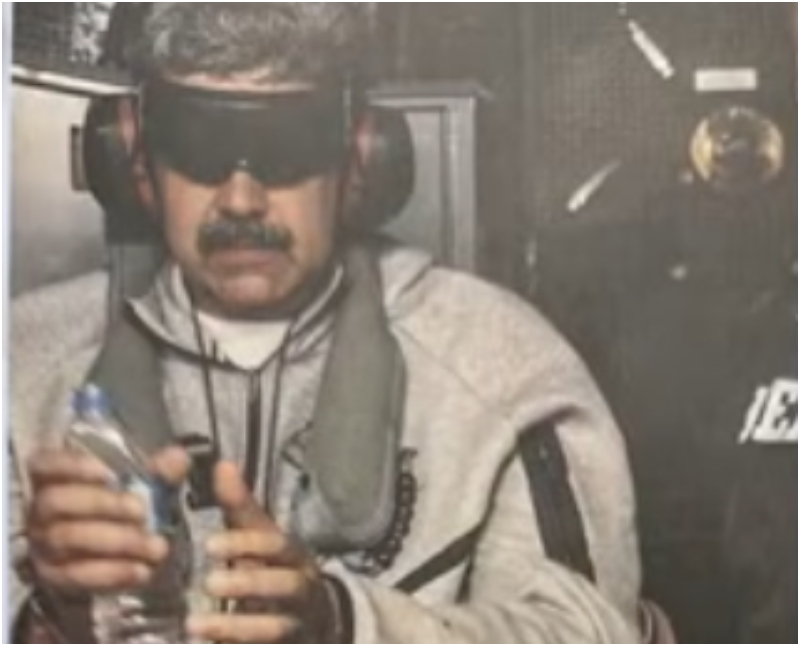
The reported capture of Venezuelan President Nicolás Maduro by U.S. forces on Saturday, January 3, 2026, marks one of the most consequential—and legally fraught—actions in modern international relations.
The arrest of a sitting head of state of a sovereign country by another state raises profound questions under international law, U.S. constitutional law, and long-standing norms governing sovereignty, immunity, and the use of force.
For legal scholars and policymakers alike, the operation represents a stress test for the post-World War II legal order.
Sovereignty and the Prohibition on the Use of Force
At the core of the legal debate is state sovereignty, a foundational principle of international law enshrined in the United Nations Charter. Article 2(4) of the Charter prohibits the threat or use of force against the territorial integrity or political independence of any state, except in narrowly defined circumstances.
The recognized exceptions are:
- Self-defense under Article 51, in response to an armed attack, and
- UN Security Council authorization.
Absent clear evidence that Venezuela launched or imminently threatened an armed attack against the United States, or explicit Security Council authorization, a unilateral U.S. military operation to seize Maduro would likely be viewed by many international law experts as a violation of the UN Charter.
The U.S. justification—framed around narco-terrorism and transnational criminal activity—pushes the boundaries of self-defense doctrine. While states have increasingly asserted the right to act extraterritorially against non-state actors, extending that rationale to justify the capture of a sitting head of state is legally unprecedented, some scholars compare it to the 1990 arrest of the leader of Panama, Manuel Noriega.
Head-of-State Immunity Under International Law
Another central issue is head-of-state immunity, which protects sitting heads of state from arrest and prosecution by foreign national courts. This immunity is not merely personal courtesy; it is a functional rule designed to preserve diplomatic relations and international stability.
Under customary international law:
- Sitting heads of state enjoy absolute immunity (immunity ratione personae) from foreign criminal jurisdiction.
- This immunity applies regardless of the alleged offense, while the individual remains in office.
There are limited exceptions, most notably prosecutions before international tribunals such as the International Criminal Court (ICC), and even those are contested when the individual’s state has not consented to the court’s jurisdiction.
The U.S. arrest of Maduro for prosecution in a domestic federal court would therefore represent a sharp departure from established norms, unless Washington argues that Maduro is not a legitimate head of state—a position the U.S. has previously taken rhetorically but which remains disputed internationally.
Regime Recognition and Its Legal Consequences
The legality of the arrest may hinge on whether the United States claims it does not recognize Maduro as Venezuela’s lawful president. Non-recognition can weaken diplomatic immunity arguments, but it does not automatically erase them under international law.
Since the U.S. military operation in Venezuela hit news headline, many legal experts who have spoken on major news networks have argued that recognition policy cannot unilaterally nullify immunity, particularly when the individual exercises de facto control over the state and is recognized by other governments. Otherwise, powerful states could circumvent immunity simply by declaring rival leaders illegitimate—a practice that would undermine global legal stability.
U.S. Domestic Law and Executive Power
From a domestic perspective, questions also arise about presidential authority. While U.S. presidents possess broad powers in foreign affairs and counterterrorism operations, the arrest of a foreign head of state implicates:
- The War Powers Resolution,
- Congressional authority over declarations of war, and
- Due process concerns related to extraterritorial arrests.
Historically, U.S. courts have been reluctant to adjudicate such cases directly, often invoking the political question doctrine. Still, any prosecution of Maduro in U.S. courts would almost certainly generate litigation over jurisdiction, immunity, and the admissibility of evidence obtained during a military operation.
Regional and Global Precedent
Perhaps the most lasting legal impact lies in the precedent set. If the seizure of Maduro stands, it could:
- Normalize the arrest of foreign leaders by rival states,
- Blur the line between law enforcement and warfare, and
- Encourage retaliatory or reciprocal actions by other powers.
This concern is amplified by President Trump’s warnings to Mexico, Cuba, and Colombia, suggesting potential consequences if they are deemed supportive of Maduro or implicated in related activities. Such statements raise further questions about collective punishment, coercive diplomacy, and the legality of threats under international law.
A Turning Point for International Legal Norms
The U.S. capture of Nicolás Maduro, if sustained, may signal a decisive shift away from traditional restraints on the use of force and the treatment of foreign leaders. While Washington may frame the operation as a necessary response to transnational crime, the legal justification remains deeply contested.
For the international legal system, the case underscores a central tension of the modern era: whether established norms of sovereignty and immunity can survive in a world where powerful states increasingly prioritize unilateral security actions over multilateral legal frameworks.
How courts, allies, and international institutions respond may determine whether this episode becomes an exception—or a new rule.