
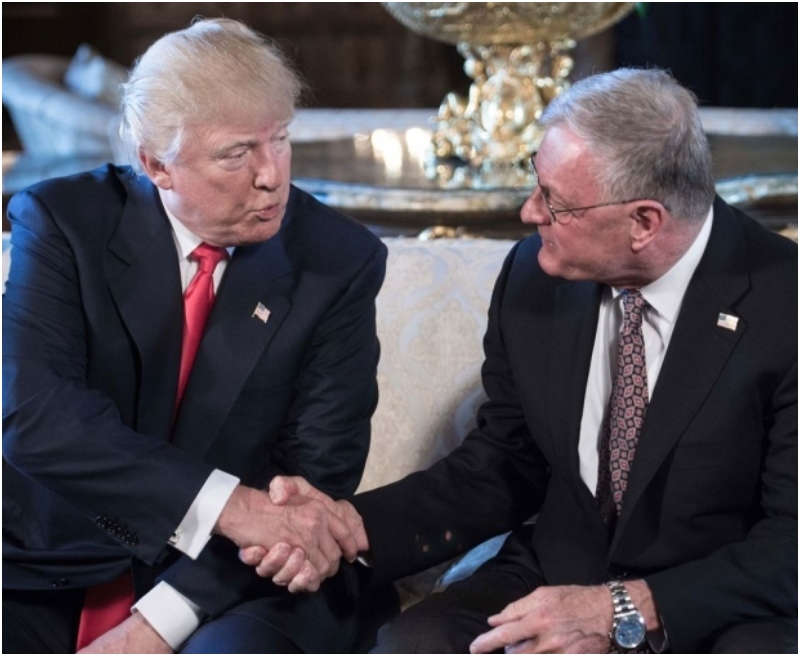
U.S. President Donald Trump reportedly referred to his special envoy to Ukraine, Keith Kellogg, as an “idiot” after the diplomat publicly described Ukrainian President Volodymyr Zelenskyy as a brave and decisive wartime leader, according to accounts published by The New York Times.
The reported remark followed a tense exchange between Trump and Kellogg in February 2025, shortly after the envoy praised Zelenskyy in a post on the social media platform X. In the post, Kellogg described the Ukrainian president as “brave,” characterising Ukraine’s fight against Russia as an existential struggle for national survival.
According to the report, Trump summoned Kellogg to the Oval Office after the remarks gained attention. During the meeting, Trump reportedly challenged him directly, asking whether he truly believed Zelenskyy was “brave and courageous.” Kellogg confirmed his position and went further, comparing Zelenskyy’s leadership during wartime to that of Abraham Lincoln during the American Civil War.
The comparison reportedly angered Trump. While recounting the exchange later to other senior advisers, Trump allegedly dismissed Kellogg as “just an idiot,” reflecting deep frustration with the envoy’s public stance on Ukraine.
The episode underscores growing internal divisions within the administration over U.S. policy toward the war in Ukraine, particularly the balance between continued engagement with Kyiv and a more isolationist approach to foreign conflicts.
The New York Times report, culled by multiple news outlets, also noted that Trump has privately expressed the view that Russia is strong and Ukraine is weak, a position Kellogg is said to have challenged during internal discussions. During at least one White House meeting, Kellogg reportedly told Trump that such assessments were “nonsense,” arguing that Russian forces were not invincible.
Further signs of policy tension emerged during a private discussion between Kellogg and European officials at an international conference, where he reportedly said he opposes isolationist voices within the American administration.
When Polish Foreign Minister Radysław Sikorski asked whether the United States and the European Union remained allies, Kellogg reportedly sought to reassure attendees, describing himself as their “best friend” inside the administration.
The controversy also comes amid reports of Kellogg’s impending departure. Reuters earlier reported that the special envoy informed colleagues he plans to leave the administration in January 2026, raising questions about continuity in U.S. diplomatic engagement with Ukraine and European partners.
From a legal and governance perspective, the episode highlights broader concerns about foreign policy coherence, executive authority, and diplomatic accountability, particularly during an ongoing international armed conflict. While envoys operate under presidential authority, public disagreements of this nature may carry implications for treaty obligations, alliance management, and the consistency of U.S. commitments under international law.
Neither the White House nor Kellogg has publicly commented on the reported exchange.
However, the incident adds to growing scrutiny of how internal policy disputes are shaping U.S. engagement with Ukraine and its NATO and EU allies at a critical moment in the conflict.