
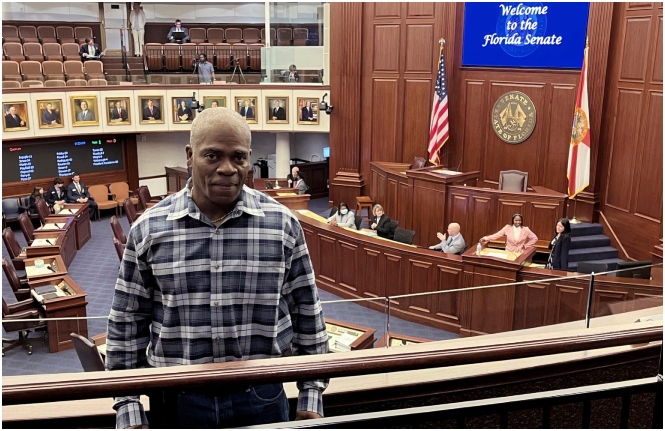
Few modern criminal justice stories have carried the tragic irony of Leonard Cure’s life.
After losing clost to 20 years behind bars for a crime he did not commit, Cure finally walked free with the opportunity to rebuild his future. He was released from prison on April 14, 2020, and subsequently exonerated on December 14, 2020, after serving more than 16 years for an armed robbery in Florida he did not commit.
Three years later, however, his life ended during a police traffic stop in Georgia — a case that continues to be cited in debates over wrongful convictions, police use of force and systemic failures within the American justice system.
Cure, a Black man from Florida, had been convicted in connection with a 2003 armed robbery of a Walgreens drug store in Broward County and sentenced to life imprisonment. A first trial had ended with a deadlocked jury before a second jury convicted him. Years later, a reinvestigation by the Innocence Project of Florida and the Broward State Attorney’s Conviction Review Unit uncovered significant problems in the case, including evidence that Cure had strong alibis and that no physical evidence conclusively placed him at the crime scene. His conviction was vacated in December 2020 after he spent more than 16 years in prison.
Cure became the first person exonerated through Broward County’s Conviction Review Unit and later received approximately $817,000 in state compensation for his wrongful incarceration. Friends and advocates said he had begun rebuilding his life, purchasing a home and considering college opportunities after regaining his freedom.
But on October 16, 2023, Cure’s story took another devastating turn.
Authorities said Cure was stopped by Camden County Sheriff’s Deputy Buck Aldridge on Interstate 95 in Georgia after allegedly speeding and driving recklessly. Video later released by officials showed Cure initially complying with instructions before the encounter escalated after he was informed he was being arrested. Investigators said the deputy used a Taser, followed by a baton, before fatally shooting Cure during a physical confrontation.
The legal aftermath extended well beyond the shooting itself. Cure’s family later filed a federal lawsuit alleging excessive force and arguing that the deputy failed to appropriately de-escalate the situation. Family members and attorneys suggested that the psychological impact of spending 16 years wrongfully imprisoned may have influenced Cure’s response during the encounter.
The case took another turn in 2025 when prosecutors announced that Deputy Aldridge would not face criminal charges in the shooting, determining that the use of deadly force met the legal standard for justification under the circumstances presented in the investigation.
Separately, Aldridge later faced federal indictment on unrelated allegations involving excessive force and falsification of records connected to other arrests. Those allegations did not directly involve Cure’s case but renewed scrutiny over law enforcement oversight and hiring practices.
For legal observers, the Leonard Cure case continues to resonate because it sits at the intersection of several enduring issues in American law: wrongful convictions, post-incarceration trauma, standards governing police use of force and institutional accountability.
Perhaps the most haunting aspect of Cure’s story is that after finally overcoming one profound injustice, he never received the opportunity to fully reclaim the life that had been taken from him years earlier.