
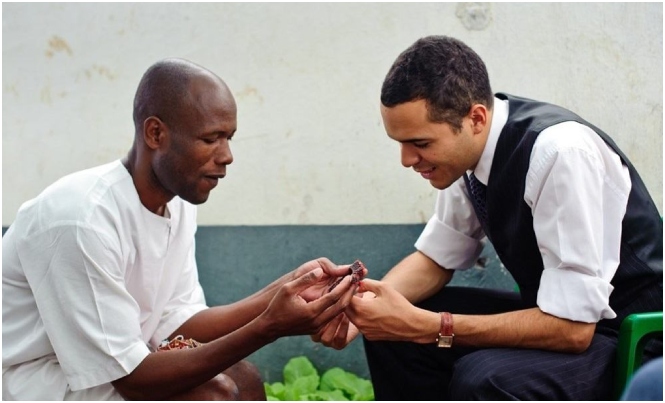
In Kenya’s overcrowded prisons, where more than 80% of inmates have never been represented by a lawyer, a British-founded organization is training incarcerated people to become paralegals and lawyers, and the results have been nothing short of transformative.
Justice Defenders, founded by Alexander McLean in 2007, has worked in 55 prisons across Kenya, Uganda, and The Gambia, providing legal training to hundreds of inmates who then help their fellow prisoners secure fair hearings in court.
The organization has trained 740 paralegals, served 180,000 clients, and helped secure the release of 74,000 people.
A Crisis of Representation
At Kamiti Maximum Security Prison outside Nairobi, a facility built to hold 300 prisoners now houses more than a thousand. In one dank holding cell, 140 men were packed together—most awaiting trial, unable to afford bail. Of more than 200 prisoners in one group, only three had lawyers.
“We think it’s a problem that often poor people go to court without defense,” McLean told 60 Minutes. “Our hope with our work is that we give people fair hearings so even if they’re convicted or they’re given a prison sentence afterwards, I say well that’s fair because my voice has been heard.”
Training from the Inside
Justice Defenders provides a three-week law course covering criminal procedure, constitutional rights, legal ethics, and case preparation. Some prisoners go further: the organization has supported 67 inmates and prison staff in earning Bachelor of Laws degrees from the University of London through a distance-learning program—the same program Nelson Mandela completed while imprisoned on Robben Island.
Remarkably, some prison guards take the classes alongside the inmates they guard. Willie Oolo, Chief Inspector at Lang’ata Women’s Prison, completed his University of London law degree and now provides legal advice to prisoners.
“People are brought to prison as a punishment but not for punishment,” he said.
From Death Row to Freedom
The program has produced remarkable success stories. Morris Kabiria, a former police officer sentenced to death for armed robbery, spent eight years in pre-trial detention before his conviction. After joining Justice Defenders, he argued his own appeal and was acquitted of all charges. He now works as a full-time employee of the organization, teaching inmates courtroom skills.
George Karaba, who was on death row for a land dispute killing, earned his law degree while incarcerated. Though he may spend the rest of his life in prison, he told 60 Minutes:
“If I do not get out of prison, I’ll still continue doing what I do to see somebody you’ve helped get out of prison. It gives me great satisfaction. I feel part of me is actually out and therefore I’m good.”
Justice Defenders also helped successfully challenge the constitutionality of Kenya’s mandatory death sentence, resulting in thousands of death row inmates becoming eligible for resentencing.
A Model for the U.S.?
Justice Defenders relies entirely on donations and spends approximately $2 million annually. The organization aims to serve 1 million prisoners by 2030 and has begun pilots in the United States.
McLean believes the model can work anywhere.
“It’s people from backgrounds of privilege who become lawyers or become politicians and make the law, but it’s the poorest people in our societies who disproportionately feel the impact of the law,” he said. “We wondered what it looked like to tap into that lived experience.”