
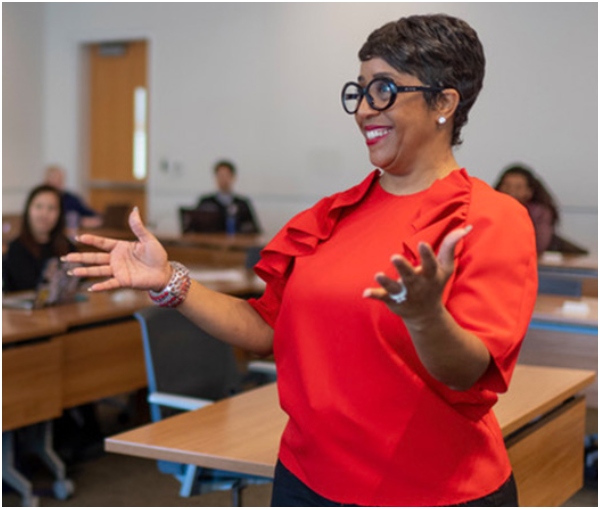
Fulton County Commission Chair candidate Mo Ivory is placing constitutional rights, pretrial detention reform, and jail conditions at the center of her runoff campaign, arguing that the county’s long-running jail crisis cannot be solved without reducing unnecessary incarceration and replacing the existing detention facility.
In a recent interview with Courier Georgia, Ivory, an attorney and Democratic runoff candidate, said Fulton County’s jail problems stem from both systemic failures within the criminal justice process and the deteriorating condition of the facility itself.
“It’s been a decades-long problem,” Ivory said, noting that overcrowding issues have persisted for much of the jail’s existence since it opened in 1989.
Her comments come as Fulton County continues to face scrutiny over conditions inside its jail, which has been the subject of litigation, federal investigations, and public concern regarding inmate deaths, overcrowding, staffing shortages, and delays in case processing.
Diversion Instead of Detention
Ivory argued that many individuals charged with low-level, nonviolent offenses should never enter the jail system at all.
“There are a lot of people that really shouldn’t go to jail in the first place,” she said. “They should be diverted.”
The candidate pointed to diversion programs as a key strategy for reducing jail populations, particularly for individuals accused of misdemeanor offenses such as disorderly conduct or petty theft.
“When people are committing misdemeanor, nonviolent crimes, those are nonviolent offenses that really shouldn’t be inside of the Fulton County Jail,” Ivory said.
She characterized many such cases as rooted in poverty rather than public safety threats.
“I call those poverty crimes,” she said. “People are just too poor to be able to not get caught up in the system.”
Legal reform advocates have long argued that overreliance on arrest and detention for low-level offenses can contribute to jail overcrowding while imposing significant economic and social costs on defendants who have not been convicted of a crime.
Court Delays and Pretrial Detention
Ivory also connected overcrowding to delays within the court system, arguing that underfunded courts contribute to prolonged pretrial detention.
“The reason you have an overcrowded jail is because you don’t have cases moving through the court system quickly,” she said.
According to Ivory, increased funding for prosecutors, public defenders, judges, and court personnel could help reduce backlogs and shorten the amount of time defendants spend awaiting indictment, hearings, or trial.
“If we fund our courts properly, then they can get through the cases faster,” she said.
Her comments reflect broader concerns among criminal justice stakeholders about the constitutional implications of prolonged pretrial detention, particularly for individuals who remain legally presumed innocent.
‘We Need a New Jail’
While supporting diversion and court reforms, Ivory said those measures alone would not address the physical condition of the existing facility.
“We have a facility problem as well, and we’ve got to treat those as two separate issues,” she said.
Her proposed solution is straightforward.
“We need a new jail, flat out.”
Ivory framed the issue as one involving constitutional and humanitarian obligations owed to detainees.
“Nobody should be in uninhabitable, unconstitutionally humanitarian spaces,” she said.
She emphasized that county jails primarily house individuals awaiting adjudication rather than convicted prisoners serving sentences.
“Jail is when you are still presumed innocent and you are waiting for your day in court,” Ivory said. “It is not prison.”
The distinction is legally significant. Under both federal and state law, pretrial detainees retain constitutional protections against punitive conditions of confinement because they have not been convicted of a crime.
Runoff Election Ahead
Ivory advanced to a runoff election after receiving the largest share of votes in the Democratic primary, setting up a head-to-head contest against longtime Fulton County Commission Chairman Robb Pitts.
The outcome could determine the future direction of one of Georgia’s most closely watched local government issues: how to balance public safety, constitutional protections, court efficiency, and jail reform in a county that has faced years of criticism over its detention system.
For Ivory, the issue ultimately comes down to protecting the rights of people awaiting their day in court.
“This is before people get to their day in court,” she said. “And we have to fix those conditions.”