
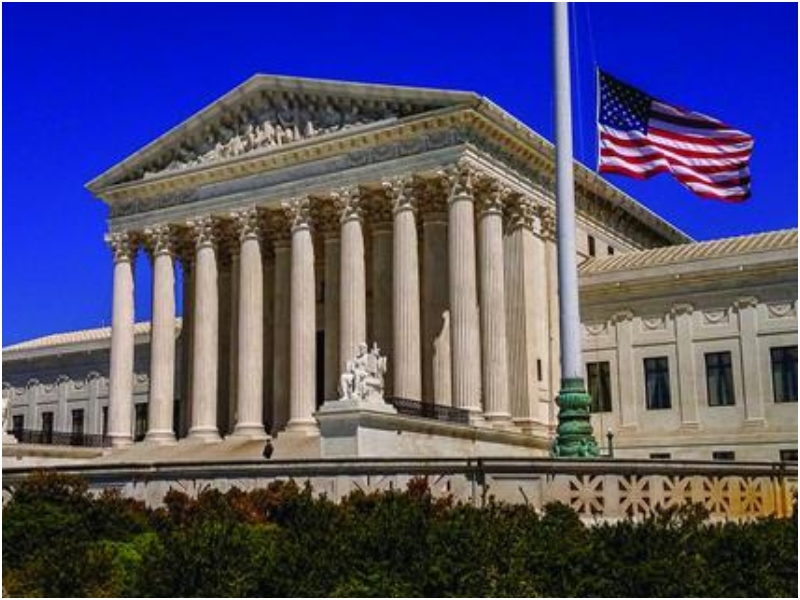
An emergency application tied to Georgia’s recent Supreme Court election remains active before the Supreme Court of the United States, raising broader constitutional questions about judicial campaign speech, due process and the power of state disciplinary bodies to publicly disclose allegations against candidates before investigations are complete.
The legal dispute stems from a lawsuit filed by Georgia Supreme Court candidates Miracle Rankin and Jen Jordan against the Georgia Judicial Qualifications Commission, commonly known as the JQC.
According to attorney and legal commentator Danielle Bess, the candidates sought emergency intervention from the U.S. Supreme Court after the United States Court of Appeals for the Eleventh Circuit allowed the JQC to publicly release letters alleging potential judicial campaign rule violations shortly before the election.
“Can the JQC silence candidates the way they tried to do Miracle and Jen?” Bess asked in a video posted to Instagram. “Can they release these public letters when there has not been a complete investigation?”
The controversy began when Rankin and Jordan filed suit in federal court after receiving letters from the JQC alleging possible campaign misconduct. According to Bess, the candidates argued the allegations had not been fully investigated and that public disclosure immediately before the election could unfairly damage their campaigns.
A federal district judge initially granted a temporary restraining order blocking the JQC from releasing the letters publicly. However, the JQC appealed, and the Eleventh Circuit issued a stay that effectively lifted the restraining order and allowed the disclosures to proceed before Election Day.
Bess described the Eleventh Circuit as “one of the most conservative in the country” and argued the appellate ruling created significant First Amendment and Fourteenth Amendment concerns.
Following the appellate court’s decision, Rankin and Jordan filed an emergency application with the Supreme Court seeking to vacate the Eleventh Circuit’s stay.
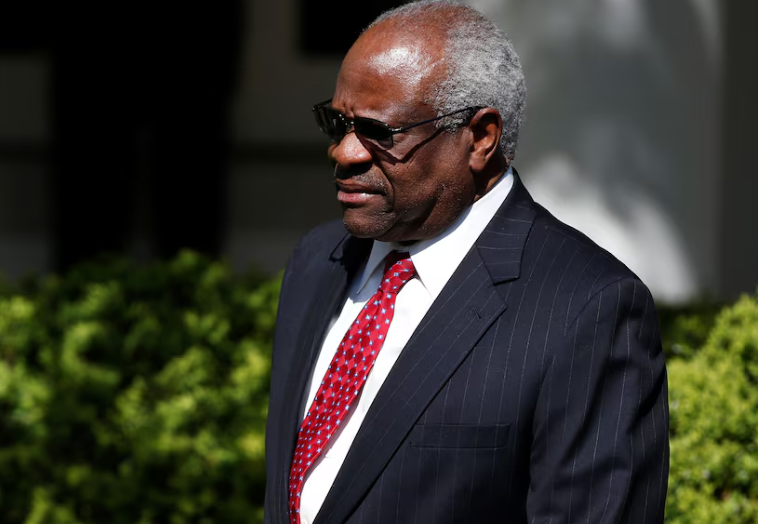
Although emergency applications to the nation’s highest court are rarely granted, the matter gained renewed attention after Clarence Thomas did not immediately deny the request. Instead, Thomas directed the JQC to submit a response by May 21.
Legal observers note that because the response deadline falls after the election, any potential ruling would likely not affect the completed race itself. However, the case could still carry significant implications for future judicial elections in Georgia and potentially beyond.
At the center of the dispute is whether state judicial oversight bodies may publicly disclose unproven allegations against candidates during active campaigns before investigations are concluded, and whether such disclosures infringe upon constitutional protections.
Bess argued the case has received relatively little public attention despite its potential long-term impact on judicial candidates and election procedures.
“The core question is still on the table,” she said. “Were the First Amendment and Fourteenth Amendment rights of Miracle and Jen violated by what the JQC did?”
As of now, the emergency application remains pending while the JQC prepares its response to the Supreme Court.