
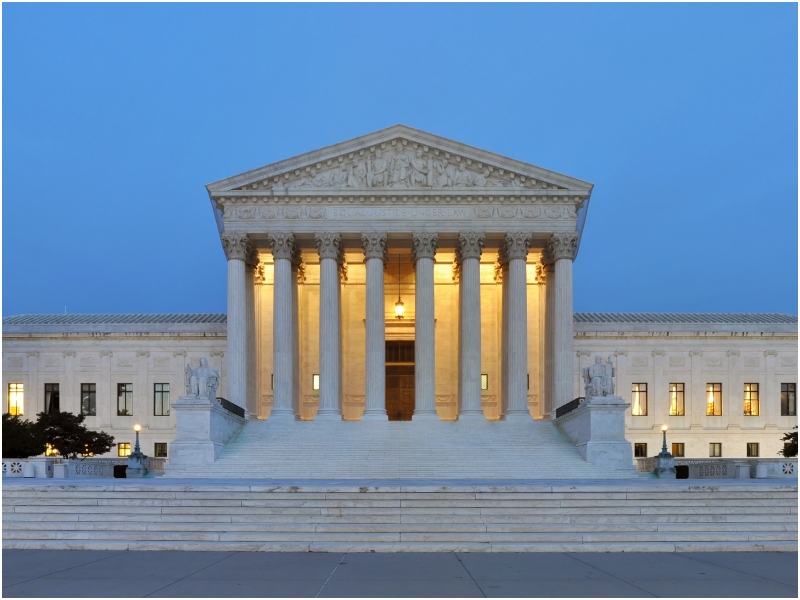
The U.S. Supreme Court is drawing intense criticism from legal experts and liberal advocates for its recent interventions in redistricting cases, which are reshaping congressional maps in key states just months before the 2026 midterm elections.
In rulings involving Louisiana and Alabama, the Court’s 6-3 conservative majority has allowed Republican-led states to redraw congressional districts in ways that eliminate majority-Black districts currently held by Democrats.
The decisions, issued less than three weeks before Louisiana’s scheduled primary, have forced both states to postpone their elections. Critics argue the Court is doing exactly what it has long warned lower courts against — interfering in election processes so close to voting day.
The controversy centers on the application (and perceived selective use) of the Purcell Principle, derived from the 2006 case Purcell v. Gonzalez, which generally discourages federal courts from changing election rules close to an election to avoid voter confusion. While the Supreme Court did not issue full opinions explaining its reasoning in the recent cases, Justice Ketanji Brown Jackson referenced the principle in her dissent. Legal observers note that the Court has applied the doctrine unevenly in recent years.
“This looks like a raw exercise of power,” said Kareem Crayton of the Brennan Center for Justice. “The Court is effectively playing an outsized role in determining the outcome of this midterm election.”
Election law experts have pointed out that while the Purcell principle is frequently invoked to block lower court interventions near Election Day, the Supreme Court has used its shadow docket and emergency powers to greenlight map changes that favor Republicans. In contrast, similar late changes sought by Democrats have often faced resistance.
The decisions come at a time when public confidence in the Supreme Court is already near historic lows, with recent polling showing widespread skepticism about the Court’s impartiality, especially following several rulings favorable to the Trump administration.