
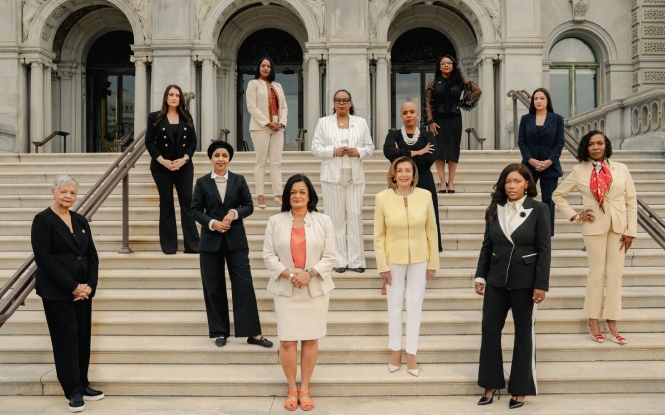
A growing coalition of Democratic lawmakers, civil rights advocates, and legal organizations is rallying behind LaMonica McIver as the New Jersey congresswoman fights federal charges stemming from a confrontation at an ICE detention facility, a case supporters say could reshape the legal boundaries of congressional oversight and executive power.
The case, now moving through the federal appeals process, has become a flashpoint in broader debates over legislative immunity, immigration enforcement, and what Democratic lawmakers describe as the criminalization of oversight activities under the Trump administration.
McIver was indicted after a May 2025 visit to the Delaney Hall ICE detention center in New Jersey, where she and other lawmakers were conducting what supporters characterize as constitutionally protected congressional oversight. Federal prosecutors charged her with assaulting, resisting, and interfering with immigration officers during the confrontation. If convicted, she faces up to 17 years in prison.
McIver has pleaded not guilty, arguing that her actions fell squarely within her duties as a member of Congress. Her legal team is invoking protections under the Constitution’s Speech or Debate Clause, which shields lawmakers from prosecution for legislative acts performed in their official capacity.
The case has drawn national attention not only because of the charges themselves, but because of the extensive legal and political support network forming around McIver. According to reporting highlighted by Marie Claire, Democratic women in Congress effectively created what some allies describe as a “protective pact” around the congresswoman after concluding that traditional Democratic leadership structures were unprepared for prosecutions targeting sitting lawmakers over oversight activities.
“They brought money, legal expertise, their platforms,” the report stated, describing support that stretched from Capitol Hill to federal courtrooms and private organizing efforts.
Several high-profile Democratic women, including Pramila Jayapal, Ayanna Pressley, Bonnie Watson Coleman, and Sara Jacobs, have publicly framed the prosecution as an attempt to intimidate lawmakers conducting oversight of federal immigration operations.
Advocacy organizations have also entered the legal fight. The American Civil Liberties Union, NAACP Legal Defense Fund, and former federal prosecutors have reportedly filed legal defenses or amicus support connected to the case.
Meanwhile, advocacy group #WinWithBlackWomenNJ called the indictment “a blatant attempt to criminalize Black women in leadership,” tying McIver’s prosecution to longstanding concerns over racial disparities in political targeting and law enforcement scrutiny.
Legal analysts say the appeals process could carry implications far beyond McIver’s individual case. At issue is whether members of Congress can face criminal prosecution for physical interactions or confrontations occurring during official oversight visits to detention centers, prisons, or federal facilities.
If courts side with prosecutors, constitutional scholars say lawmakers may become more hesitant to engage in aggressive oversight of executive agencies, particularly in politically contentious areas such as immigration enforcement. A ruling favoring McIver, however, could reinforce broad protections for congressional investigative authority under the Speech or Debate Clause.
The case also highlights the increasingly adversarial relationship between federal law enforcement agencies and elected officials overseeing them. Democrats argue the prosecution reflects a dangerous escalation in using criminal statutes against political opponents, while supporters of the charges contend lawmakers are not exempt from laws governing conduct toward federal officers.
The political stakes remain high as McIver simultaneously campaigns for reelection in New Jersey’s 10th Congressional District ahead of the 2026 midterms.
For many Democratic women in Congress, however, the case represents something larger than one prosecution. Allies have increasingly framed the indictment as a test case for whether congressional oversight itself can become grounds for criminal liability in polarized political environments.