
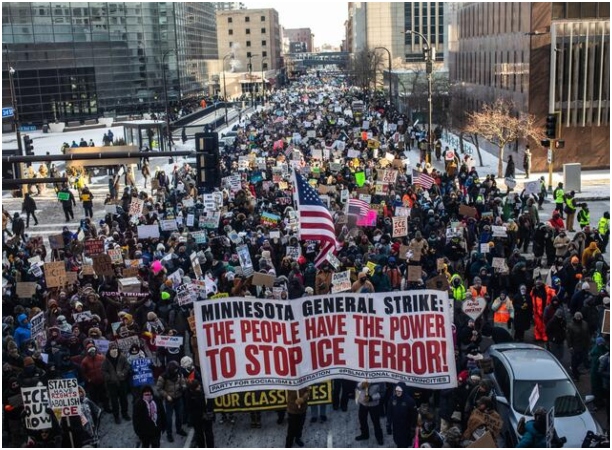
A series of detentions during an anti-war demonstration in New York City has sparked renewed legal scrutiny over policing of political protests and First Amendment protections.
Organizers said more than 90 demonstrators were taken into custody during a rally opposing U.S. military support for Israel in its ongoing conflict with Iran.
According to the advocacy group Jewish Voice for Peace, protesters were detained Monday outside the offices of U.S. Senate Minority Leader Chuck Schumer and Senator Kirsten Gillibrand. The New York Police Department confirmed “multiple arrests” but did not provide an official count.
Among those reportedly detained was Chelsea Manning, a high-profile figure known for her role in the disclosure of classified military documents in the WikiLeaks case.
Protesters gathered carrying signs reading “fund people, not bombs” and “No war, No ICE, Free Palestine,” while chanting slogans calling for an end to military action and civilian casualties. The demonstration focused on U.S. foreign policy and military support related to the Israel–Iran conflict, which has triggered sustained protests in New York and other major cities.
Authorities have not released details on the specific charges, if any, brought against those detained.
Legal Context: Protest Rights vs. Public Order Enforcement
Legal analysts note that the mass detention of protesters in politically charged demonstrations often raises constitutional questions under the First Amendment, particularly regarding freedom of speech and assembly.
While law enforcement agencies have broad authority to regulate demonstrations for public safety, courts have repeatedly held that arrests must be narrowly tailored and supported by probable cause. Large-scale detentions without individualized justification can prompt civil rights challenges.
Pattern of Escalating Demonstrations
The New York protest is part of a broader wave of anti-war demonstrations linked to U.S. and Israeli military activity in the Middle East. Earlier protests in the city have at times resulted in confrontations between demonstrators and police, including a February 19 rally outside a real estate firm accused by activists of involvement in Israeli property transactions.
The current escalation follows intensified regional military developments and increased U.S. military presence in the Middle East, which activists argue has contributed to ongoing civilian casualties and geopolitical instability.
Potential Legal Fallout
Civil liberties advocates are expected to review the circumstances of Monday’s detentions to determine whether arrests complied with constitutional standards governing protest policing.
If excessive or indiscriminate arrests are alleged, the city could face potential litigation under federal civil rights statutes, particularly 42 U.S.C. § 1983, which allows claims for deprivation of constitutional rights under color of law.
As protests over foreign policy continue to intensify in New York City, the legal balance between maintaining public order and protecting constitutional rights remains under close scrutiny.