
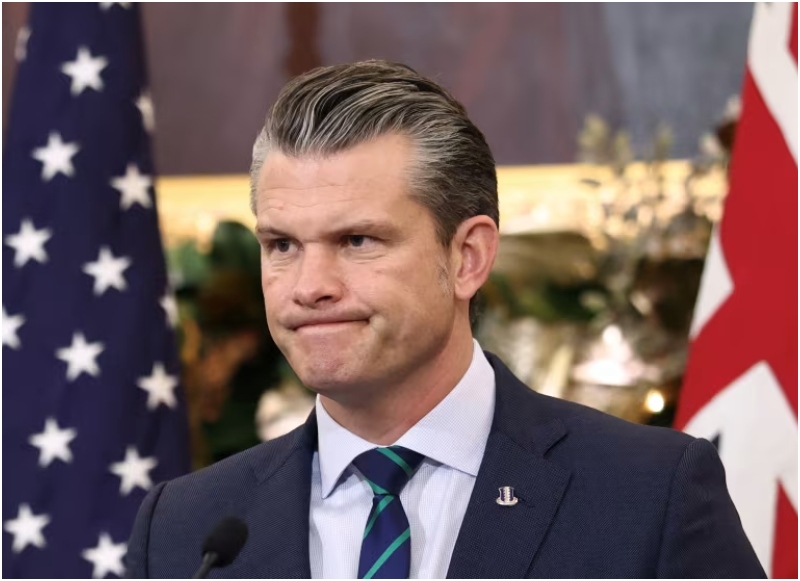
House Resolution 935, impeaching Secretary of Defense Peter B. Hegseth for “high crimes and misdemeanors,” has been introduced, alleging that the nation’s top defense official ordered the extrajudicial killing of shipwrecked survivors during a military campaign and recklessly disclosed classified war plans via a commercial messaging application.
The resolution sets forth two articles of impeachment against Secretary Hegseth, the principal civil officer in command of the Armed Forces, subordinate only to the President as Commander-in-Chief. The articles charge him with (1) murder and conspiracy to commit murder, and (2) reckless and unlawful mishandling of classified information.
Article I: Murder and Conspiracy to Murder
The first and most grave article alleges that Secretary Hegseth ordered lethal strikes against small boats in the Caribbean Sea and eastern Pacific Ocean beginning September 2, 2025, without any authorization from Congress for the use of military force.
According to the resolution, the campaign targeted vessels the administration has described as carrying “narco-terrorists,” though the House maintains that “no evidence” has been provided to support this characterization. The resolution further notes that the operation included no attempts to intercept or board the targeted vessels, nor any warnings or opportunity to comply — procedures typical of lawful drug interdiction operations.
The September 2 Strike
On September 2, 2025, the first such strike occurred in the Caribbean Sea off the coast of South America. The resolution observes that the vessel contained persons whose identities “remain unknown to the American public.” Experts cited in the resolution note that the large number of people in a small vessel would be “more likely indicative of migrants than of drug smuggling.”
Crucially, the resolution alleges that Secretary Hegseth gave a spoken directive described by someone with direct knowledge of the operation as: “The order was to kill everybody.” Multiple credible sources have confirmed words substantially to that effect.
The Second Strike
Following an initial strike that rendered the vessel inoperable and killed the majority of persons on board, at least two survivors were observed clinging to the wreckage. The resolution alleges that, in compliance with Secretary Hegseth’s order, the Armed Forces carried out a second strike with the “express, willful, and deliberate purpose of killing the shipwrecked survivors.”
The Department of Defense’s own Law of War Manual states: “It is forbidden to declare that no quarter will be given” and “combatants placed hors de combat must not be made the object of attack.”
The resolution describes the murder of shipwrecked survivors as “the most fundamental example, established by centuries of precedent, of an unambiguous crime on the high seas” — a practice “absolutely prohibited under all circumstances.”
Command Responsibility
The resolution invokes the doctrine of command responsibility, noting that commanding military officers and superior civil officers are subject to liability for crimes committed by subordinates in their chain of command, as well as for the reasonably foreseeable consequences of their orders.
“Secretary Hegseth has betrayed his trust as Secretary of Defense, violated the criminal laws and international obligations of the United States, exposed members of the Armed Forces to potential liability and harms, imperiled our most fundamental principles of civil-military relations, and tarnished the good standing and reputation of the United States in the community of nations,” the resolution states.
The article cites, among other statutes, 18 U.S.C. § 1111 (first-degree murder), 18 U.S.C. § 1117 (conspiracy to murder), and 18 U.S.C. § 2441 (war crimes, including grave breaches of common Article 3 of the Geneva Convention).
Article II: Reckless and Unlawful Mishandling of Classified Information
The second article arises from Secretary Hegseth’s participation in a Signal messaging group chat that inadvertently included a journalist.
From March 11 through March 15, 2025, numerous high-ranking officials — including the Vice President, Secretary of State, Secretary of the Treasury, Director of National Intelligence, CIA Director, National Security Advisor, and White House Chief of Staff — discussed planning and decision-making for upcoming airstrikes against Houthi forces in Yemen.
Signal, a commercial messaging application, is not an authorized platform for the lawful discussion and retention of classified information.
The Journalist Added to the Chat
Jeffrey Goldberg, editor-in-chief of The Atlantic and a journalist specializing in foreign affairs, was added to the Signal group chat. Goldberg observed highly sensitive classified information being discussed and received unsolicited messages detailing decision-making at the highest level of United States foreign and national security policy.
On March 15, 2025, Secretary Hegseth messaged the group with operational details regarding imminent airstrikes, including:
- Target information
- Weapons systems to be employed
- Attack sequencing
- Launch times of F-18 aircraft, MQ-9 drones, and Tomahawk missiles
- The time when aircraft would reach their targets
- The time when bombs would land
The strikes were subsequently carried out as planned later that day.
On March 24, 2025, Goldberg published an article in The Atlantic titled “The Trump Administration Accidentally Texted Me Its War Plans.” The magazine subsequently published the full transcripts of the Signal group chat, and the administration has confirmed their authenticity.
Criminal Exposure
The resolution notes that 18 U.S.C. § 1924 criminalizes the knowing removal of classified documents or materials to an unauthorized location by any officer or employee of the United States.
“Such reckless and unlawful handling of classified information would be, for any of Secretary Hegseth’s millions of civilian and military subordinates, a career-ending offense and likely result in criminal prosecution,” the resolution states.
By his actions, the resolution alleges, Secretary Hegseth “recklessly endangered members of the Armed Forces engaged in combat operations, undermined good order and morale, and set an example of unprofessionalism and incompetence at the highest levels of the national command authority.”
Relief Sought
The resolution seeks Secretary Hegseth’s impeachment and trial by the Senate, removal from office, and disqualification “to hold and enjoy any office of honor, trust, or profit under the United States.”
Case Summary Box:
| Resolution | H. Res. 935 |
|---|---|
| Subject | Secretary of Defense Peter B. Hegseth |
| Articles of Impeachment | 2 |
| Article I | Murder and conspiracy to murder (18 U.S.C. §§ 1111, 1117, 2441) |
| Article II | Reckless and unlawful mishandling of classified information (18 U.S.C. § 1924) |
| Key alleged conduct | Ordering second strike to kill shipwrecked survivors; sharing war plans via Signal with journalist present |
| Relief sought | Impeachment, trial, removal from office, disqualification from future office |