
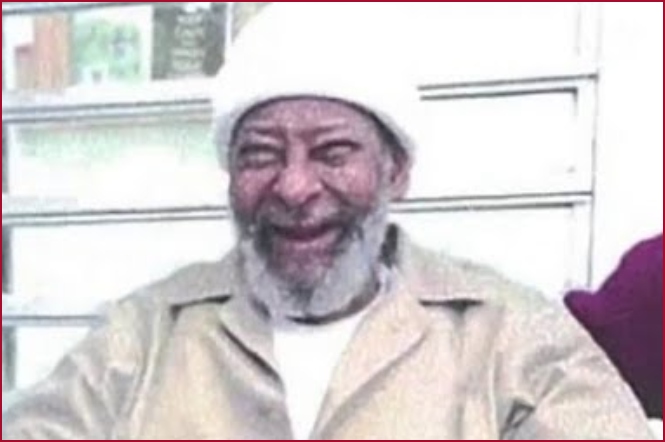
Alabama officials are preparing to execute death row inmate Joseph Burton this week, a case drawing national attention because Burton did not personally kill the victim in the crime that led to his conviction.
Burton, who has spent more than three decades on death row at William C. Holman Correctional Facility, was sentenced to death for his role in a 1991 robbery that ended in a fatal shooting inside an AutoZone store in Talladega, Alabama.
“I shouldn’t die for something I haven’t done,” Burton said in a recent phone interview from prison.
Crime That Led to the Death Sentence
According to court records, Burton was one of six men involved in the robbery of an AutoZone store in Talladega in 1991. Burton admitted he entered the store with a gun and took money from a safe before leaving the building to wait at a getaway car.
While Burton was outside, his accomplice Derrick DeBruce shot and killed a customer, 34-year-old Doug Battle.
State prosecutors acknowledged in court filings that Burton had already left the store when the shooting occurred.
“DeBruce hit Battle, knocking him to the floor, then fatally shot him in the back,” Alabama Attorney General Steve Marshall wrote in a filing responding to Burton’s request for a stay of execution.
Burton maintains he had no knowledge that a killing would occur.
“I didn’t know a murder was going to happen,” he said. “I would have stopped that.”
The Felony Murder Rule
Burton’s death sentence was made possible under the legal doctrine known as the felony murder rule.
Under this rule, anyone participating in certain felonies—such as robbery or burglary—can be held legally responsible for a death that occurs during the crime, even if they did not commit the killing themselves.
“Felony murder allows for everybody involved in the underlying offense to be treated by the legal system as if they committed an intentional murder,” said Nazgol Ghandnoosh, research director at The Sentencing Project.
Legal experts note that similar laws exist in nearly every U.S. jurisdiction. According to the Felony Murder Reporting Project, more than 10,000 felony murder cases have been documented nationwide.
Different Outcomes for Co-Defendants
The man who fired the fatal shot, DeBruce, was initially sentenced to death as well. However, his punishment was later reduced to life in prison after a court ruled that his lawyer had provided ineffective representation during the penalty phase of his trial.
For years, Burton and DeBruce were held on death row at the same prison before DeBruce’s sentence was changed. DeBruce later died in custody in 2020.
Burton said he ultimately forgave the man responsible for the killing.
“He got me with my life for something stupid that he did,” Burton said. “But I forgave him.”
Growing Calls for Clemency
Burton’s case has drawn unusual support from people connected to the original trial—including members of the jury and the victim’s family.
Tori Battle, who was nine years old when her father was killed, recently urged Alabama officials to spare Burton’s life in an opinion piece.
“Mr. Burton remains on death row not because moral clarity demands it, but because procedural rules have blocked courts from correcting past mistakes,” she wrote.
Six jurors who originally voted to impose the death penalty have also submitted affidavits asking Alabama Gov. Kay Ivey to grant clemency.
“The death sentence is too harsh for someone that did not pull the trigger,” former juror Priscilla Townsend said.
“I don’t see him as a bad guy anymore,” Townsend added. “He made poor choices. I don’t feel he should be sentenced to death for a poor choice.”
Planned Execution Method
Unless Governor Ivey grants clemency or the U.S. Supreme Court intervenes with a last-minute stay, Burton is scheduled to be executed using nitrogen gas.
Alabama became the first state to carry out an execution using nitrogen hypoxia in 2024 when it executed Kenneth Eugene Smith.
Witnesses have reported that the process can take between 15 and 40 minutes.
In filings to the Supreme Court, the state has argued Burton’s execution is justified.
“His death sentence is long overdue,” Attorney General Marshall wrote.
Broader Debate Over Felony Murder
Burton’s case highlights the broader national debate over felony murder laws, which exist in 48 states and Washington, D.C.
Critics argue the rule can lead to severe penalties for individuals who did not intend to kill anyone. Advocates for reform point to cases across the country in which defendants received life sentences—or even death sentences—without committing the fatal act themselves.
One example often cited by reform advocates is the case of Ryan Holle, who received a life sentence in Florida after lending his car to men who later committed a burglary that ended in murder. His sentence was later commuted in 2018 by then-Gov. Rick Scott, and Holle was released in 2024.
Burton’s Final Hope
For now, Burton says he continues to hope for mercy.
“I’ll never lose hope, even when I’m sitting in the chair with the gas mask strapped on my head,” he said. “I want people that listen to me to know that I didn’t kill nobody. These are my last words.”