
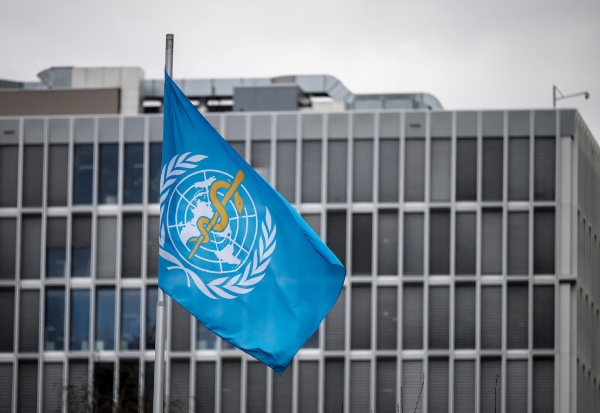
The United States has formally completed its withdrawal from the World Health Organization (WHO), marking a significant shift in global health governance and international legal relations.
The decision, announced jointly by the U.S. Department of Health and Human Services (HHS) and the U.S. Department of State, concludes a year-long withdrawal process initiated by President Donald Trump in January 2025.
In a joint statement, Health and Human Services Secretary Robert F. Kennedy Jr. and Secretary of State Marco Rubio said the move was driven by what the U.S. government described as WHO’s mishandling of the COVID-19 pandemic, its failure to implement critical institutional reforms, and its inability to demonstrate independence from political influence by member states.
According to U.S. officials, the withdrawal process included a complete suspension of U.S. funding to the WHO, the removal of all American personnel from the organization, and the transition of U.S. global health activities from multilateral WHO frameworks to direct bilateral and multistakeholder engagements. Following the exit, U.S. coordination with the WHO will be limited strictly to technical matters necessary to finalize the withdrawal.
Legal and Institutional Criticisms
The U.S. government cited several governance concerns underpinning its decision. Central among them was the WHO’s delayed declaration of a global public health emergency and pandemic during the early stages of COVID-19, a delay officials argue cost the international community critical response time as the virus spread globally.
U.S. authorities further accused WHO leadership of uncritically endorsing China’s early pandemic response despite evidence of underreporting, information suppression, and delays in confirming human-to-human transmission. Additional criticisms included the organization’s early downplaying of asymptomatic transmission risks and its failure to promptly acknowledge airborne transmission pathways.
From a legal accountability standpoint, U.S. officials expressed concern that post-pandemic reviews failed to produce meaningful reforms addressing political interference, governance weaknesses, and coordination failures. These shortcomings, the statement said, undermined the organization’s credibility and eroded global trust in its independence.
The U.S. also objected to the WHO-led investigation into the origins of COVID-19, which rejected the possibility of laboratory involvement despite China’s refusal to release genetic data from early cases or provide full transparency regarding laboratory activities and biosafety conditions in Wuhan.
Shift in Global Health Strategy
Despite the withdrawal, U.S. officials emphasized that the country will continue to play a leading role in global health through alternative legal and diplomatic channels. Future U.S. engagement will prioritize direct partnerships with national governments, private sector entities, non-governmental organizations, and faith-based institutions.
The administration stated that U.S.-led initiatives will focus on emergency preparedness, biosecurity coordination, and health innovation, aligning global health cooperation with national security and public health protection objectives.
Legal analysts note that the U.S. exit from the WHO raises broader questions about international institutional accountability, treaty withdrawal mechanisms, and the balance between multilateral cooperation and sovereign decision-making in global health governance.