
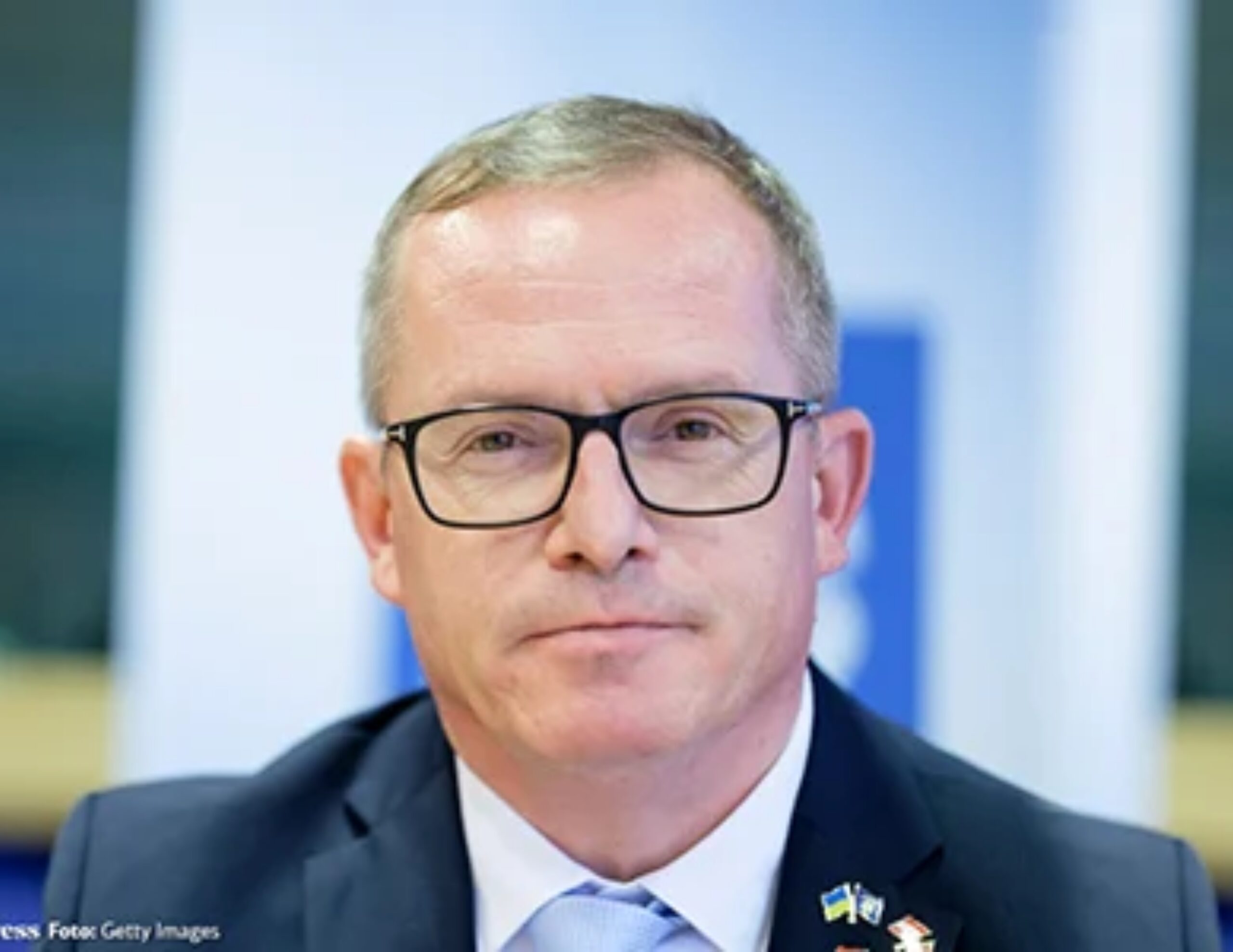
A senior NATO-affiliated official has issued an unusually blunt warning to the United States, escalating legal and diplomatic tensions surrounding President Donald Trump’s renewed interest in acquiring Greenland.
Gunther Fehlinger, chairman of Austria’s NATO enlargement committee, said that any U.S. attempt to annex Greenland would trigger the confiscation of all American military bases across Europe and force a full withdrawal of U.S. forces from the continent. His remarks were delivered in a video posted to social media and widely circulated on X and Reddit earlier this week.
“If you take it, we take every single base of the Americans from Aviano to Ramstein, from Romania to all the other military bases,” Fehlinger said. “They will be confiscated, and you will lose the entire position of American power since World War II.”
Although Fehlinger does not speak on behalf of NATO as an institution, his comments underscore growing unease in Europe over statements from the Trump administration suggesting that military force could be used to secure Greenland, a semi-autonomous territory of Denmark.
Legal and Alliance Implications
Under international law, the unilateral annexation of territory belonging to another sovereign state would violate the United Nations Charter and fundamental principles of territorial integrity. Any such move by the United States would place NATO—founded on collective defense and shared democratic norms—under unprecedented strain.
Fehlinger warned that Europe could respond independently of Washington, arguing that U.S. access to European bases is essential for global power projection.
“You need these spaces for global power projection,” he said. “Without them, you won’t have it.”
Legal analysts note that while individual European states host U.S. bases under bilateral agreements, coordinated termination or suspension of those agreements would be legally complex but not impossible in the event of a severe breach of international norms.
Trump Administration Signals Firm Stance
The comments follow a White House statement reaffirming that President Trump views Greenland as a strategic national security priority, particularly in the Arctic, where competition with Russia and China has intensified.
“President Trump has made it well known that acquiring Greenland is a national security priority of the United States,” White House Press Secretary Karoline Leavitt said. “The president and his team are discussing a range of options, and utilizing the U.S. military is always an option at the commander-in-chief’s disposal.”
Stephen Miller, the White House Deputy Chief of Staff for Policy, later sought to downplay the likelihood of armed conflict, telling reporters that “nobody is going to fight the United States militarily over the future of Greenland.” He also suggested that military action would not be necessary due to Greenland’s small population.
Europe Moves to De-escalate
European leaders have reacted with alarm to the rhetoric, warning that any forced acquisition of Greenland could fracture the NATO alliance itself. French Foreign Minister Jean-Noël Barrot said U.S. Secretary of State Marco Rubio had privately ruled out an invasion.
“I was on the phone with Secretary Rubio, who confirmed that this was not the approach being taken,” Barrot told France Inter Radio, emphasizing that Europe wants to address the issue collectively.
Denmark, which retains sovereignty over Greenland, has also called for urgent diplomatic talks. Danish Foreign Minister Lars Løkke Rasmussen and Greenland’s Foreign Minister Vivian Motzfeldt have requested an immediate meeting with Rubio to cool tensions.
“The shouting match must be replaced by a more sensible dialogue—now,” Rasmussen wrote on social media.
A Test for Transatlantic Law and Order
While no formal policy change has been announced, the dispute has already exposed legal fault lines in the transatlantic alliance. Any move toward annexation—military or otherwise—would raise constitutional, treaty, and international law questions that could reverberate through NATO, the United Nations, and U.S.–European relations for decades.
For now, European officials appear focused on preventing escalation. But Fehlinger’s warning highlights a growing willingness among some European figures to openly challenge U.S. power should Washington cross a legal and diplomatic red line.