
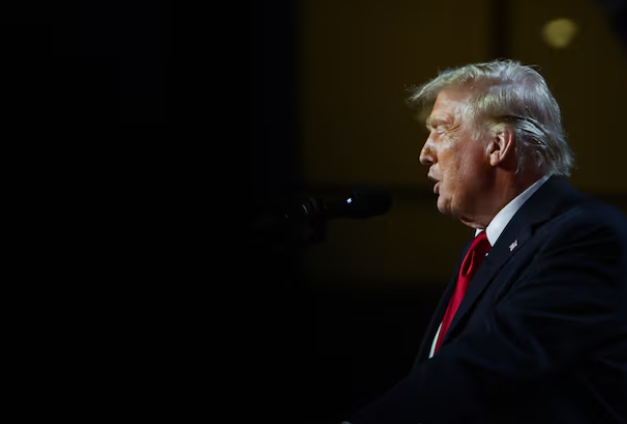
When President Donald Trump outlined what he calls a “reverse migration plan” on Truth Social, the reaction among immigration attorneys was immediate.
Attorney LaToya McBean-Pompy, a widely followed immigration lawyer, broke down the proposal in a video that has since gained traction online, calling the plan “lofty,” “broad,” and potentially “sweeping” in its reach.
Her analysis sheds light on a blueprint that, if implemented, would represent one of the most far-reaching immigration overhauls in modern American history.
A ‘Permanent Pause’ on Immigration From Third World Nations
Trump’s first pillar—a permanent pause on migration from “all third world countries”—signals a dramatic shift from decades of U.S. immigration norms. McBean-Pompy questioned the terminology itself:
“If it’s permanent, how could it be a pause? And we don’t even know which countries he’s referring to.”
She warned that based on previous patterns, African nations may be the first to face expanded travel bans, with some Latin American countries potentially included. Such a move could reshape the country’s demographic future and block entire regions from sending new migrants for years, or indefinitely.
Rolling Back Biden-Era Immigration Approvals
Trump’s message also laid out intentions to rescind immigrant admissions made under President Biden. According to McBean-Pompy, many of these reversals are already underway:
- Parole programs rolled back
- “Catch and release” policies canceled
- Temporary Protected Status (TPS) designations curtailed or ended
The objective, she suggests, is clear: unwind as much of the previous administration’s immigration framework as possible.
A Broad New Deportation Mandate
Perhaps the most sweeping—and controversial—portion of the plan is Trump’s call to remove anyone he deems:
- Not a “net asset” to the United States
- Incapable of “loving our country”
- A public charge
- A security risk
- Non-compliant with “Western civilization”
Even for seasoned immigration lawyers, such language is a red flag.
“We have no idea who could be impacted by this,” McBean-Pompy stressed.
The resurrection of the public charge rule would dramatically expand the government’s ability to deny green cards—even if a U.S. citizen relative received food stamps or another form of public assistance.
Green Card Holders Could Lose Benefits—and Citizenship May Not Be Safe
Trump’s post explicitly referenced all non-citizens, a category that includes green card holders. Under the proposal, they could be barred from federal benefits and subsidies—an unprecedented shift in policy.
Even more striking is a provision to strip citizenship from naturalized Americans accused of “undermining domestic tranquility.”
Denaturalization has historically been rare and reserved for cases like fraud or national security breaches. A broader interpretation could put millions of naturalized citizens on edge.
The Core Pillar: Reverse Migration
Trump’s final point centered on “scaling back” the existing immigrant population—what he calls reverse migration. That includes targeting individuals admitted under what he describes as “unauthorized auto pen approvals,” a term McBean-Pompy said remains unclear.
The overarching aim, as framed by Trump: reduce what he labels “illegal and disruptive populations” to “fully cure the problem.”

The Bigger Picture
While immigration has long been a centerpiece of Trump’s political identity, this outline goes further than his first-term policies—expanding bans, intensifying deportations, and applying new scrutiny even to lawful permanent residents and naturalized citizens.
For millions of immigrant families in the United States, the uncertainty is palpable. For immigration experts, the unanswered questions are countless. And for the political landscape heading into 2025, the implications are massive.
What’s clear is this: if enacted, Trump’s “reverse migration plan” would push America into untested legal and humanitarian territory—reshaping not just who gets to enter the United States, but who gets to stay.

