
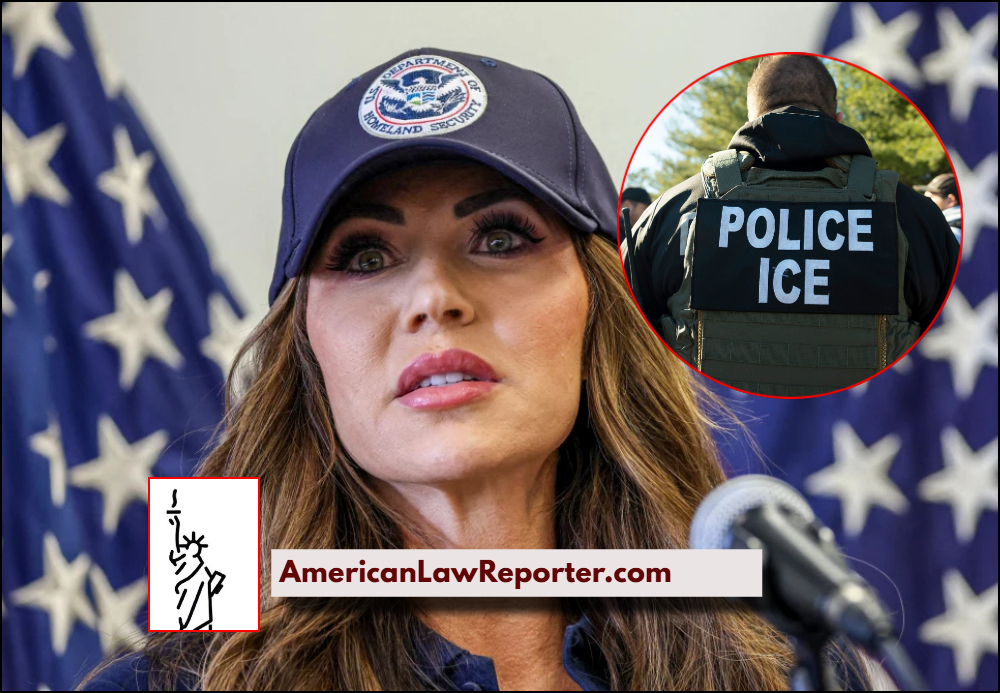
Homeland Security Secretary Kristi Noem’s decision to disregard a federal judge’s order blocking the deportation of alleged Venezuelan gang members is igniting a fierce legal debate in Washington — one that could shape the accountability landscape long after President Donald Trump leaves office.
According to a recent Justice Department filing, Noem personally authorized the continuation of deportation flights last March, even after being notified that a federal judge had ordered the planes turned around.
The detainees were ultimately transferred to El Salvador’s notorious CECOT detention facility, despite the court’s explicit directive to halt the removals under the Alien Enemies Act, a rarely invoked wartime statute.
Former Congressman and television host Charles Joseph Scarborough, speaking on Morning Joe, warned that the consequences for Noem — and the lawyers who reportedly advised her — could be severe if future administrations decide to pursue accountability. Scarborough noted that officials in Trump’s first term who defied legal boundaries “ended up being disbarred” or sanctioned, citing former Trump attorney Jenna Ellis as a recent example.
“This doesn’t end well,” Scarborough said, arguing that Noem’s refusal involved a direct order from Judge James Boasberg, widely regarded as one of the most respected conservative jurists in Washington. Attempting to portray Boasberg as ideologically motivated, he said, “is not going to work… not with conservatives, and not with the Supreme Court.”
If the allegations hold, legal experts say future consequences could include professional sanctions for lawyers involved, potential civil liability for violating court orders, and even criminal exposure under statutes governing obstruction or contempt of court.
The severity would depend on the next Justice Department’s approach to revisiting decisions made under Trump — a politically volatile but increasingly relevant question as the administration faces mounting legal scrutiny.
Noem, who has leaned heavily into a law-and-order image, is now at the center of a contradiction: a top official responsible for enforcing U.S. law allegedly choosing to ignore it.
Already, according a report by ABC, a federal judge has ordered declarations from all government officials involved in the decision to send more the Venezuelan men to El Salvador in a bid to determine whether Noem or anyone else should be referred for potential contempt prosecution.
Civil liberties groups argue the episode underscores a widening pattern of executive branch defiance during Trump’s second term, particularly on immigration and national-security matters.
For now, the Justice Department filing marks the clearest acknowledgment to date of internal resistance to judicial oversight. What remains unanswered is whether a future administration — or Congress — will decide that the rule of law demands a retroactive reckoning.