
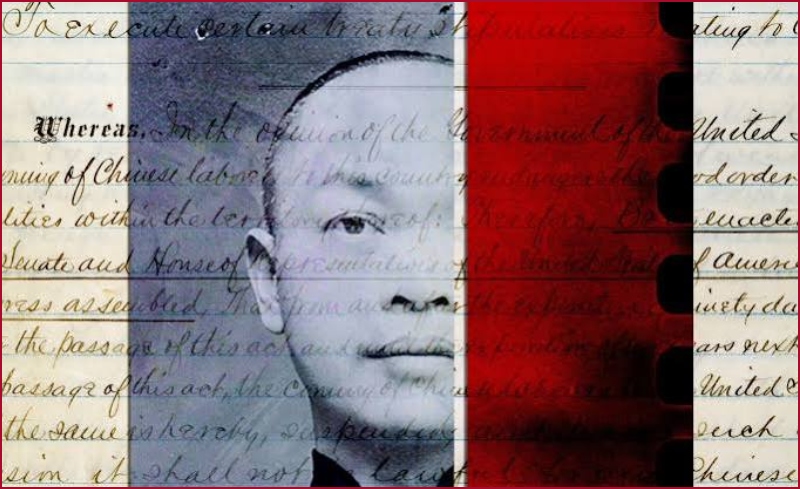
On August 13, 1894, the United States Senate ratified a treaty with China that would cement one of the most discriminatory chapters in American immigration law. The Chinese Exclusion Treaty—also known as the Gresham-Yang Treaty—extended and deepened the exclusion of Chinese laborers from the United States for another decade.
Today marks the 132nd anniversary of that ratification. Here is what every legal observer should know about this landmark agreement.
1. The Treaty Was the Culmination of Decades of Exclusion
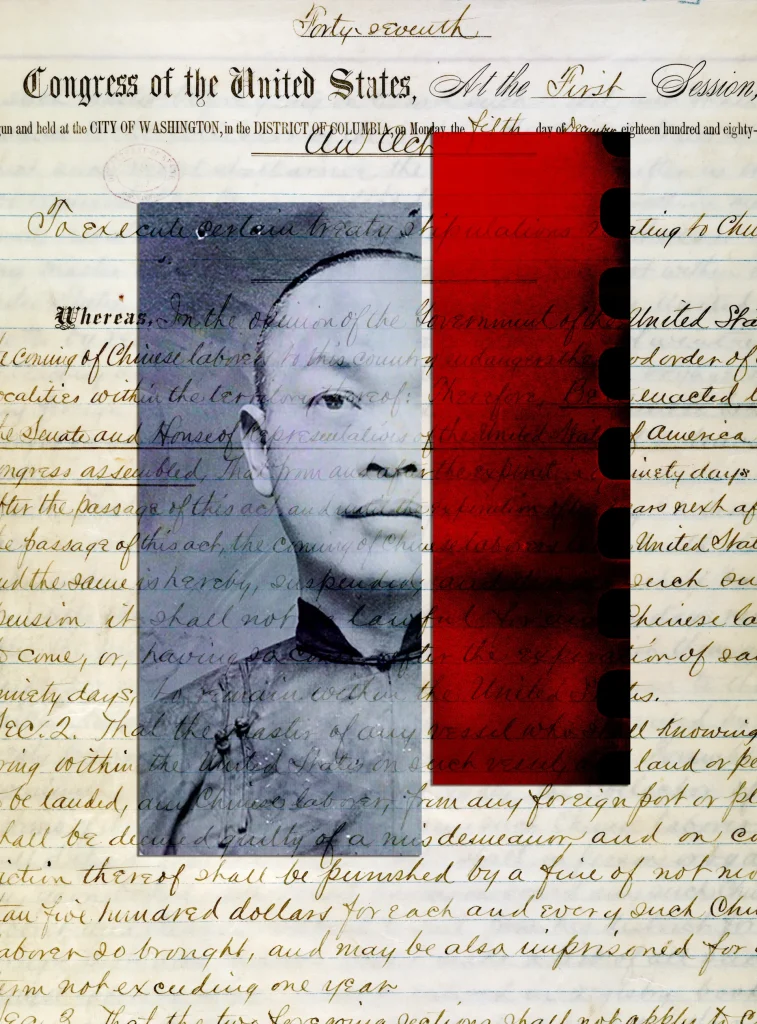
The 1894 treaty did not emerge from a vacuum. It was the latest in a series of agreements and statutes designed to restrict Chinese immigration:
- 1868: The Burlingame Treaty established formal friendly relations between the United States and China and recognized the right of free migration between the two countries.
- 1880: The Angell Treaty permitted the United States to suspend, but not prohibit, the immigration of Chinese laborers.
- 1882: The Chinese Exclusion Act became the first significant federal law restricting immigration into the United States, imposing an absolute 10-year ban on Chinese laborers immigrating to the country. It also barred Chinese immigrants from becoming U.S. citizens.
- 1888: The Scott Act went further, preventing Chinese laborers who had left the United States from returning.
By 1894, the exclusionist momentum was unstoppable. China, facing mounting pressure, agreed to a new treaty that would “absolutely prohibit” the immigration of Chinese laborers for another ten years.
2. The Treaty Made Exclusion ‘Absolute’
Article I of the treaty was stark and unambiguous:
“The High Contracting Parties agree that for a period of ten years, beginning with the date of the exchange of the ratifications of this Convention, the coming, except under the conditions hereinafter specified, of Chinese laborers to the United States shall be absolutely prohibited.”
This was stronger language than any previous agreement. The 1880 Angell Treaty had allowed the U.S. to suspend immigration; the 1894 treaty made prohibition absolute.
The treaty was signed on March 17, 1894, by U.S. Secretary of State Walter Q. Gresham and Chinese Envoy Yang Yü. Ratifications were exchanged on December 7, 1894, and the treaty was proclaimed on December 8, 1894.
3. Exemptions Were Narrowly Drawn
While the treaty prohibited the entry of Chinese laborers, it preserved the right of certain exempt classes to enter the United States.
Article III provided that the treaty would not affect the right of:
- Officials
- Teachers
- Students
- Merchants
- Travelers “for curiosity or pleasure, but not laborers”
These exemptions, however, were strictly construed. Courts consistently held that the burden of proving exempt status rested on the Chinese person seeking entry.
4. The Treaty Permitted Some Laborers to Return
Under Article II, a Chinese laborer who had a lawful wife, child, or parent in the United States, or property worth $1,000, or debts of like amount, could return—provided he registered with the collector of customs before leaving.
The right of return had to be exercised within one year, with a possible one-year extension for sickness or disability. The treaty also required a certificate from the collector of customs as proof of the right to return.
These provisions were narrow and burdensome, making return difficult for most laborers.
5. The Treaty Had Significant Legal Consequences
The 1894 treaty became the legal foundation for the exclusion regime. According to one congressional analysis, it was “the only treaty that absolutely prohibited the coming of the Chinese to this country”.
The treaty also interacted with domestic legislation. For example, the Geary Act of 1892—which required all Chinese residents to register and obtain certificates of residence—was effectively validated by China’s consent in the 1894 treaty.
Courts interpreted the treaty strictly. As one legal commentator noted, “Since the treaty of 1894 no case will be found wherein a court has held that any Chinese person claiming to be of the exempt class is such in fact”.
6. China Denounced the Treaty in 1904
The treaty had a built-in termination mechanism. Under its terms, either party could denounce it six months before its expiration on December 7, 1904.
On March 23, 1904, the Chinese government formally notified the United States that it did not desire the continuance of the treaty. The New York Times reported: “The Chinese Government has notified the United States that it does not desire the continuance of the exclusion treaty of 1894 beyond the time fixed”.
Had China not denounced the treaty, it would have continued in force for another ten years.
7. The Treaty’s Denunciation Created Legal Uncertainty
China’s denunciation raised immediate legal questions. Some attorneys argued that the denouncement of the treaty “opens the United States to unrestricted Chinese immigration” because the exclusion laws were treaty-based.
Others disagreed, contending that domestic legislation—including the Geary Act and subsequent statutes—continued to prohibit Chinese immigration even without the treaty.
Congress ultimately passed new legislation in 1904 to maintain the exclusion regime.
8. The Treaty Was Part of a Broader Pattern of Discrimination
The 1894 treaty must be understood in its historical context. From 1882 to 1943, the United States severely curtailed immigration from China. The Chinese Exclusion Act, as amended and extended, remained in effect for over sixty years.
The treaty was part of a broader pattern of discrimination against Chinese immigrants, who faced violence, legal restrictions, and social ostracism in many parts of the country.
9. The Treaty’s Legacy Continues to Resonate
The 1894 treaty is a reminder of how law can be weaponized to exclude and marginalize. It also illustrates the complex interplay between treaties and domestic legislation in American immigration law.
In 1943, Congress repealed the Chinese Exclusion Act, partly as a gesture of goodwill toward China, a wartime ally against Japan. But the legal architecture of exclusion had already shaped American immigration policy for generations.
10. Key Takeaways for Legal Observers
- Treaties can override constitutional protections: The treaty system effectively sanctioned race-based exclusion for decades.
- Executive agreements matter: The treaty was negotiated by the executive branch and ratified by the Senate, demonstrating the treaty power in action.
- Treaties and statutes interact: The 1894 treaty both validated and was validated by domestic exclusion laws.
- International law can be used to legitimise discrimination: China’s formal consent to the treaty gave it an aura of legitimacy that domestic legislation alone might have lacked.
- Denunciation has legal consequences: China’s 1904 denunciation created significant legal uncertainty and prompted new legislation.