
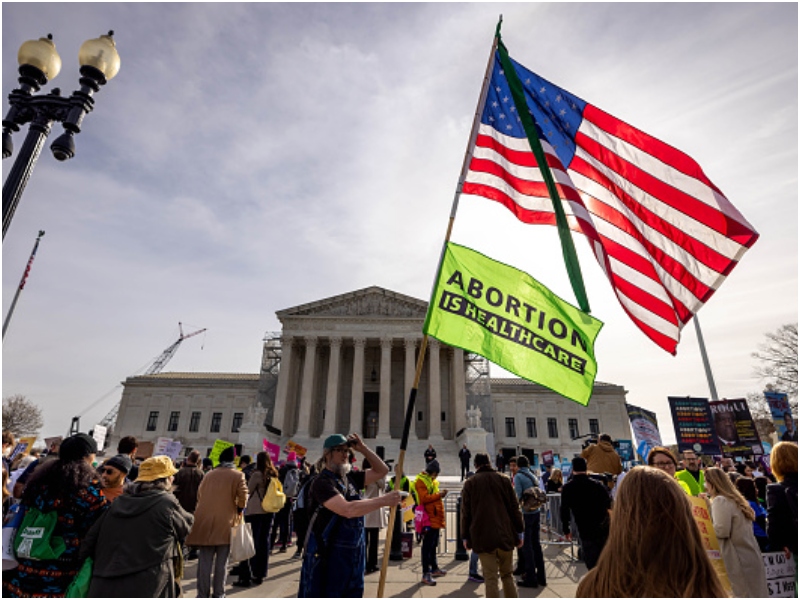
The U.S. Supreme Court has shaped the nation’s legal landscape through decisions that define the balance of power among branches of government, expand or clarify individual rights, and set enduring rules for criminal justice, equality, and free expression.
These ten cases stand out for their foundational impact on American law and everyday life. Each established principles that continue to influence courts, legislatures, law enforcement, and citizens decades later.
1. Marbury v. Madison (1803)
Chief Justice John Marshall’s opinion established the doctrine of judicial review—the power of federal courts to declare acts of Congress (and later other government actions) unconstitutional. The case arose when William Marbury sought a court order forcing delivery of his judicial commission. The Court held that a provision of the Judiciary Act of 1789 exceeded Congress’s constitutional authority. By asserting that “it is emphatically the province and duty of the judicial department to say what the law is,” the decision made the judiciary a co-equal branch and the ultimate interpreter of the Constitution.
2. McCulloch v. Maryland (1819)
Maryland attempted to tax the Second Bank of the United States. The Court ruled that Congress had implied powers under the Necessary and Proper Clause to charter the bank and that states could not tax federal instrumentalities. Chief Justice Marshall’s opinion affirmed federal supremacy and a broad reading of congressional authority, laying the groundwork for expansive national power in areas ranging from banking to later regulatory programs.
3. Gibbons v. Ogden (1824)
A dispute over steamboat licenses on interstate waters led the Court to interpret the Commerce Clause broadly. Congress’s power to regulate commerce “among the several States” includes navigation and activities affecting interstate trade. The decision struck down a New York monopoly and established federal preeminence in interstate commercial regulation, providing the constitutional foundation for later federal oversight of transportation, labor, civil rights, and economic activity.
4. Brown v. Board of Education (1954)
In a unanimous decision, the Court held that racial segregation in public schools violates the Equal Protection Clause of the Fourteenth Amendment, overturning the “separate but equal” doctrine of Plessy v. Ferguson (1896). The ruling declared that segregated educational facilities are inherently unequal. It catalyzed the civil rights movement, accelerated desegregation efforts, and reshaped constitutional analysis of racial classifications.
5. Mapp v. Ohio (1961)
Police searched Dollree Mapp’s home without a valid warrant and used the evidence against her. The Court applied the exclusionary rule—barring illegally obtained evidence—to the states through the Fourteenth Amendment. Previously limited to federal courts, the rule now requires state courts to exclude evidence from unreasonable searches and seizures. It fundamentally changed police procedures and criminal litigation nationwide.
6. Gideon v. Wainwright (1963)
Clarence Earl Gideon, charged with a felony in Florida, was denied a court-appointed lawyer because he could not afford one. The Court held that the Sixth Amendment right to counsel is a fundamental right applicable to the states via the Fourteenth Amendment. States must provide attorneys to indigent defendants in felony cases. The decision transformed the criminal justice system by ensuring legal representation as a baseline of fairness.
7. New York Times Co. v. Sullivan (1964)
An Alabama official sued The New York Times over an advertisement criticizing police actions during the civil rights movement that contained factual errors. The Court ruled that public officials must prove “actual malice”—knowledge of falsity or reckless disregard for the truth—to recover damages for defamation. The decision constitutionalized libel law, protected robust criticism of government, and became a cornerstone of press freedom.
8. Miranda v. Arizona (1966)
Ernesto Miranda confessed after police interrogation without being informed of his rights. The Court required that suspects in custody be warned of their right to remain silent and their right to an attorney before questioning. These “Miranda warnings” protect the Fifth Amendment privilege against self-incrimination and have become standard police procedure, influencing virtually every custodial interrogation in the United States.
9. Loving v. Virginia (1967)
Richard and Mildred Loving, an interracial couple, were convicted under Virginia’s anti-miscegenation law. In a unanimous opinion, the Court struck down such laws as violations of the Equal Protection and Due Process Clauses of the Fourteenth Amendment. The ruling invalidated remaining state bans on interracial marriage, affirmed marriage as a fundamental right, and advanced equal protection doctrine.
10. United States v. Nixon (1974)
President Richard Nixon claimed absolute executive privilege to withhold White House tapes sought in the Watergate investigation. The Court unanimously held that executive privilege is not absolute and must yield to the demonstrated need for evidence in a criminal proceeding. The decision reinforced that no person, including the president, is above the law and strengthened judicial checks on executive power.
These cases illustrate the Supreme Court’s dual role as guardian of constitutional structure and protector of individual rights. From establishing judicial review and federal power in the early republic to expanding criminal procedure safeguards, equality, and free expression in the 20th century, their principles continue to guide American law. Many remain actively cited, debated, and applied in contemporary disputes over government authority, privacy, speech, and equality.