
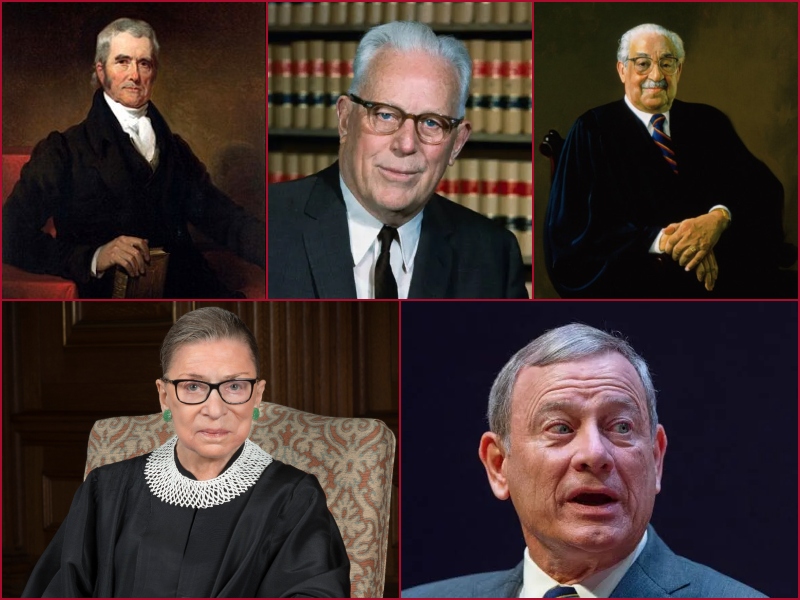
Throughout U.S. history, certain judges have left an indelible mark on the nation through landmark rulings that reshaped law, society, and rights. Here are five whose legacies continue to influence everyday American life:
1. John Marshall (Chief Justice, 1801–1835) — Marbury v. Madison (1803)
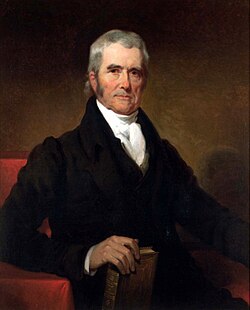
Often called the “Great Chief Justice,” Marshall established the principle of judicial review — the power of the Supreme Court to declare laws unconstitutional. In Marbury v. Madison, the Court asserted its authority to strike down acts of Congress, fundamentally strengthening the judiciary as a co-equal branch of government.
Legacy: This single decision laid the foundation for the modern Supreme Court’s role as the ultimate interpreter of the Constitution.
2. Earl Warren (Chief Justice, 1953–1969) — Brown v. Board of Education (1954)
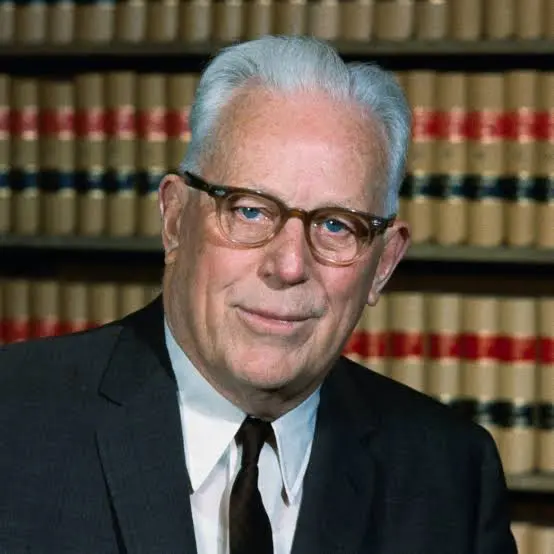
As Chief Justice, Warren led a unanimous Court in ruling that racial segregation in public schools was unconstitutional. The decision overturned the “separate but equal” doctrine from Plessy v. Ferguson and became a cornerstone of the Civil Rights Movement.
Legacy: Warren’s Court expanded civil liberties and due process rights, fundamentally transforming American society and advancing equality under the law.
3. Thurgood Marshall (Associate Justice, 1967–1991) — Key Civil Rights Advocacy (pre-Court) & Regents of the University of California v. Bakke (1978)
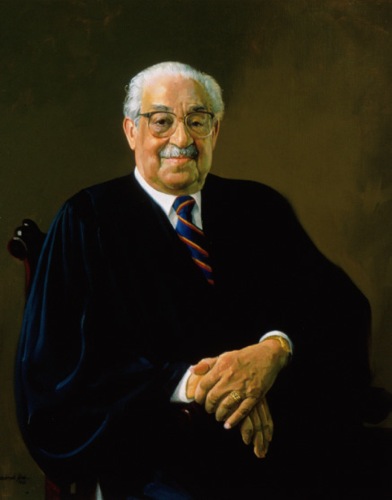
Before joining the Court, Marshall successfully argued Brown v. Board of Education as lead counsel for the NAACP. On the bench, he became a powerful voice for affirmative action and minority rights. In Bakke, he defended race-conscious admissions policies to address historical discrimination.
Legacy: Marshall remains the first African American Supreme Court Justice and a symbol of using the law to fight systemic injustice.
4. Ruth Bader Ginsburg (Associate Justice, 1993–2020) — United States v. Virginia (1996)
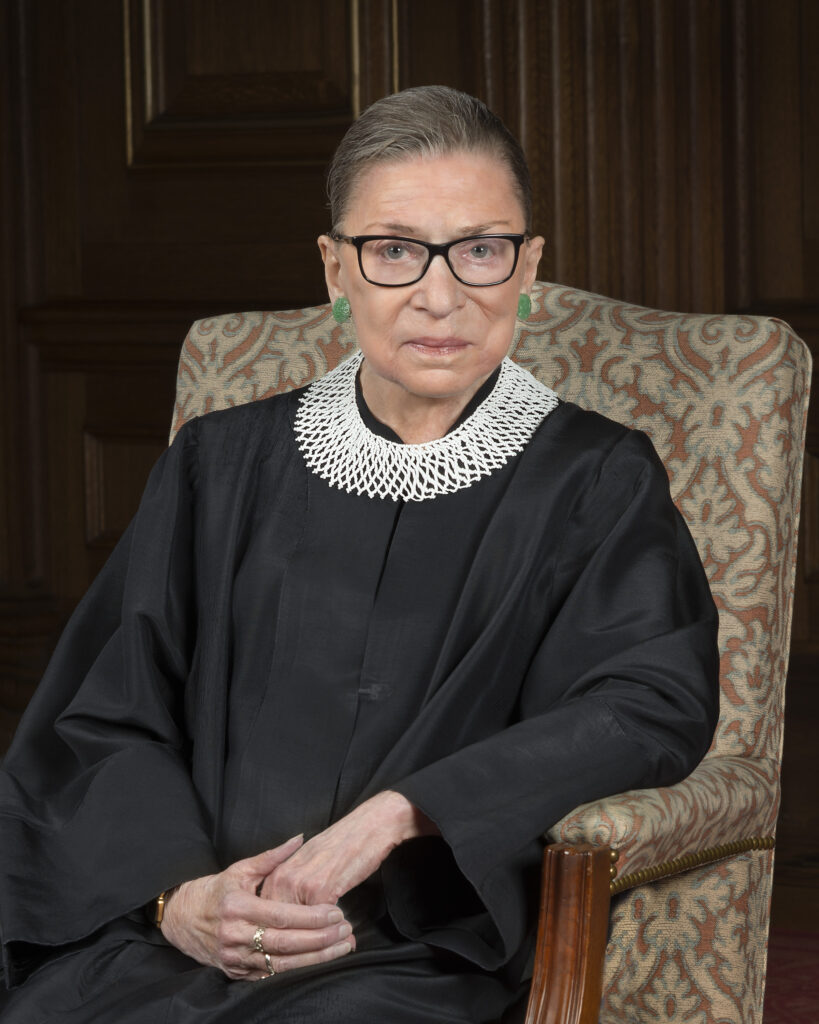
Ginsburg authored the landmark opinion striking down the Virginia Military Institute’s male-only admissions policy, establishing that gender-based classifications must meet heightened scrutiny. Her strategic litigation before joining the Court helped advance gender equality across multiple areas.
Legacy: RBG’s work transformed legal standards for sex discrimination and inspired generations of women in law and public service.
5. John Roberts (Chief Justice, 2005–present) — National Federation of Independent Business v. Sebelius (2012)

In a surprise move, Roberts upheld the individual mandate of the Affordable Care Act (Obamacare) as a valid exercise of Congress’s taxing power, preserving the law while limiting the Commerce Clause.
Legacy: Roberts has often acted as a institutionalist, preserving the Court’s legitimacy even as he steered it in a conservative direction on issues like voting rights and executive power.
These judges, across different eras, demonstrate how a single ruling — or a career of decisions — can profoundly shape American democracy, rights, and governance.