
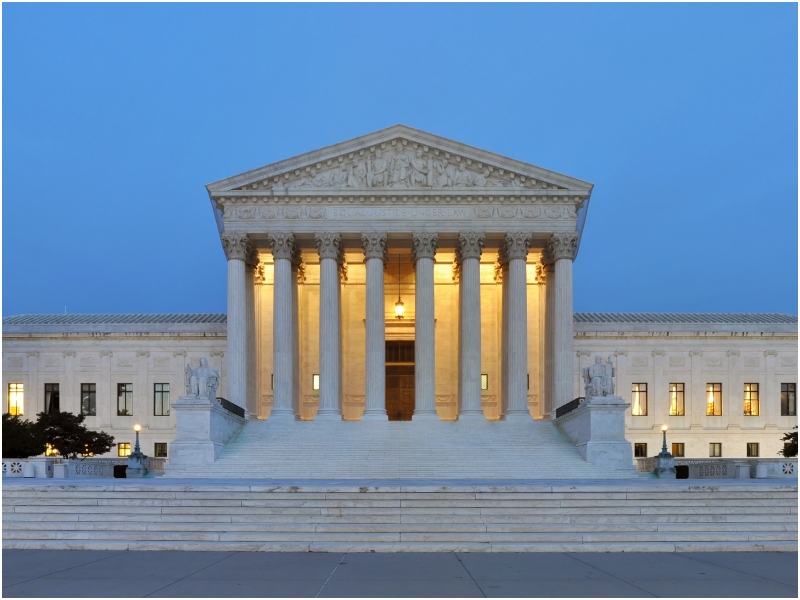
The US Supreme Court on Thursday temporarily preserved nationwide telehealth and mail access to the abortion medication mifepristone, blocking a lower court ruling that threatened to reinstate strict in-person dispensing requirements while a major legal fight continues.
The unsigned order in Danco Laboratories, LLC v. Louisiana and the consolidated case GenBioPro, Inc. v. Louisiana keeps current FDA rules in place as appeals move forward through the Fifth Circuit Court of Appeals. The decision means patients across the United States can continue accessing mifepristone through telehealth appointments, mail delivery, and participating retail pharmacies for now.
The ruling marks another significant chapter in the post-Dobbs legal battle over abortion access, state authority, federal drug regulation, and the future of medication abortion nationwide.
Supreme Court Keeps Existing FDA Rules in Place
The dispute centers on the FDA’s 2023 changes to mifepristone regulations, known as the Risk Evaluation and Mitigation Strategy (REMS). Those revisions eliminated a longstanding requirement that patients obtain the medication during an in-person medical visit.
Louisiana sued the FDA in October 2025, arguing the agency unlawfully loosened safety restrictions and violated the Administrative Procedure Act. The state also argued mailing abortion medication violates the federal Comstock Act, an anti-obscenity law dating back to 1873.
Earlier this month, a three-judge panel of the Fifth Circuit sided with Louisiana and temporarily restored the in-person dispensing requirement nationwide while the case proceeds. Drug manufacturers Danco Laboratories and GenBioPro quickly appealed to the Supreme Court, warning the ruling would create immediate confusion and disrupt ongoing medical care.
Thursday’s Supreme Court stay blocks the Fifth Circuit ruling from taking effect until the appeals process is completed and any future Supreme Court review is resolved.
Sharp Dissents From Justices Alito and Thomas
Justices Clarence Thomas and Samuel Alito dissented from the order.
Alito criticized the court’s decision as “remarkable” and accused abortion-rights advocates and states with shield laws of undermining the Supreme Court’s 2022 ruling in Dobbs v. Jackson Women’s Health Organization, which overturned Roe v. Wade and returned abortion regulation authority to individual states.
He argued Louisiana’s abortion restrictions were being bypassed through telehealth providers and interstate mailing of abortion pills. Alito also questioned whether the drug manufacturers demonstrated sufficient irreparable harm to justify emergency relief.
Thomas separately argued that the Comstock Act criminalizes mailing abortion medication and wrote that companies are not entitled to legal protection for profits tied to what he described as unlawful activity.
Mifepristone Remains at Center of National Legal and Political Debate
Mifepristone, approved by the FDA in 2000, is commonly used alongside misoprostol for medication abortions during early pregnancy. According to the FDA, serious adverse events occur in approximately 0.5 percent of cases, while mortality rates remain below 0.001 percent.
Major medical organizations, including the American College of Obstetricians and Gynecologists, continue to describe the medication as safe and effective.
However, anti-abortion organizations and Republican officials have increasingly challenged the FDA’s relaxation of dispensing restrictions. Health and Human Services Secretary Robert F. Kennedy Jr. and FDA Commissioner Marty Makary recently initiated a new internal review of mifepristone safety protocols after citing research from the conservative Ethics and Public Policy Center that claimed higher complication rates.
That report has faced criticism from reproductive-health researchers, misinformation experts, and major news organizations questioning its methodology and conclusions.
States, Congress and Advocacy Groups Weigh In
The case attracted extensive national attention and dozens of legal briefs from lawmakers, medical organizations, and advocacy groups.
Twenty-two states led by New York, 259 members of Congress, pharmaceutical industry groups, and former FDA commissioners urged the Supreme Court to preserve current access to the drug.
Meanwhile, 23 Republican-led states, anti-abortion organizations, and more than 100 Republican lawmakers supported Louisiana’s position.
Following Thursday’s ruling, reproductive-rights advocates celebrated the decision while warning that the broader legal fight remains unresolved.
Planned Parenthood said in a statement that while access remains unchanged “for now,” threats to abortion access continue nationwide.
Virtual abortion provider Hey Jane also praised the ruling, arguing courts should not override FDA medical determinations on drug safety and telehealth care.
Anti-abortion advocacy group Heartbeat International condemned the ruling, arguing abortion pills distributed through the mail place women at risk and undermine states’ authority to regulate abortion access.
Broader Implications for Federal Authority and Reproductive Rights
Legal analysts say the case could eventually become one of the most consequential reproductive-rights disputes since Dobbs, particularly because it tests the balance between federal FDA authority and state abortion bans.
The litigation also raises major questions surrounding interstate medical care, telehealth regulation, medication access, and the future use of the Comstock Act in abortion-related cases.
For now, however, medication abortion access through telehealth and mail delivery remains legally protected nationwide pending further court action.

