
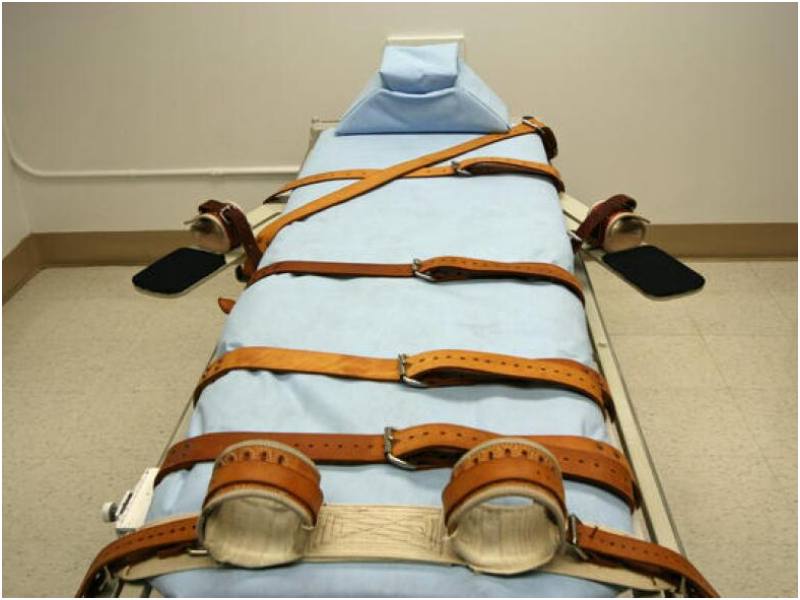
The U.S. Department of Justice (DOJ) has announced a sweeping policy shift to resume federal executions, marking a significant reversal of the 2021 moratorium and signaling a broader expansion of capital punishment at the federal level.
In a statement released last Friday, the DOJ confirmed it is actively seeking death sentences against 44 defendants and will reinstate execution protocols using lethal injection. The department also indicated it will authorize alternative methods—including firing squads, electrocution, and nitrogen asphyxiation—if the primary drug used in lethal injections is unavailable.
The decision follows the April 24 release of the DOJ’s Restoring and Strengthening the Federal Death Penalty report, which sharply criticizes the moratorium imposed by former Attorney General Merrick Garland. Garland had halted federal executions in July 2021 over concerns that the government’s single-drug lethal injection protocol, using pentobarbital, could cause “unnecessary pain and suffering,” raising potential constitutional issues under the Eighth Amendment.
The new report rejects those concerns, asserting that the use of pentobarbital meets constitutional standards established by the U.S. Supreme Court in Bucklew v. Precythe (2019). DOJ officials argue that Garland’s moratorium relied on an “arbitrary standard” inconsistent with prevailing legal interpretations of cruel and unusual punishment.
Acting Attorney General Todd Blanche framed the policy shift as a return to strict law enforcement priorities.
“The prior administration failed in its duty to protect the American people by refusing to pursue and carry out the ultimate punishment against the most dangerous criminals,” Blanche said. “Under President Trump’s leadership, the Department of Justice is once again enforcing the law and standing with victims.”
The move comes after a dramatic reduction in the federal death row population. Former President Joe Biden commuted the sentences of 37 federal death row inmates, leaving only three prisoners facing execution prior to the DOJ’s latest announcement.
Beyond reinstating executions, the DOJ outlined additional structural and procedural changes. The Bureau of Prisons has been directed to expand or construct new facilities to accommodate an anticipated increase in death row inmates. The department is also considering regulatory changes to streamline federal habeas corpus review in capital cases—an area long criticized for its complexity and lengthy timelines.
Additionally, proposed rules would delay clemency petitions until after the completion of direct appeals and initial collateral review, a shift that could significantly alter the timing and availability of executive relief for death row inmates.
The DOJ’s willingness to adopt alternative execution methods reflects ongoing logistical challenges tied to lethal injection drugs. International restrictions, particularly from European Union countries that prohibit capital punishment, have limited the export of substances used in executions. Domestic pharmaceutical companies have similarly resisted supplying such drugs, prompting jurisdictions to explore other means.
While several U.S. states—including Idaho, Mississippi, Oklahoma, South Carolina, and Utah—authorize execution by firing squad, the federal government has never implemented such a protocol. The DOJ’s announcement raises the possibility of unprecedented federal use of these alternative methods.
The policy shift is expected to reignite legal and ethical debates surrounding capital punishment, particularly regarding the constitutionality of emerging execution techniques and the balance between federal authority and evolving standards of decency under the Eighth Amendment.
Legal experts anticipate immediate challenges in federal courts, especially concerning the expanded use of non-lethal injection methods and proposed limitations on post-conviction review.