
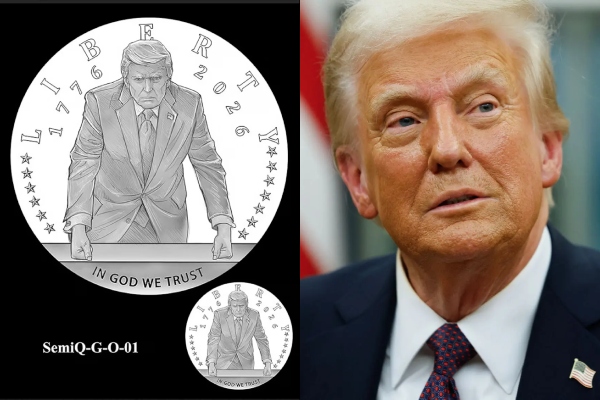
A decision by the Commission of Fine Arts to approve a 24-karat gold commemorative coin bearing the image of Donald Trump is drawing mounting legal scrutiny and political backlash, with critics warning the move could violate longstanding federal law.
The panel voted Thursday, March 19, 2026, to advance the coin’s design, reportedly based on a photograph of Trump taken inside the White House and personally approved by the president. Members of the commission—some of whom are Trump appointees—reportedly advocated for the coin to be produced at the largest possible size, underscoring what supporters describe as its symbolic significance ahead of the United States’ 250th anniversary.
U.S. Treasurer Brandon Beach defended the proposal, calling Trump’s likeness “emblematic” of the nation’s democratic spirit.
“There is no profile more emblematic for the front of such coins than that of our serving President,” Beach said in a statement.
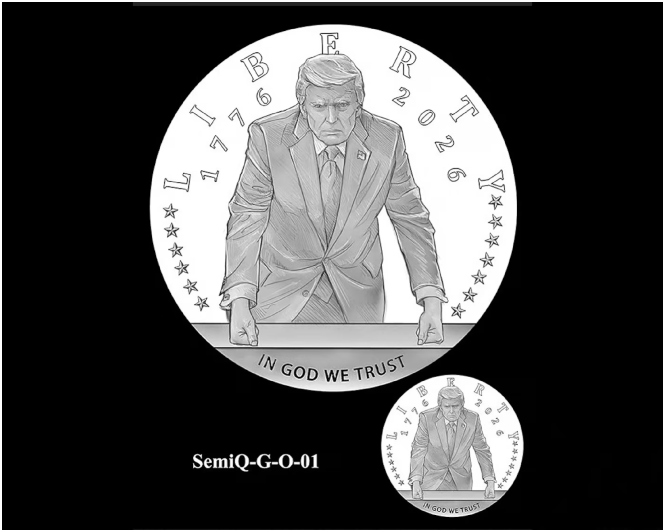
Legal Concerns Over Federal Currency Laws
However, the approval has triggered a wave of legal concerns centered on federal statutes governing U.S. currency design. Critics point to a long-established legal principle prohibiting the depiction of living individuals on American currency, including coins.
Members of the Citizens Coinage Advisory Committee (CCAC), a congressionally established body tasked with reviewing coin designs, warned that proceeding with the coin could face legal challenges.
“If you issue a coin with a portrait of a sitting president, it will send a message that the sitting president is a king,” members of the committee cautioned, raising both constitutional and symbolic concerns.
While the Treasury Department has argued that certain interpretations of the law may allow a sitting president’s image on commemorative coins, legal experts say such a move could invite court challenges over statutory compliance and executive overreach.
Political and Legislative Pushback
The controversy has also spilled into Congress, where Democratic lawmakers are moving to block the initiative. Senators Jeff Merkley and Catherine Cortez Masto have introduced legislation that would explicitly prohibit any living or sitting president from appearing on U.S. currency, including commemorative issues.
Their proposal reflects broader concerns that the coin could blur the line between democratic governance and political glorification, particularly as it involves a sitting president.
Advisory Role vs. Executive Authority
The dispute also highlights tensions over the role of advisory bodies in federal decision-making. While the CCAC is mandated to review and provide recommendations, Treasury officials maintain that final authority rests with the Secretary of the Treasury.
According to officials, the CCAC declined multiple opportunities to review the coin design, prompting the Treasury to assert that its statutory obligations had been fulfilled.
Still, critics argue that bypassing or minimizing advisory input could further complicate the legal standing of the coin if challenged in court.
Broader Implications
Beyond legal questions, the controversy underscores deeper debates about precedent, symbolism, and the limits of executive influence over national emblems. Some analysts warn that approving such a coin could set a contentious precedent for future administrations.
With the administration also reportedly considering a separate Trump-themed $1 coin, legal experts say the issue is likely to intensify, potentially culminating in judicial review.