
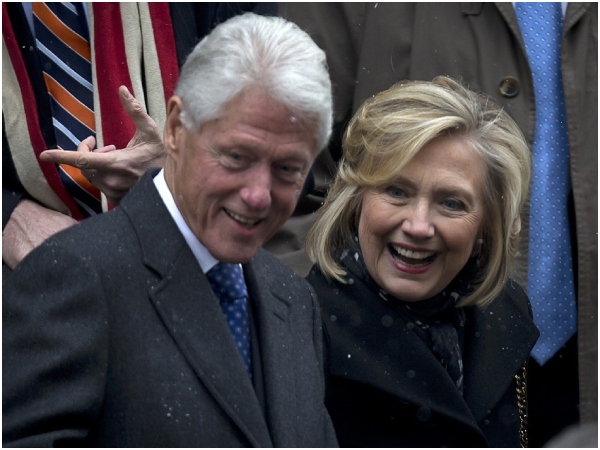
Former U.S. President Bill Clinton and former Secretary of State Hillary Clinton are facing the prospect of contempt of Congress after declining to comply with subpoenas issued by the House Oversight Committee in its investigation into the late financier Jeffrey Epstein.
While the refusal has sparked political debate, it also raises important legal questions about how a contempt case would unfold if House Republicans decide to proceed.
Step One: Committee Vote on Contempt
The first stage wouldhttps://www.findlaw.com/litigation/legal-system/contempt-of-congress-process-and-penalties.htmlitself. Chairman Rep. James Comer (R-Ky.) has indicated that the panel could formally vote to hold either or both Clintons in contempt for failing to appear at scheduled depositions. A simple majority of committee members is sufficient to approve a contempt recommendation.
Such a vote would not determine guilt but would signal that the committee believes the subpoenas were lawful and that the refusal to comply was unjustified.
Step Two: Full House Consideration
If approved at committee level, the contempt resolution would move to the full U.S. House of Representatives. There, lawmakers would debate and vote on whether to formally hold the Clintons in contempt of Congress. Passage again requires a simple majority.
Historically, contempt votes against high-profile political figures are rare and often deeply partisan, increasing the likelihood of prolonged political and legal battles.
Step Three: Referral to the Department of Justice
Should the House approve a contempt resolution, the matter would typically be referred to the U.S. Department of Justice (DOJ) for enforcement. Under federal law, criminal contempt of Congress can carry penalties including fines and up to one year in prison.
However, DOJ enforcement is not automatic.
The department retains prosecutorial discretion and may decline to pursue charges, particularly if constitutional issues—such as the validity of the subpoenas or separation of powers—are raised.
Potential Legal Defences
The Clintons’ legal team has already argued that the subpoenas are invalid and lack a legitimate legislative purpose, a key requirement under U.S. constitutional law. If contempt proceedings move forward, their attorneys are expected to challenge the process in federal court, potentially delaying or blocking enforcement.
Legal experts note that courts often scrutinize congressional subpoenas involving former senior officials, especially when claims of political motivation are raised.
Broader Implications
Even if no criminal charges result, a contempt vote would carry significant symbolic and political weight, reinforcing congressional oversight authority while also testing its limits. The case could set new precedents on how far Congress can go in compelling testimony from former presidents and top officials in politically sensitive investigations.
For now, the standoff highlights the fragile balance between legislative oversight, executive privilege, and the rule of law—an issue that may ultimately be resolved not on Capitol Hill, but in the courts.

