
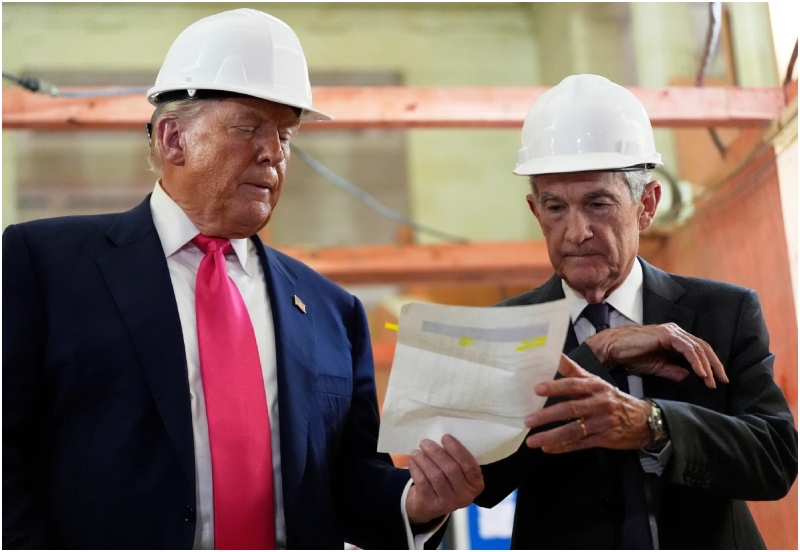
Several Republican lawmakers have publicly broken ranks with President Donald Trump in response to the Department of Justice’s criminal investigation into Federal Reserve Chair Jerome Powell.
The development reveals deepening concerns both home and abroad over the independence of the U.S. central bank and the rule of law.
The controversy stems from a criminal probe initiated by federal prosecutors in Washington, D.C., which served grand-jury subpoenas on Powell tied to his congressional testimony and a multi-million-dollar renovation project at the Federal Reserve’s headquarters.
Critics contend that the inquiry represents a politically motivated attempt to exert presidential influence over monetary policy and undercut the Federal Reserve’s autonomy.
GOP Pushback: A Rare Break With the White House
Senator Lisa Murkowski (R-Alaska) publicly threw her support behind colleagues such as Senator Thom Tillis (R-North Carolina) in opposing Trump’s approach. Tillis has vowed to block any Federal Reserve nominees, including a successor for Powell, until the legal matter is resolved, citing threats to institutional independence.
“If the Federal Reserve loses its independence, the stability of our markets and the broader economy will suffer,” Murkowski said on social media platform X.
Other Republican voices, including Senator Kevin Cramer, have joined the chorus, acknowledging personal disagreements with Powell’s leadership but rejecting the notion that he is a criminal.
These senators argue that political interference with the Fed undermines confidence in monetary governance and risks broader economic instability.
Bipartisan Concern and Former Fed Chairs Weigh In
The criticism extends beyond Capitol Hill. Former Federal Reserve chairs Janet Yellen, Ben Bernanke and Alan Greenspan, along with other former economic policymakers, issued a joint statement condemning the probe as an “unprecedented attempt” to weaken the Fed’s independence. Comparing the situation to practices seen in countries with weaker institutional safeguards, they warned that such encroachments could harm inflation control and market function.
Democrats, too, have criticized the investigation, with Senate Minority Leader Chuck Schumer and others calling it a broader assault on institutional checks and balances. This unusual bipartisan alignment reflects the high stakes of the dispute: the Federal Reserve’s ability to set interest rates based on economic conditions free from political coercion.
Context: Powell’s Probe and Monetary Policy Pressure
Powell’s term as Fed chair is set to expire in May 2026. The Trump administration’s move to investigate him was preceded by public criticism directed at Powell for not cutting interest rates in line with presidential preferences. Powell, who has defended the Fed’s independence and data-driven monetary policy, has characterized the subpoenas as a “pretext” for political pressure rather than a substantively justified legal action.
Monetary policy experts and economists have expressed alarm that weaponising the Justice Department’s prosecutorial powers against a sitting central bank chair could jeopardise market confidence and blur the constitutional separation between political and economic governance.
Broader Legal and Economic Implications
The Republican lawmakers’ break with the president illustrates growing tensions not just over a single legal inquiry, but over fundamental questions about the rule of law, executive influence, and institutional independence. For legal observers, the dispute underscores how criminal investigations connected to high-profile public officials can affect governance norms, regulatory confidence, and the broader integrity of federal institutions.
Whether Congress, the courts, or party leadership will ultimately rein in or validate the Trump administration’s approach remains uncertain.
However, the emerging split within the president’s own party signals that the Fed’s independence may be a rare point of bipartisan defense against perceived political encroachment.

