
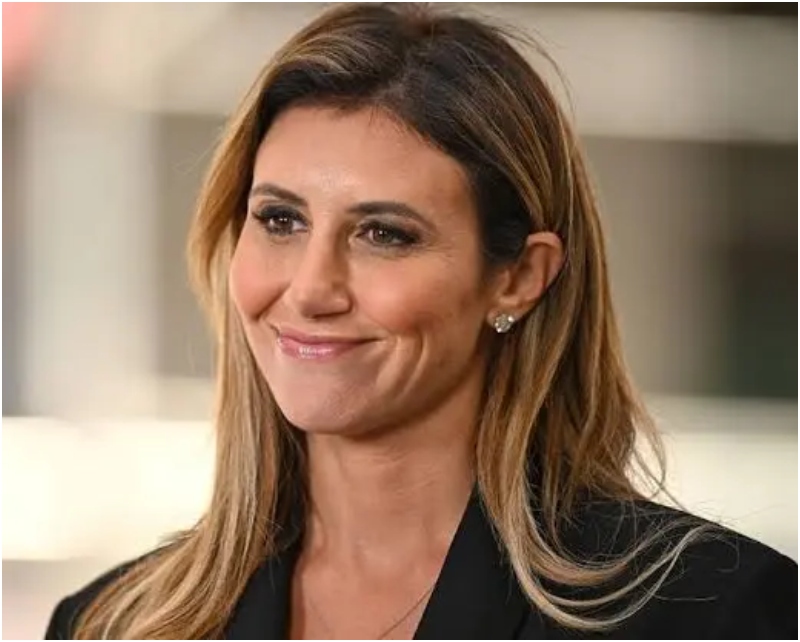
Alina Habba, a former personal attorney to Donald Trump and one of the most polarizing figures in the Justice Department’s recent reshuffling, announced Monday , December 8, 2025, she is stepping down as acting U.S. attorney for the District of New Jersey.
The move comes days after a federal appeals court ruled that her appointment was unlawful — a stunning rebuke with major implications for how the government fills powerful federal prosecutor posts.
In a statement posted on X, Habba said she decided to resign “to protect the stability and integrity of the office which I love,” but urged supporters “not [to] mistake compliance for surrender.”
Her resignation ends months of legal turbulence, political pressure, and behind-the-scenes maneuvering that several judges say pushed the limits — and possibly the intent — of federal appointment law.
A Legal Puzzle That Fell Apart
The Third U.S. Circuit Court of Appeals last week upheld a lower-court ruling that found Habba’s appointment violated federal law. Their reasoning was blunt: the Justice Department’s workaround to keep her in power “would allow the Department to fill such posts indefinitely,” sidestepping the Senate confirmation process.
That process is not a suggestion — it’s a constitutional requirement. And the courts made clear the DOJ’s approach crossed a line.
The 3rd Circuit ruling followed an August decision by U.S. District Judge Matthew W. Brann, who criticized the “novel series of legal and personnel moves” used to keep Habba in charge even after her interim term expired.
According to Brann, the Justice Department:
- Fired Habba’s successor
- Reappointed Habba as a “Special Attorney to the Attorney General”
- Installed her into the deputy U.S. attorney role
- Used that position to elevate her back into the acting U.S. attorney job
Each step built upon the next — and each, the judge said, was designed to bypass the Senate after Habba’s nomination stalled.
The courts agreed that Habba must be disqualified from all ongoing cases.
Bondi Responds: “Saddened to Accept” the Resignation
Attorney General Pam Bondi said she was “saddened to accept Alina’s resignation,” arguing that the court’s decision made it “untenable for her to effectively run her office.”
Bondi announced she will appoint Habba as a senior advisor to the Attorney General for U.S. Attorneys — a role that keeps her in DOJ leadership even as her authority in New Jersey evaporates.
She also made clear the DOJ is far from giving up the fight.
“We are confident [the ruling] will be reversed,” Bondi said on X. “Alina intends to return to lead the U.S. Attorney’s Office for the District of New Jersey if this occurs.”
Leadership Now Split Three Ways
In a statement late Monday, the Justice Department said responsibility for running the New Jersey office will be divided among three senior officials, reflecting the unusual turbulence created by the legal battle. The agency offered no timeline for resolving the leadership vacuum.
For a critical federal office responsible for prosecuting public corruption, organized crime, terrorism, and major financial fraud, the instability is more than an administrative headache — it’s a governance problem.
The Bigger Picture: Appointment Rules Under the Microscope
Habba’s rise was controversial from the start. Trump appointed her interim U.S. attorney on March 24, four days before she was formally sworn in. Interim appointments last only 120 days; her permanent nomination on June 30 never received Senate action.
When the court exercised its statutory power to appoint her deputy instead, the DOJ began its now-rejected workaround to reinstall her in the top job. Judges saw the maneuver as a constitutional red flag.
If allowed, the 3rd Circuit warned, the DOJ could perpetually avoid Senate oversight — something no administration is allowed to do.
What Comes Next
The Justice Department has already moved to appeal. Habba, for her part, says she fully intends to return if the ruling is overturned. But even if the courts eventually side with the DOJ, the episode is likely to raise lasting questions about how federal prosecutors are appointed — and how far agencies can stretch their authority.
For now, New Jersey’s most important federal prosecutor’s office is in the hands of a temporary trio, and Habba is out of the job she fought hard to keep.
But as she made clear Monday, she is not done.