
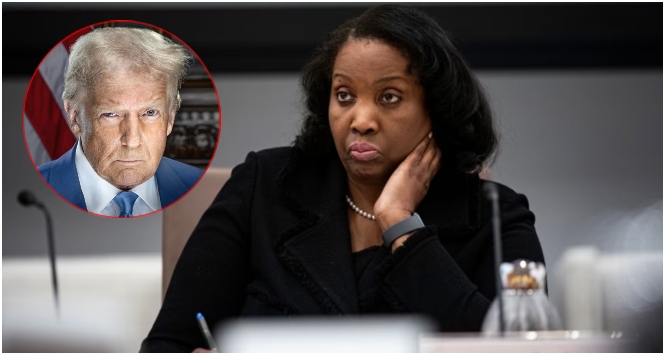
The U.S. Supreme Court has temporarily halted President Donald Trump’s attempt to remove Federal Reserve Governor Lisa Cook, issuing a closely divided ruling that legal observers say could reinforce statutory protections designed to preserve the Federal Reserve’s institutional independence.
In a 5-4 decision, the Court concluded that the administration had not afforded Cook adequate due process protections before attempting to remove her from office. The ruling returns the dispute to lower courts, where the administration must substantiate allegations against Cook if it intends to continue seeking her removal.
The case centers on allegations that Cook improperly claimed two principal residences on mortgage documents, an accusation she has denied.
The administration argued that the alleged conduct could undermine public confidence in the Federal Reserve and constitute grounds for removal. During earlier proceedings, the government maintained that presidential notice through public statements and social media postings was sufficient.
Cook’s legal team challenged both the substance of the allegations and the procedure used to pursue her dismissal, arguing that allowing such action without meaningful procedural safeguards would weaken statutory protections Congress specifically created for Federal Reserve officials.
Under federal law, members of the Federal Reserve Board may only be removed “for cause,” a legal standard intended to insulate monetary policy decisions from political influence and short-term electoral pressures.
Cook addressed the ruling in a statement following the decision, arguing that the controversy reached beyond the mortgage allegations themselves.
“This case was never about mortgage documents,” Cook said, describing the claims as a “manufactured pretext.”
She further stated that Federal Reserve decisions should be based on “independent judgement, free from political interference.”
The legal dispute has drawn significant attention because it tests the scope of presidential authority over officials serving in independent federal institutions.
The Court’s decision did not resolve the underlying allegations against Cook. Instead, it focused on whether the administration followed legally sufficient procedures in attempting to remove her.
Administrative law experts have long viewed due process protections as a critical component of removal proceedings involving independent agencies and officials whose positions were intentionally structured by Congress to limit political interference.
The decision also arrives amid broader judicial examination of executive power and the status of independent federal agencies.
In a separate ruling issued the same day, the Supreme Court expanded presidential authority over certain independent regulators, allowing presidents greater flexibility in removing officials from some federal agencies and significantly narrowing a longstanding legal precedent dating back nearly a century.
However, the Cook matter appears to preserve, at least for now, the unique legal framework surrounding the Federal Reserve.
The litigation now returns to lower courts, where the administration will bear the burden of demonstrating legal grounds for removal while Cook will have the opportunity to formally contest the allegations and defend her position.