
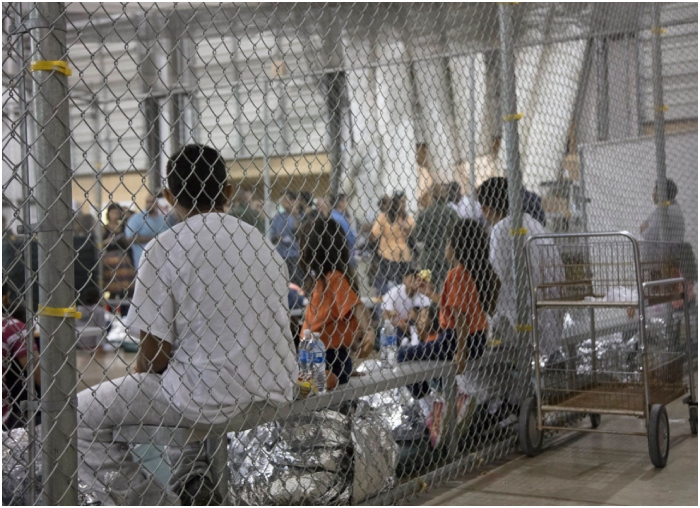
The U.S. Department of Homeland Security (DHS) is no longer pursuing plans for a large-scale Immigration and Customs Enforcement (ICE) detention facility in Social Circle, Georgia, marking a significant development in an immigration enforcement proposal that had generated local opposition and raised questions about federal coordination with municipal authorities.
The proposed facility, described by critics as an “Amazon-style warehouse” detention operation, was expected to house as many as 10,000 detainees as part of broader immigration detention efforts.
According to reporting highlighted by journalist Antonia Hylton, DHS had paid just under $130 million for the warehouse property during the tenure of former Homeland Security Secretary Kristi Noem.
The decision to withdraw from the project carries legal and administrative implications beyond immigration policy itself, touching on questions involving federal authority, local government coordination, land use concerns, emergency services planning, and public accountability.
According to Hylton’s reporting, local officials in Social Circle alleged that federal authorities did not adequately coordinate with municipal leadership before moving forward with plans for the detention site.
“DHS did not coordinate with elected leaders or the police or fire department,” Hylton said in a report shared through The Prime Weekend.
The issue appears to have generated friction in the conservative Georgia community, where some residents reportedly said they struggled for months to obtain answers from federal officials and elected representatives regarding the proposal’s scope and potential impact.
Some residents interviewed expressed frustration not only with federal agencies but also with elected officials whom they believed should have represented local concerns.
“We are trying to figure out how we’re going to fight with a little money, fight the big federal government, when we should have had our government fight for it,” one resident said.
Legally, federal agencies possess broad authority regarding immigration detention operations. However, large-scale detention proposals frequently intersect with state and local concerns involving infrastructure capacity, public safety planning, zoning issues, environmental impact considerations, and intergovernmental coordination.
The abandonment of the Social Circle proposal may also represent a logistical challenge for federal immigration enforcement planning. According to documents referenced in reporting, DHS now intends to dispose of the Georgia warehouse and six additional properties, either by transferring them to other agencies or selling them.
For now, DHS reportedly indicated that it intends to rely on existing detention capacity rather than pursuing the Social Circle site.
The development arrives amid continuing national legal debates surrounding immigration enforcement powers, detention practices, and the relationship between federal authority and local governance.
For Social Circle residents, however, the dispute appears to have become about more than immigration policy alone. It also became a question of representation and whether local communities have meaningful input when federal decisions carry potentially significant consequences for the places where they live.