
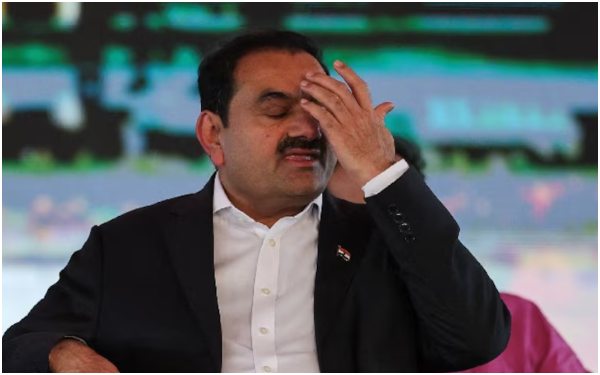
The U.S. Department of Justice is reportedly preparing to drop federal criminal fraud charges against Indian billionaire Gautam Adani after his legal team argued that the ongoing prosecution was standing in the way of a proposed $10 billion investment in the United States.
According to Reuters, the possible dismissal comes after Adani hired attorney Robert Giuffra, who also serves as a personal lawyer for President Donald Trump. Giuffra reportedly told Justice Department officials that Adani’s planned investments and job creation efforts in the U.S. could not move forward while the criminal case remained active.
“Adani could not make its investment while the case was proceeding,” one source familiar with the matter told Reuters.
Federal prosecutors had accused Adani and associates in November 2024 of orchestrating a bribery scheme involving approximately $265 million in alleged payments to Indian officials to secure approvals tied to a massive solar energy project in India. Prosecutors also alleged the defendants concealed the alleged corruption from lenders and investors while raising more than $3 billion through loans and bonds.
Adani and the Adani Group have repeatedly denied wrongdoing, calling the allegations “baseless.”
The reported move to abandon the criminal prosecution is already raising questions among legal observers and ethics watchdogs about the relationship between political influence, economic promises, and prosecutorial discretion under the Trump administration.
Reuters reported that Giuffra presented Justice Department officials with a 100-page argument challenging the legal basis of the prosecution, claiming the case lacked jurisdiction and sufficient evidence. Some prosecutors reportedly insisted the proposed $10 billion investment should not affect the criminal matter, though it remains unclear whether all officials involved agreed.
The development comes as Adani simultaneously resolved a related civil fraud case brought by the U.S. Securities and Exchange Commission. Court records show Adani and his nephew, Sagar Adani, agreed to pay $18 million in civil penalties without admitting or denying wrongdoing.
The SEC lawsuit accused the Adanis of misleading investors in connection with the same alleged bribery operation. Their attorneys argued the agency lacked jurisdiction because the securities involved were not traded on a U.S. exchange and described the claims as “impermissibly extraterritorial.”
The potential dismissal of the criminal case would mark another example of the Trump-era Justice Department backing away from a major prosecution initiated during former President Joe Biden’s administration.
Still, Adani’s legal challenges may not be over. Reuters reported that Indian regulators continue to examine multiple allegations involving securities violations and offshore investment structures connected to the Adani Group. India’s market regulator, the Securities and Exchange Board of India, declined to comment.
The case has drawn international attention not only because of Adani’s immense business empire, but also because it sits at the intersection of global finance, political influence, cross-border enforcement, and corporate accountability.