
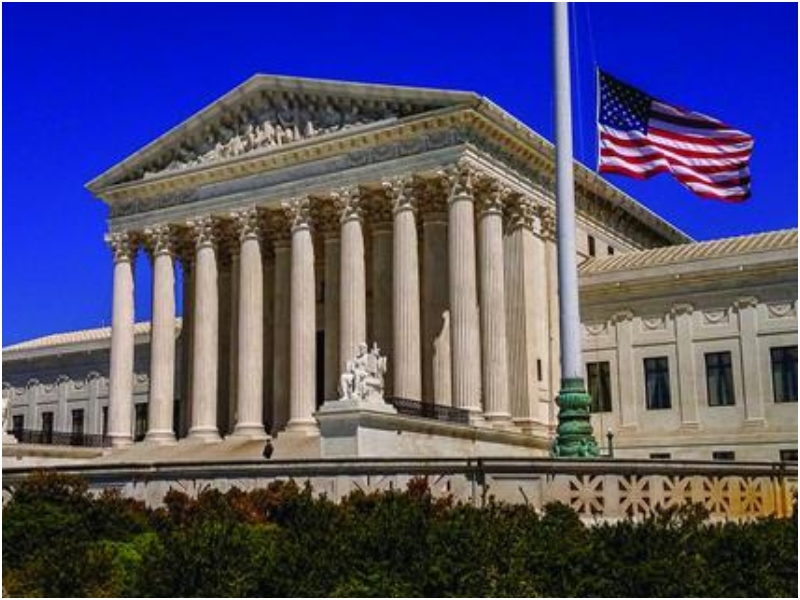
The United States has had only 17 Chief Justices in its more than 235-year history. From the court’s humble beginnings to its modern role as a powerful institution at the center of American life, each Chief Justice has left a distinct mark on the Supreme Court and the nation.
Here is a concise overview of each of the 17 men who have held the highest judicial office in the United States:
1. John Jay (1789–1795)
The first Chief Justice, John Jay was a key Founding Father who helped negotiate the Treaty of Paris ending the Revolutionary War. As Chief Justice, the Court was relatively quiet, deciding just four cases in its first six years. Jay’s most notable opinion came in Chisholm v. Georgia (1793), which led to the ratification of the Eleventh Amendment. He resigned to become Governor of New York and later declined reappointment, citing the Court’s lack of sufficient “energy, weight, and dignity.”
2. John Rutledge (1795)
Rutledge served only briefly as a recess appointment. A delegate to the Constitutional Convention and former Governor of South Carolina, his nomination failed after he publicly attacked the Jay Treaty. He became the first Supreme Court nominee rejected by the Senate. Tragically, he attempted suicide later that year.
3. Oliver Ellsworth (1796–1800)
Best remembered for co-authoring the Great Compromise at the Constitutional Convention and drafting the Judiciary Act of 1789, Ellsworth served as Chief Justice while also undertaking diplomatic missions. He resigned due to poor health.
4. John Marshall (1801–1835)
Widely regarded as the most influential Chief Justice in history, Marshall established the Court’s authority through landmark decisions. In Marbury v. Madison (1803), he established judicial review. In McCulloch v. Maryland (1819), he affirmed federal supremacy and implied powers. Marshall transformed the Court into a co-equal branch of government.
5. Roger Taney (1836–1864)
Appointed by Andrew Jackson, Taney is best known for authoring the infamous Dred Scott v. Sandford (1857) decision, which held that Black Americans could not be citizens and helped precipitate the Civil War. He clashed repeatedly with President Lincoln during the Civil War.
6. Salmon P. Chase (1864–1873)
A former Treasury Secretary under Lincoln and prominent abolitionist, Chase presided over Andrew Johnson’s impeachment trial. He authored Texas v. White (1868), affirming the permanence of the Union. Chase twice sought the presidency while serving as Chief Justice.
7. Morrison Waite (1874–1888)
Appointed by Ulysses S. Grant, Waite’s Court generally supported federal economic power but took a narrow view of Reconstruction Amendments, limiting civil rights protections. The Court decided important patent cases, including those involving the telephone.
8. Melville Fuller (1888–1910)
Fuller presided over the Lochner v. New York and Plessy v. Ferguson eras. His Court was generally pro-business and protective of states’ rights. He served 22 years and died in office.
9. Edward Douglass White (1910–1921)
The first Associate Justice elevated to Chief Justice, White served on the Court during a period of significant antitrust and free speech cases. He participated in the Insular Cases and joined the majority in Plessy v. Ferguson.
10. William Howard Taft (1921–1930)
The only person to serve as both President and Chief Justice, Taft made his greatest impact on judicial administration. He helped create the modern Supreme Court by securing control over its docket and overseeing the construction of the Supreme Court Building.
11. Charles Evans Hughes (1930–1941)
A former Governor, Associate Justice, and 1916 presidential candidate, Hughes skillfully navigated the Court during the New Deal era and helped defeat President Franklin Roosevelt’s court-packing plan. He provided strong leadership during a turbulent period.
12. Harlan Fiske Stone (1941–1946)
A former Columbia Law School dean and Attorney General, Stone wrote the famous Footnote Four in United States v. Carolene Products (1938), which became a foundation for modern constitutional law. He struggled to manage tensions among strong personalities on the Court and died in office.
13. Fred M. Vinson (1946–1953)
The only Chief Justice to have served in all three branches of government, Vinson helped decide several important early civil rights cases, including Shelley v. Kraemer and Sweatt v. Painter. He died before the Court decided Brown v. Board of Education.
14. Earl Warren (1953–1969)
One of the most consequential Chief Justices, Warren led a liberal activist Court that transformed American society. Key decisions include Brown v. Board of Education (1954), Miranda v. Arizona, Gideon v. Wainwright, Loving v. Virginia, and Reynolds v. Sims. His tenure is known as the “Warren Court” era of expansive civil rights and civil liberties protections.
15. Warren E. Burger (1969–1986)
Appointed by President Nixon, Burger moved the Court in a more conservative direction but still authored or joined major rulings such as Roe v. Wade. He focused heavily on judicial administration and court reform.
16. William Rehnquist (1986–2005)
A former law clerk to Justice Robert Jackson, Rehnquist began as a staunch conservative dissenter (“the Lone Ranger”) and later led a conservative Court that limited federal power in cases like United States v. Lopez and United States v. Morrison. He presided over the 2000 decision in Bush v. Gore.
17. John Roberts (2005–present)
The current Chief Justice has steered the Court toward a conservative judicial philosophy while emphasizing institutional legitimacy. Major opinions include NFIB v. Sebelius (upholding the Affordable Care Act as a tax), Shelby County v. Holder, Students for Fair Admissions v. Harvard (ending race-based affirmative action), Loper Bright (overturning Chevron deference), and Trump v. United States (presidential immunity). Roberts has frequently been in the majority and has spoken publicly in defense of judicial independence.
These 17 leaders have shaped not only American law but the very role of the Supreme Court in the nation’s constitutional system. Their legacies continue to influence contemporary legal and political debates.
Adapted from SCOTUSblog