
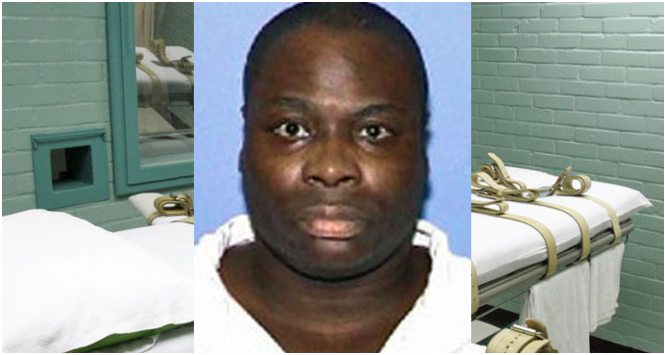
A federal appeals court has temporarily halted the scheduled execution of Texas death row inmate Edward Busby, citing unresolved constitutional questions surrounding whether he is intellectually disabled and therefore ineligible for execution under U.S. law.
The United States Court of Appeals for the Fifth Circuit issued the 2-1 ruling ahead of Busby’s planned Thursday execution, ordering the stay to remain in effect “pending further order” of the court.
Busby was sentenced to death in Tarrant County in 2005 for the kidnapping and murder of 78-year-old Laura Crane. Prosecutors said he robbed Crane and killed her by suffocating her with tape wrapped around her face.
The latest legal battle centers on protections under the Eighth Amendment to the United States Constitution, which bars the execution of individuals determined to be intellectually disabled.
In his appeal, Busby argued that a federal district court wrongly denied funding requests for additional intellectual disability testing. His attorneys also submitted two new expert evaluations — including one conducted for the state — which they say support claims that Busby meets the legal criteria for intellectual disability.
Judge Stephen Higginson wrote that the court should proceed cautiously because the Supreme Court of the United States is expected to soon rule in a separate Alabama case that could reshape how courts evaluate multiple IQ tests in death penalty cases.
“In a matter of life and death, we must be certain that we apply the proper constitutional rule,” Higginson wrote, emphasizing the importance of clarity before allowing executions to proceed.
Texas Attorney General Ken Paxton quickly pushed back against the ruling. Paxton’s office asked the U.S. Supreme Court to overturn the stay, arguing Busby’s appeal lacks merit and was improperly filed before the appeals court.
The case highlights growing scrutiny over intellectual disability determinations in capital punishment cases across the United States.
Busby’s halted execution marks Texas’ third execution stay in just over a year and the first in 2026. Other Texas death row inmates, including David Wood and Robert Roberson, also had their cases returned to lower courts for further review in 2025.
Busby himself previously received execution stays in 2020 due to the COVID-19 pandemic and again in 2021 by the Texas Court of Criminal Appeals.
In April, the Texas appeals court also removed Clarence Curtis Jordan from death row after determining he was ineligible for execution because of intellectual disability. He joined 19 other inmates who have been removed from Texas death row on similar grounds.
Had the execution proceeded, Busby would have become the 600th person executed in Texas since the U.S. Supreme Court reinstated the death penalty in 1976.
The temporary halt now places Busby’s fate in the hands of higher courts as legal debates continue over constitutional protections, mental disability standards, and the future application of the death penalty in America.