
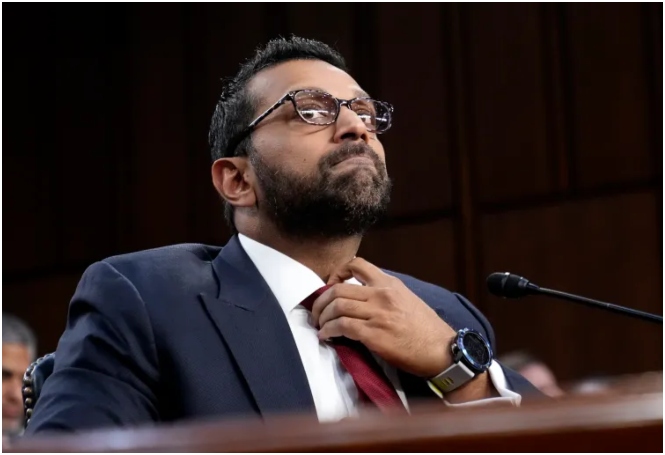
FBI Director Kash Patel filed a defamation lawsuit Monday against The Atlantic magazine and reporter Sarah Fitzpatrick, seeking $250 million in damages over an article alleging excessive drinking and unexplained absences that the complaint calls a “sweeping, malicious, and defamatory hit piece.”
The lawsuit, filed in the US District Court for the District of Columbia, targets an April 17 article headlined “Kash Patel’s Erratic Behavior Could Cost Him His Job.”
According to the complaint, the story alleged that Patel drank to the point of obvious intoxication at private clubs in Washington and Las Vegas, that official meetings were rescheduled around alcohol-fueled nights out, and that his security detail had struggled to wake him on multiple occasions.
Patel, who filed the suit as a private citizen and Nevada resident, claims the piece falsely portrays him as “a habitual drunk, unable to perform the duties of his office” and “vulnerable to foreign coercion.”
Pre-Publication Dispute
Patel’s attorney, Jesse Binnall, sent a pre-publication letter to The Atlantic disputing 19 specific claims made in the article. The lawsuit alleges that The Atlantic gave the FBI less than two hours to respond before its publication deadline and proceeded to publish regardless.
The suit argues that this timeline constitutes “among the strongest possible evidence of actual malice” – a critical legal threshold in defamation cases involving public figures.
The Atlantic Responds
The Atlantic said Monday that it stands by its reporting and will vigorously defend against the lawsuit.
“We stand by our reporting and will vigorously defend against this lawsuit,” the magazine stated.
No trial date has been set.
The Legal Standard: Actual Malice
To prevail on a defamation claim, Patel – as a public figure – must demonstrate that The Atlantic acted with “actual malice.” Under the landmark US Supreme Court case New York Times Co. v. Sullivan (1964), actual malice is defined as knowledge that the published statement was false or reckless disregard for whether it was true or false.
This standard, established to protect robust debate about public officials, imposes a high burden on plaintiffs. Patel’s legal team will need to show not merely that the article was inaccurate, but that The Atlantic either knew it was false or published with serious doubts about its truthfulness.
The lawsuit’s emphasis on the abbreviated pre-publication response window appears designed to support an argument that the magazine acted with reckless disregard for the truth.
Key Allegations in the Complaint
According to the filing, the disputed article contained claims that Patel:
- Drank to obvious intoxication at private clubs in Washington and Las Vegas
- Had official meetings rescheduled around alcohol-fueled nights out
- Was difficult for his security detail to wake on multiple occasions
- Exhibited behavior that alarmed colleagues
The complaint denies each of these allegations and argues that the cumulative effect of the piece is to portray Patel as unfit for office and a national security risk.
Implications of the Lawsuit
Legal observers note several significant aspects of the case:
Venue: Filing in the District of Columbia places the case in a jurisdiction familiar with high-profile defamation matters involving public officials and media organizations.
Damages: The $250 million figure signals that Patel intends to pursue substantial compensation, potentially deterring future critical reporting if successful.
Actual Malice Burden: The constitutional protection afforded to media defendants under Sullivan means Patel faces an uphill battle. Public figure defamation plaintiffs lose such cases more often than they win.
Discovery Risks: A lawsuit of this nature could lead to discovery into both The Atlantic’s reporting process and Patel’s conduct while in office, potentially exposing information neither party wishes to become public.
What Comes Next
The Atlantic is expected to file a motion to dismiss, likely arguing that the challenged statements are either substantially true, protected opinion, or that Patel cannot prove actual malice. If the case survives dismissal, it would proceed to discovery and potentially trial.
No hearing dates have been scheduled.