
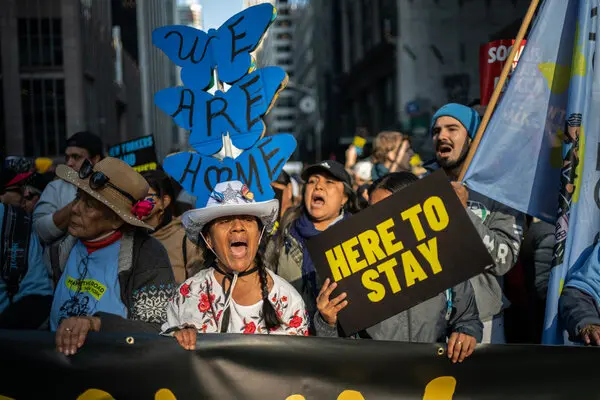
In a significant setback for the Trump administration’s immigration agenda, a divided U.S. appeals court has upheld protections for over 350,000 Haitians living in the United States, ruling that the government cannot revoke their Temporary Protected Status (TPS) amid ongoing crises in Haiti.
The U.S. Court of Appeals for the District of Columbia Circuit, in a 2-1 decision issued late Friday, denied the administration’s request to pause a lower court order blocking the Department of Homeland Security (DHS) from terminating Haiti’s TPS designation.
TPS, a humanitarian program established under federal immigration law, shields eligible migrants from deportation and grants them work authorization when their home countries face extraordinary conditions like natural disasters, armed conflict, or other crises.
The ruling stems from a class-action lawsuit filed by Haitian TPS holders challenging DHS Secretary Kristi Noem’s November decision to end the protections. U.S. District Judge Ana Reyes, in her February 2 order, found that the termination likely violated statutory procedures for TPS revocations and infringed on the Fifth Amendment’s equal protection clause. Reyes’ decision emphasized the procedural safeguards required under the Immigration and Nationality Act, which mandate a thorough assessment of country conditions before ending TPS.
On appeal, the administration argued that TPS was intended as a temporary measure, not a “de facto amnesty,” and cited U.S. Supreme Court precedents allowing the termination of TPS for Venezuelans. However, Circuit Judges Florence Pan and Brad Garcia—both appointees of President Joe Biden—distinguished the cases, highlighting Haiti’s dire circumstances.
“Haitians sent home would be vulnerable to violence amid a ‘collapsing rule of law’ and lack access to life-sustaining medical care,” the majority opinion stated, underscoring the humanitarian basis for maintaining the protections.
Circuit Judge Justin Walker, a Trump appointee, dissented sharply, likening the Haitian case to the Venezuelan litigation as “the legal equivalent of fraternal, if not identical, twins.” He argued that the administration’s actions aligned with prior Supreme Court guidance on executive discretion in immigration matters.
A DHS spokesperson condemned the ruling, labeling it the work of “activist judges legislating from the bench” and affirming plans to appeal to the U.S. Supreme Court. “Temporary means temporary,” the statement read, signaling a potential escalation in the ongoing legal battle over TPS terminations for multiple countries.
Haiti’s TPS designation originated in 2010 following a catastrophic earthquake that killed over 200,000 people and displaced millions. The U.S. has extended the status multiple times, with the most recent renewal in July 2024 under the Biden administration, citing Haiti’s compounding crises—including economic collapse, gang violence, political instability, and health emergencies exacerbated by the absence of a functioning government.
This decision reinforces the judiciary’s role in scrutinizing executive actions on immigration, particularly where humanitarian considerations intersect with constitutional protections. As the case heads toward possible Supreme Court review, it could set precedents for TPS programs affecting migrants from other nations targeted by the Trump administration’s crackdown.