
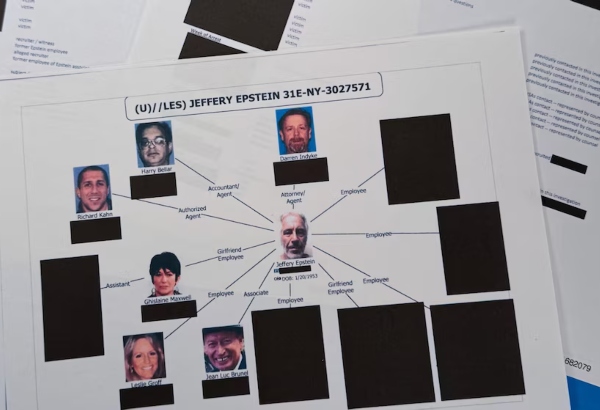
Members of the U.S. Congress will begin reviewing unredacted Justice Department files related to Jeffrey Epstein next week, marking a significant escalation in an ongoing legal and political dispute over transparency, statutory compliance, and executive privilege.
According to two sources familiar with the Department of Justice’s plans, lawmakers will be allowed to review the materials starting Monday morning at DOJ offices, under strict conditions outlined in a letter sent to members of Congress and obtained by NBC News.
The review will take place in person, on DOJ-controlled computers, and will exclude access to physical documents. Members may take handwritten notes but are prohibited from bringing electronic devices into the review rooms.
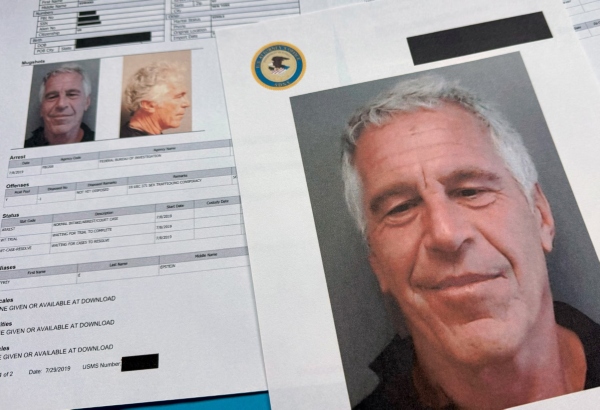
Access will be limited initially to members of Congress only, excluding staff, and requires 24 hours’ advance notice. While leadership and members of the House and Senate Judiciary Committees will receive priority, DOJ officials say all members of Congress will eventually be granted access.
Scope of Review and Statutory Tension
Critically, lawmakers will only be permitted to review approximately 3 million files that are already publicly available in redacted form, despite the DOJ acknowledging possession of more than 6 million Epstein-related documents in total. The limitation has intensified concerns among lawmakers that the department is falling short of its obligations under the Epstein Files Transparency Act, enacted in November.
The law, passed with bipartisan support and signed by President Donald Trump on Nov. 19, requires the attorney general to make publicly available “all unclassified records, documents, communications, and investigative materials” related to Epstein, including internal DOJ communications concerning charging decisions or the decision not to pursue charges against Epstein or his associates.
Deputy Attorney General Todd Blanche pledged congressional access to the materials last Friday when announcing the DOJ’s release of documents it deemed appropriate for public disclosure. Shortly thereafter, Reps. Thomas Massie (R-Ky.) and Ro Khanna (D-Calif.), the bipartisan co-authors of the transparency law, formally requested access to the unredacted records, citing concerns that DOJ redactions may exceed what the statute permits.
Privilege Claims and Legal Objections
In correspondence with lawmakers, Blanche said the department has withheld or redacted approximately 200,000 pages, citing legal protections including the deliberative process privilege, attorney-client privilege, and the work-product doctrine. These claims have become a focal point of legal contention.
Massie and Khanna argue that such redactions may violate the plain language of the statute, which explicitly mandates disclosure of internal DOJ communications related to prosecutorial decisions. In a joint letter, the lawmakers criticized what they described as a “blanket approach” to redactions, while also raising alarm that, in some instances, victim names were insufficiently protected, despite the DOJ stating that Epstein had more than 1,000 identified victims.
The Justice Department has faced sustained criticism from victims’ advocates and lawmakers alike, who argue that inconsistent redaction practices undermine both victim protection and public accountability.
Congressional Oversight Intensifies
Democrats on the House Judiciary Committee also requested expedited access to the unredacted materials ahead of Attorney General Pam Bondi’s scheduled appearance before the committee next Wednesday. Lawmakers have said reviewing the files beforehand is essential to conducting meaningful oversight.
Rep. Khanna praised the DOJ’s decision to allow congressional review but framed it as the result of sustained pressure. “When Congress pushes back, Congress can prevail,” he wrote on X, adding that lawmakers must not become “a doormat” in matters involving the Epstein files.
Background of the Case
Epstein, a wealthy financier with deep political and social connections, was charged in 2019 in Manhattan federal court with sex trafficking of minors. He died in federal custody while awaiting trial; his death was officially ruled a suicide. The DOJ and FBI announced in July that no additional individuals would be charged, a conclusion that triggered bipartisan backlash and ultimately led to the passage of the transparency law.
As Congress prepares to review the unredacted files, the dispute underscores a broader constitutional tension between legislative oversight authority and executive branch claims of privilege — one that could shape future transparency mandates and judicial interpretations of congressional investigatory power.