
What began as a chance meeting during law school orientation at North Carolina Central University (NCCU) has evolved into an extraordinary judicial legacy.
Four former NCCU School of Law roommates — now all judges — are reflecting on a journey defined by professional excellence, mutual accountability, and the enduring impact of legal education at a historically Black institution.
Judges Shamieka Rhinehart, Camille Banks-Prince, Keisha Wright-Hill, and Teresa Raquel Robinson-Freeman met as first-year law students in 1998 and quickly formed a close-knit support system. Years later, each now serves on the bench, presiding over cases that shape lives, interpret statutes, and uphold constitutional principles within their respective jurisdictions.
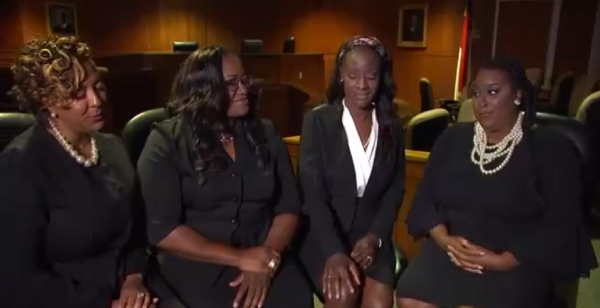
Their story, recently highlighted in a 2026 feature, underscores how informal peer networks in law school can play a decisive role in professional outcomes — particularly for students navigating the pressures of rigorous legal training. The four judges, who jokingly dubbed themselves “The Golden Girls,” say their bond helped them persist through academic challenges, personal loss, and the demanding early years of legal practice.
One pivotal moment came when Judge Wright-Hill considered leaving law school after the death of her father. Encouraged by her roommates to continue, she credits that support as instrumental to her eventual judicial appointment. The experience, she has said, shaped her understanding of empathy and perseverance — qualities she now brings to the bench.
Beyond their personal friendship, the judges point to the broader significance of representation within the judiciary. Each emphasized that their presence in the courtroom carries legal and symbolic weight, particularly in communities historically underrepresented in judicial decision-making. According to the judges, diversity on the bench enhances public confidence in the legal system and strengthens the legitimacy of judicial outcomes.
Judge Robinson-Freeman has noted that judicial diversity extends beyond race and gender to include lived experience, professional background, and perspective — factors that influence how judges interpret facts, apply precedent, and exercise discretion within the bounds of the law.
The quartet also credited NCCU School of Law, an HBCU with a long tradition of civil rights advocacy and public service, for equipping them with both doctrinal training and a sense of responsibility to the communities they serve. They describe the institution as one that fosters resilience, ethical grounding, and a commitment to justice.
Today, despite demanding caseloads and family responsibilities — the four judges collectively raise ten children — they remain closely connected, continuing to mentor one another and younger attorneys considering judicial careers.
Their collective ascent from shared dorm rooms to judicial chambers offers a case study in how mentorship, institutional support, and peer accountability can shape the legal profession — and, ultimately, the administration of justice itself.